






Iran’s Leadership is Still Comfortable – We Will Not Win Until This Changes
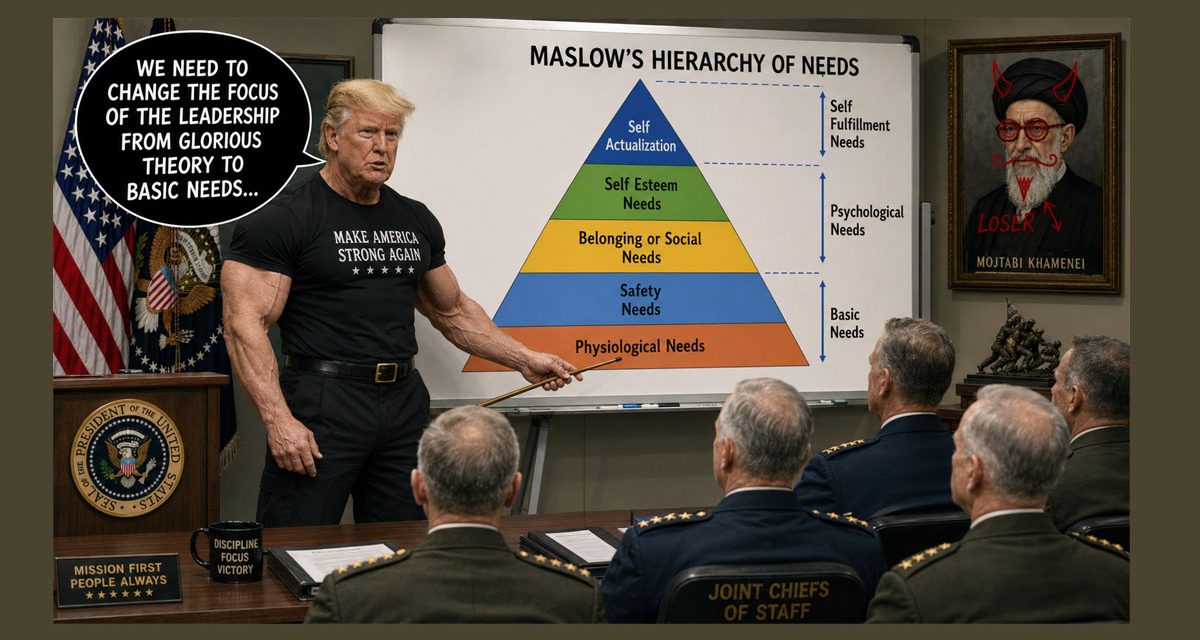
A few weeks ago I wrote a tongue-in-cheek article about using stink bombs to drive Iraning leaders out of their comfortable palaces. Perhaps I was too subtle.
The bottom line is very simple.
If Iranian leaders surrender to the U.S. they are likely to die.
The succession of people willing to kill them goes all of the way from the elite leadership of Iran to the bottom of the IRGC. The general welfare of the people of Iran and and the destruction of the regular military are absolutely, completely irrelevant.
Remember that these leaders and the IRGC are privileged classes, they live and eat well, pulling disproportionate resources from the less fortunate population. General bombing and destruction has not changed this much.
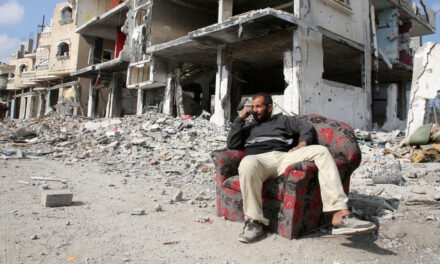
The ONLY way to move this off the dime is to turn the privileged into paupers. Short of wholesale killing of IRGC soldiers, the best way to do this is to focus on taking away their resources, where they live making sure their housing is unlivable, making sure they have no water or electricity, destroy the roads and other logistics that supply them where they are, force them to move from where they are to locations where the general population is already suffering. Leaders need palaces, soldiers need barracks. Deny that.
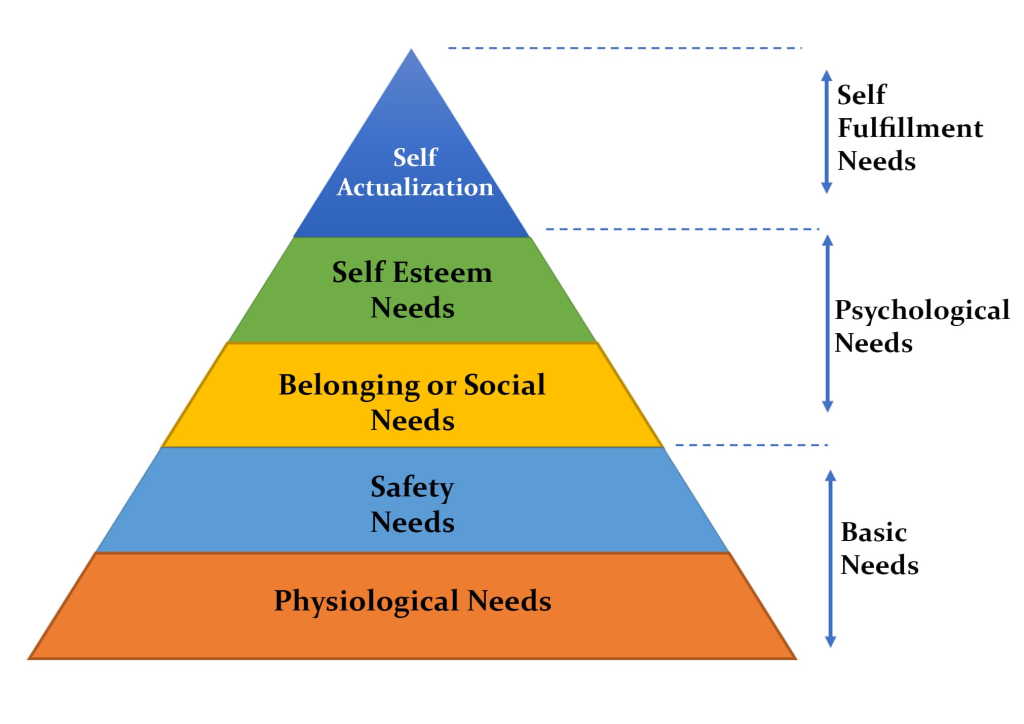
Psychologically, we need to move them on the Maslow scale from the top level where religious fervor rules, to the bottom level where they and their families must focus on surviving. We need the decisions to be based on their personal discomfort and desperation, not the theoretical suffering of people they do not care about.
We do not need to do this for all of the people of Iran. They are irrelevant in this war.
Elite Loyalty: The Foundation of Iran’s Leadership Structure
One of the most widely accepted ideas in political science is that authoritarian governments survive only as long as the people who keep them in power remain loyal. In democratic systems, leaders ultimately answer to voters. In authoritarian systems, however, the most important audience is often much smaller. It consists of military commanders, intelligence officials, party leaders, and other members of the ruling elite.
This concept helps explain why many analysts focus less on public opinion and more on the internal coalition that supports a regime.
In Iran, the formal government includes a president, parliament, and cabinet ministries, but the country’s real centers of power extend well beyond those institutions. At the top is the Supreme Leader, who has ultimate authority over the armed forces, intelligence services, major foreign policy decisions, and the judiciary. Beneath that office is a network of senior Islamic Revolutionary Guard Corps (IRGC) commanders, intelligence leaders, and members of the Supreme National Security Council. Together, these individuals form the regime’s core support structure.
From this perspective, the Supreme Leader’s most important political audience is not the Iranian public. Instead, it is the elite group that possesses the ability to protect the regime, enforce its policies, and preserve its authority. As long as this coalition remains united, the government is generally able to withstand significant economic hardship, international pressure, and public dissatisfaction.
This framework leads to an important hypothesis about how authoritarian governments make decisions. If leaders believe their greatest threat comes from within their own governing coalition rather than from outside enemies or public protests, they are likely to devote considerable attention to maintaining the confidence of that coalition. Preserving elite loyalty becomes a higher priority than satisfying the broader population. Make no mistake, these threats are often mortal threats, not just a loss of status.
Throughout history, authoritarian governments have often ensured that senior military officers, intelligence officials, and political elites receive better housing, more reliable access to goods and services, stronger personal security, and greater economic privileges than ordinary citizens. These benefits are not simply rewards. They also reinforce loyalty by giving influential insiders a strong interest in preserving the existing political system.
This does not necessarily mean that every member of the elite enjoys luxury or complete immunity from hardship. However, many scholars argue that when key officials continue to enjoy relative stability and security, they have fewer incentives to challenge the leadership. Their families, careers, financial interests, and personal safety are closely tied to the survival of the current system.
Several historical examples illustrate this broader principle. The Soviet Union maintained power for decades through the support of the Communist Party and security services. Saddam Hussein relied heavily on trusted military units and family networks. Muammar Gaddafi built overlapping security organizations designed to ensure that no single faction could threaten his rule. In Syria, the Assad government has depended on loyal military and intelligence institutions to preserve its authority during years of civil war.
These cases differ in many important respects, but they share one common characteristic: regime survival depended heavily on maintaining the cohesion of a relatively small group of powerful insiders.
This perspective also helps explain why authoritarian governments sometimes appear willing to endure significant economic costs or public dissatisfaction. Outside observers often assume that widespread hardship will automatically produce political change. In practice, however, history shows that many authoritarian governments remain stable as long as the institutions responsible for coercion and internal security continue to support the leadership.
At the same time, there are competing theories. Some scholars argue that ideology plays the dominant role, especially in revolutionary governments. Others believe bureaucratic rivalries, institutional interests, or economic pressures have greater influence than elite loyalty alone. Still others point to periods when Iran has negotiated with foreign powers, suggesting that its leaders are capable of making pragmatic compromises when they believe those compromises strengthen the regime’s long-term survival.
The combination of the material comforts and the religious doctrine allow a stable base for Khamenei to throw mud in the face of the U.S. and Israel. To affect change without causing the chaos of massive assassinations within the ranks, the whole ‘audience’ line has to be turned into desperate poor. Drive the leaders from their comfortable homes, scatter the IRGC to the winds, turn anyplace where there is a concentration into unlivable deserts.
If the material comforts are taken away from the elite, psychology say that this stability will be threatened, the equations will be changed and perhaps a surrender can be obtained.
And of course, this must be done carefully. Any leader who dies will likely be replaced by someone more radical. And loss of life, even of the IRGC (terrorist) organization, reflects on our reputation.
Perhaps an offshoot of this will be that when the IRGC turns on the general population to regain their resource advantage, resistance groups will form and a counter revolution will begin.




You desire to commit war crimes by hitting civilian targets to create regime change?
And is the goal back to regime change again? A second time? Don’t really think if they stepped down today, we would be done?
Cuz we destroyed their navy. We obliterated their nuclear. We decimated their military. We got rid of the regime once already. We blockaded their Straight.
We even reduced their girls in schools.
What exactly do you want to accomplish with the end of a second regime that constitutes the necessity of war crimes against humanity?
Because if you want us to believe that if we take out all civilian infrastructure and the regime topples that it’s mission accomplished; I want what you’re smoking.
Fact is that if you don’t know where you’re going, then any path you choose will get you there.
I don’t believe that even this article understands the depth of the theological commitment of the leadership in Iran. They are willing not only to let the common people suffer, but they are committed to suffer and die themselves to continue the fight against the “Great Satan” (us) and the “Little Satan” (Israel). You would have to kill every last one of them to win, and they are not concentrated in just a few places. There are probably more than a million of them in a country of more than 90 million. For them, to die is to go directly to heaven as a martyr. Consider how many of them died during the Iran-Iraq war in the ’80’s. The only way to win is to shame them theologically.
I agree they are indeed committed to their theology, and they are perfectly willing to allow their people to suffer and die. But I don’t believe for a second that any significant portion of the leadership is committed enough to suffer and die or allow their wives and children to suffer and die – most of these guys are the worst of hypocrites. And especially as you get into the IRGC, they are less likely to overthrow leadership that maintains their abilities to lead a comfortable life.
But theological shame might be a good weapon if you can manage it, but I’m not sure how one would do that. There is no higher authority to chastise them. In the u.s. the big shames for politicians are sex scandals and financial crimes, would these work in Iran? Maybe but they would have to be generated internally, no external accusation would be believed.
Ideas?
I am sure that the Israelis have dirt on most if not all of the high leadership, and we should use it to shame them. Sex and financial crimes would do very nicely in a puritanical regime like theirs. In addition, there are numerous aspects of Islam that are shameful to any normal adult, such as the fact that Muhammad married his wife Aisha when she was 6 years old, and consummated that marriage when she was 9 and he was 54. Also, Shi’a Islam allows for “temporary marriages” which as you can imagine, is just a fig leaf for prostitution. David Wood and “the Apostate Prophet” and many others have collected scores of these kind of things. They both post a lot on YouTube. Ayaan Hirsi Ali is also a good source. As for how to deliver these damaging ideas, we have about a million refugees from Iran here in America, and many of them would be willing to broadcast back to their old homeland through satellite or the internet.
It would be much better if the Israeli’s had a line on their location. I agree with your assessment that perceptions in the muslim world are not the same as in the West. The refugee idea is a good one, but they may have to do it from inside of Iran to be listened to. Its a tough nut.