





















“Best By” Dates Waste a Lot of Good Food and Money
Friends and family members know that cooking is a hobby with me. That means I occasionally am confronted with those so-called “Best By” or “Expiration” dates on cans and packages.
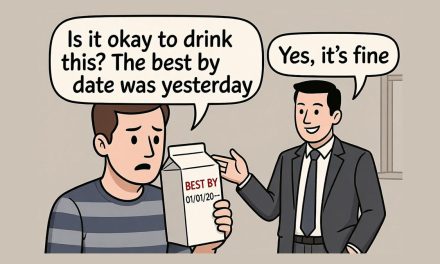
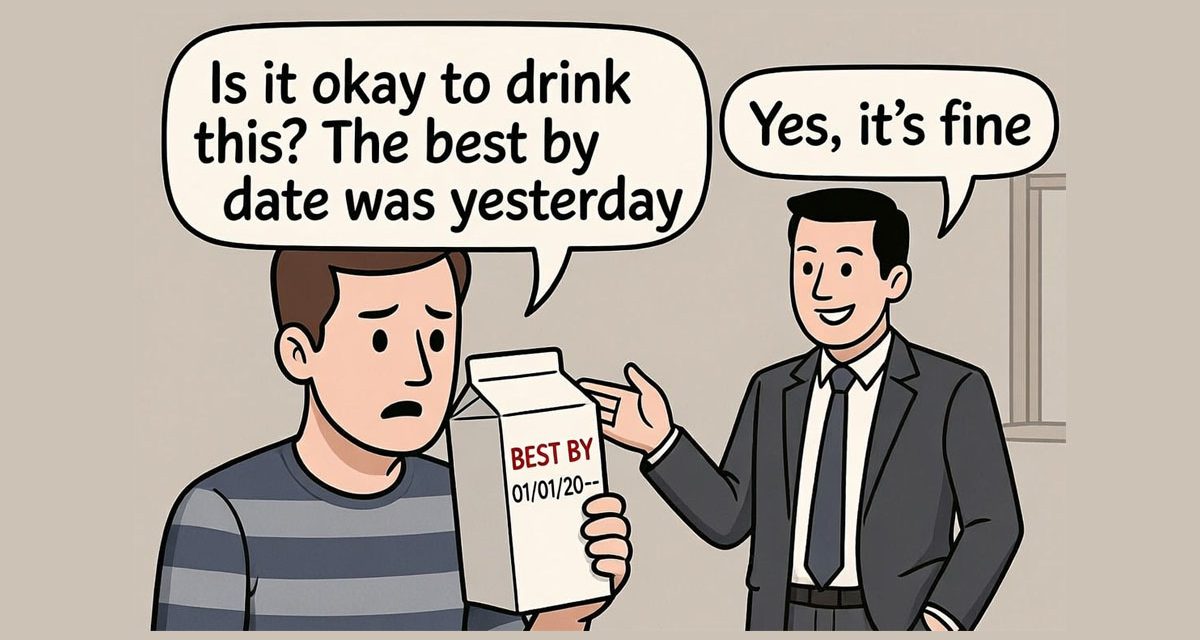
Many folks act like on that date, the food inside the package immediately turns into arsenic. Forty-three percent of American pitch food based solely on the “best by” date. I am on the opposite side of the gastronomical world. I never bother to read those dates when purchasing anything – and very rarely when I go to use a product.
Sometimes I will give into curiosity concerning items that may have been on the shelf since Ronald Reagan was governor of California. If I find something with a very old “use by” date, do I pitch it? No. Some items last for years beyond those termination dates –stuff like rice, pasta, items with more salt (a preservative) or sugar.
I have long relied on the tried and true methods to determine whether food is good, a bit off or beyond hope. It is the human senses – look, smell, taste (sometimes) and feel. The good news is that most foods that have gone bad are still not dangerous. They do not cause illness or worse. The most dangerous situations are often not the food itself, but from parasitic infestation – and that can occur in foods that look fresh.
The imposition of the due dates has caused a significant increase in the waste of perfectly good food. We Americans waste approximately 40 million tons of good food every year — by consumers and retailers. That is an astounding 25 to 40 percent of the entire food supply. In economic terms, the wasted food has a value of up to $325 billion. The portion of discarded good food based on those “best by” dates is estimated to be in excess of 3.5 billion tons at a cost of $20 billion. And this while millions of people around the world suffer from malnutrition and starvation.
If you want to talk about food affordability, it is noteworthy that the average American family trashes from $1500 to $2500 worth of good food each year based on “best by” dates.
Now for a surprise for most folks. Dating food is not a government requirement. Neither the Food and Drug Administration nor the Department Agriculture have a “best by” dating requirement s– although the latter does require a production date and will step in where there is fraudulent labeling.
It is the food manufacturers that put those scary dates on the packages – and to play it safe the dates are long before the food could possibly go bad.
The “best by” dates serve no real purpose except to scare the wary and the germophobes. You know … those who will not eat raw meat, anything that drops on the floor (no three second rule), or will toss an entire block of cheese the moment a spot of mold appears on the edge. They are often the same folks who swim in waters in which fish poop and people pee. Go figure.
Ironically, the hyper safe and sanitary folks are more likely to get sick from food poisoning because their obsessive sanitary requirements have reduced their immune systems. There is a body of scientific data labeled the “hygiene hypothesis” that suggests that avoiding exposure to pathogens – especially in the early years – weakens the immune system. It is why some Americans may suffer intestinal problems drinking water in foreign nations – Mexico (Montezuma’s revenge), Asia and Africa – and the locals do not.
If you like termination dating on food products, and comply, you might have to thank notorious mobster Al Capone. He called for clearer labeling after his sister got sick from some bad milk. But the manufacturer dating was never intended to be a deadline (no pun intended), but merely a general guide – and not a very good one.
Based on the latest reports, I feel vindicated for my life long – food poisoning-free — avoidance of food warnings. Bon appétit.
So, there ‘tis.



Good article, here’s the numbers behind it: *https://usafacts.org/articles/how-many-people-get-sick-from-foodborne-illnesses/* People do get sick, but more often in eating out than in. Thus, covid actually kept the numbers down, but might have been artifact of hospital avoidance.
Larry is almost right that the Fed does not mandate dates except for baby formula. But the States often do, even Illinois and Florida. Over 40 states and the District of Columbia mandate date labels on at least some food products, particularly perishables like dairy, meat, and shellfish. It varies with: 23 states strictly prohibit selling food past the date, while others only mandate the label itself. The remaining nine states do not require or regulate date labeling on any foods (e.g., New York, which leaves it strictly voluntary). To review your exact state’s legislative requirements use the *https://policyfinder.refed.org/?gad_source=1&gad_campaignid=22271676603&gbraid=0AAAAACdMtWrDuyI5Nw8bUETa49WJ-Qpxw&gclid=EAIaIQobChMIvM7F-OfjlQMV5kxHAR1tpRuoEAAYASAAEgIzufD_BwE*
that details date labels.
Growing up in restaurants working every job there was, I have seen the needle and the damage done; I throw out food at the drop of a hat. Don’t suggest it to others, but that’s just me. I take no risk, but manage well, and not much gets tossed. Like Larry, I follow my nose and use “best by,” “sell by” “use by” dates as directional. I mean 9 months for soda? It’s good for years, just flat. I do find it odd that Larry has never suffered a little food poisoning and just figure he needs to get out more. The numbers are pretty big, and mostly due to eating out.
I was a short-order cook as I entered state college so I got a job in their cafeteria as I needed both food and money. While all of the other kids worked for the college, I was the only kid to work for the state. The kid supervisors hated me in that I could care less about their orders, but the other cooks, mostly blacks who had served in WWII, loved me. The kids ate what we were cooking, I ate what the cooks were cooking, and with our plates of steaks, the cooks and I marched by the kids to our private dining room, no kids allowed. Funny. One supervisor said to me one time: “I know karate” to which I replied: “I know Rufus.” I did the breakfast shift, and pancake day still haunts me. For 600 kids, I made up batter 10 gallons at a time, had three grills going simultaneously, like 36 pancakes. You know those old cartoons where the music goes bump, bump, bump, as the whatever’s march unendingly at the hero finally overwhelming him. I see pancakes in my nightmare. They just keep coming and coming…. Nothing like laying down a three gallon omelet….. Today I am still “the King of breakfast
‘ and the Duke of Lunch.” My Reubens are to die for, potato salads like no other, and can whip up a meal for 40 without flinching, or leaving a mess.
On my first day the boss told me to grab some eggs from the freezer and defrost them for breakfast. So, I grabbed a five gallon can and put it in a hot water bath. Rolling it out, the boss stopped me and asked how I did it so fast, went in shock at my answer, and told me to trash the toxic brew I had made saving hundreds. I have been very careful since.
I also have a strange stomach in that I can eat almost anything, including really hot peppers, but if you whisper “brown” over lettuce, my stomach tells me so. A canary in the coal mind. It may just be in my head, but whatever…
In kitchens, you learn the tricks of the trade like food bleach, perfectly safe, but you can turn brownish lettuce back to green with just a dusting. Actually you can make bad look good so you do need to be careful. Lemon on fruit slices is similar. You learn that chaffing dishes turn eggs green; no issue, just ugly looking.
In my career, I was on the road 25-50% of the time and have some memorable events. Once in San Fran, I was taking the red eye home and had one last dinner alone on a very successful trip. So, I march down to the wharf, found the oldest fish house there, as a walk-in, they sit me at the BEST table overlooking the bridge at sunset and I am so pumped up, I make the mistake of saying so to the server and telling him, get me the best fish you can choose before I fly home (aka I won’t be back). About 20 minutes into my flight, I get that feeling…. Thank God the plane was not packed because what I was packing had to depart. Even in pain, I laughed at my demise. Usually in travel I go with no-sauces, and a few other tricks to lower risk. A lot of steak or burgers, medium well. Once, I was speaking in San Antonio in a converted multi-story bank building turned conference center. When I got there, they said my room was taken so they booked me on the Riverwalk in a fancy place overlooking the walk, with New Orleans like wrought-ironed, French-doored, porches where I could look out at “my people” ten feet below on the walk. I was so excited, I forgot, and ordered something with a white sauce. The next day, during the talk, oh no, I really need a room at this conference center. I finished, ran to the head, and then waddled out where no cabs were waiting. I waddled on, finally finding a cab half a block later, hurried home, just made it, and was down for the count for a night. I was still laughing at what I had caused as I ate my medium well burger later that night.
Like I said, I have seen the needle and the damage done so I do tend to minimize risk and trash early. I agree with Larry but note that tainted food offers an experience worth missing, even if you know it won’t kill you.
My mother played on the edges never throwing out food and famously stating “I haven’t killed anyone yet,” to which the kids replied, “but how many have you wounded?” I still find it strange Larry has never suffered from food-borne pathogens. Lucky guy. And yes, food dating is guidance, not law.