





What’s Behind the Covert CIA Operations against Maduro?
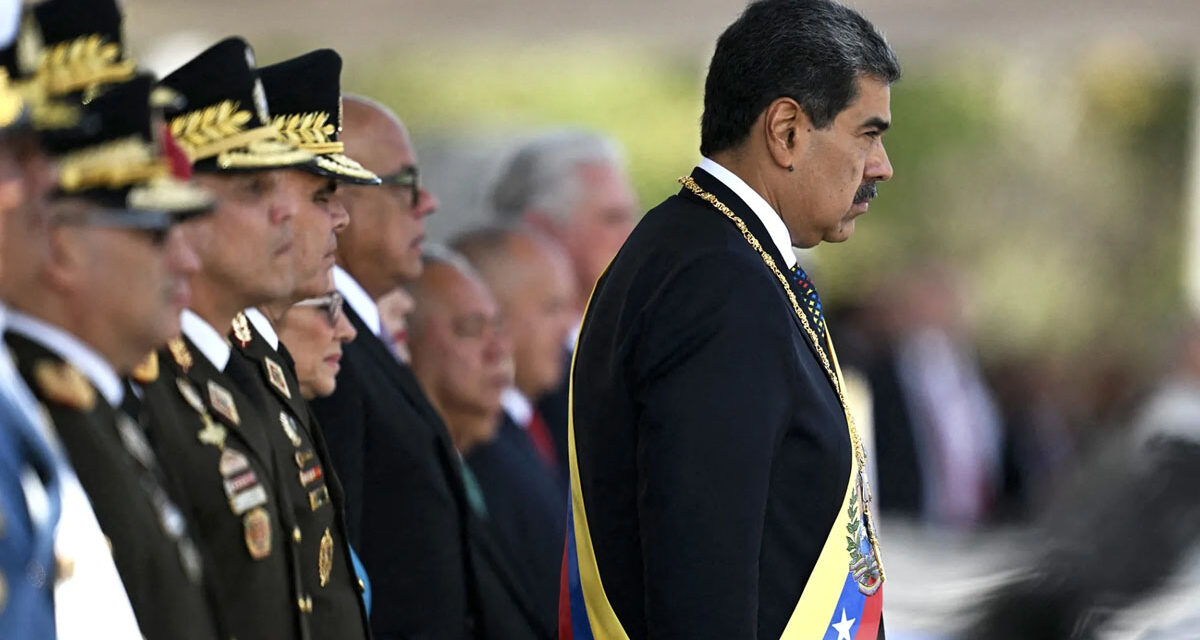
Are President Trump’s military attacks on Venezuelan boats in the Caribbean and Pacific preemptive measures against what the Trump administration calls narcoterrorism? Or is it a re-run of the Iraq War playbook to overthrow a leader who refuses to cave to the globalist west? This question leads the analysis of many independent commentators, especially now that the Maduro administration of Venezuela claims to have caught American intelligence in the act of sabotaging the elected government of the country.
This week started with two bombshell news about American intelligence’s covert operations in Venezuela, which were reportedly authorized by the Trump administration a couple of weeks ago (Associated Press, October 16).
On Monday (October 27), media went abuzz with the statement of Venezuelan government on their security forces capturing some mercenaries working for the American Central Intelligence Agency (CIA). According to the statement, the mercenaries captured were working a false-flag attack from waters bordering Trinidad and Tobago, or “from Trinidad or Venezuelan territory itself.” Slamming the alleged US covert operation in collusion with Venezuela’s neighboring states, the statement ended as:
“These are not defensive exercises: this is a colonial operation of military aggression that seeks to turn the Caribbean into a space for lethal violence and US imperial domination.”
Reporting on the Venezuelan claim of foiling the CIA false-flag operation, Raw Story noted that the claim comes as the United States has launched joint military exercises with Trinidad and Tobago. The latter has challenged the Venezuelan government’s claim and demanded proof.
The complete statement of the Venezuelan government was shared by some people on X.
The second story coming out of Venezuela at about the same time ran in media that cited three current and former US officials as well as one source in the Venezuelan opposition. The sources shared details of a US government plan to abduct President Maduro of Venezuela by recruiting his pilot. The plan was mainly coordinated by DHS agent Edwin Lopez who tried to lure Maduro’s pilot Gen. Bitner Villegas, into flying Maduro’s plane to a place where U.S. authorities could capture the Venezuelan president. The pilot was to be rewarded with a hefty sum for his role in this scheme. Ultimately it didn’t work and, as the Associated Press (October 28) put it:
The conversation was tense, and the pilot left noncommittal, though he provided the agent, Edwin Lopez, with his cell number — a sign he might be interested in helping the U.S. government.
The reason for the pilot’s final refusal is said to be his loyalty to his president.
On his show “Redacted,” conservative podcaster Clayton Morris touched on how the US attacks on Venezuela were the initiation of a regime-change war to get access to Venezuelan oil resources. Morris interviewed former CIA official and whistleblower John Kiriakou to discuss America’s plans for Venezuela and “the CIA’s nefarious operations.” Kiriakou opined that the regime change operation is not personally about Maduro with whom the US has worked and bought oil from for years. But now that China is making a refinery in the Caribbean that can refine Venezuelan oil and buy it, the US is intimidating Venezuela to keep the Chinese out of the Caribbean and South America.
Within the elected Republican leadership in D.C., not everyone is onboard with President Trump’s military strikes against the alleged narcotic traffickers from Venezuela. Senator Rand Paul of Kentucky has gone on record questioning Trump’s narrative and called those killed in the Trump admin’s military strikes on the targeted boats “extrajudicial killing.” He went on Fox News to say that what the current American government is doing in Caribbean is the kind of thing you’d expect from China or Iran.



what type of operation it is?
Its a secret, but don’t worry, it will hit the Washington Post as soon as they make a mistake
We don’t need Venezuelan oil (the US is the world’s top oil producer given most advanced extraction technology), but we don’t want Chinese influence (or oil buying) in the Western Hemisphere; nor do we want countries to be complicit in if not actively enabling drug trafficking. Both allowing expanded adversary influence and enabling drug trafficking are actively hostile acts against us. Panama understood that there would be benefits for them if they cooperated in kicking out the Chinese from canal related operations, and consequences if they didn’t. But Venezuela’s Maduro is a nutcase ideologue not amenable to reasonable considerations.
So it’s not about imperialism or globalism, although given our history in South America, one can imagine that it could look like it.