








Funeral of Iran’s Khamanei Echoes With Calls for Death and Revenge Against America
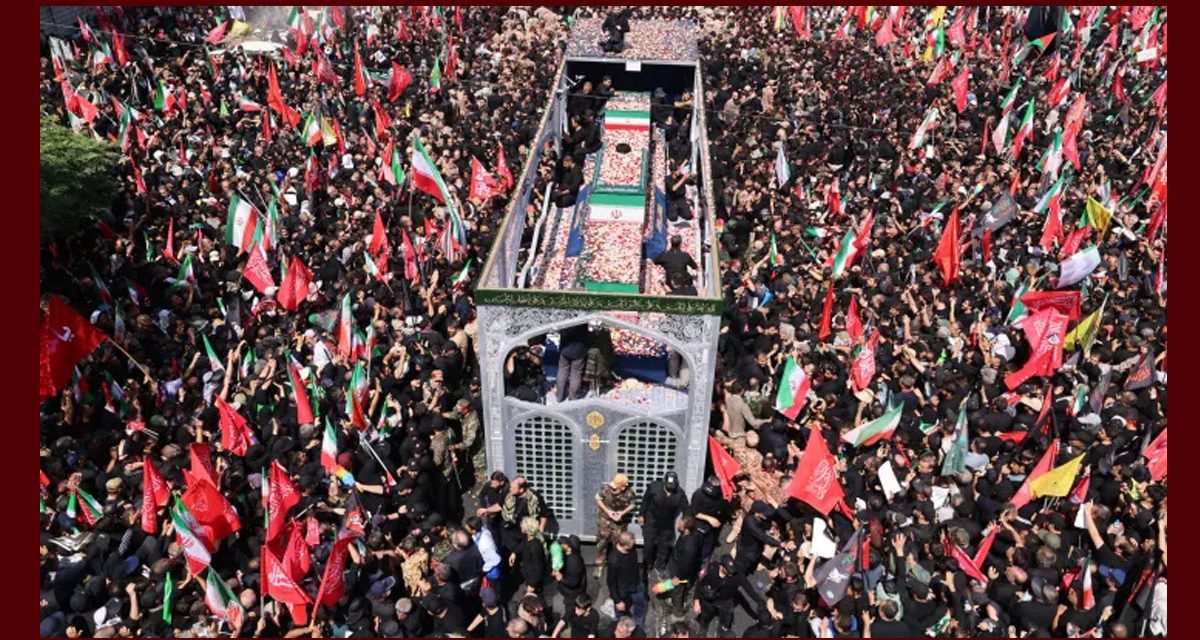
A Funeral Filled With Threats
The funeral of Iran’s late Supreme Leader Ayatollah Ali Khamenei was supposed to be a solemn farewell to the man who ruled the Islamic Republic for decades. Instead, it became a massive display of hatred directed toward the United States, Israel, President Donald Trump, and Israeli Prime Minister Benjamin Netanyahu. Before crowds that stretched for miles through Tehran, speakers, mourners, and signs openly called for revenge and even assassination.
Khamenei, who ruled Iran for more than three decades, was killed at age 86 in a February 28 airstrike at the opening of the recent war between Iran and Israel, with the United States supporting the military campaign. His death marked one of the most significant blows ever dealt to Iran’s ruling regime. Yet as hundreds of thousands and perhaps more than a million mourners gathered over several days of funeral ceremonies, many showed that military defeat had done little to change the revolutionary ideology that has defined the Islamic Republic since 1979.
A Massive Show of Defiance
Iranian authorities organized an enormous funeral procession that stretched through Tehran before continuing to religious cities across Iran and neighboring Iraq. Helicopter footage showed enormous crowds filling major boulevards as mourners reached out to touch Khamenei’s flag draped coffin.
The government promoted the event as a demonstration of national unity and strength while negotiations with the United States remain on hold. Throughout the ceremonies, chants of “Death to America!” and “Death to Israel!” repeatedly echoed through the crowds. Rather than signaling reconciliation after a costly war, the funeral became a public rally centered on revenge.
According to Reuters, demonstrators burned American and British flags, threw rocks at a billboard depicting President Trump, and carried large red placards reading “KILL TRUMP.” Other posters displayed Trump, Vice President JD Vance, Defense Secretary Pete Hegseth, and Prime Minister Netanyahu inside gunsights beneath the words “There will be blood.”
Poet Mohammad Rasouli, who served as a featured performer during the funeral ceremony, repeatedly urged the crowd to embrace revenge. Referring to President Trump, he asked, “Why is the most bastard man in the world still alive?” The question drew loud cheers from the crowd.
Elsewhere during his remarks, Rasouli declared, “Why shouldn’t we kill the one who killed my Imam and my Leader?” He continued, “It is a disgrace for us if we do not kill your killer,” while urging chants of “Death to America” and “Death to Israel.” He also declared that “Trump’s killing is our duty.”
Gholamreza Sabooni, a 29 year old grocery worker attending the funeral, expressed his own desire for retaliation. “I came here to shout and seek revenge,” he said. “They killed our imam, we should kill their leader, Trump.”
Fatima Hassan, another mourner interviewed during the procession, said, “We are not here to say goodbye to him. We are here for revenge. And we will take revenge.”
Sahar Zaraatgar likewise pledged continued hostility, saying, “We are here to show that his path will continue… and soon we will certainly avenge his death against the U.S. and Israel.”
Other participants carried signs reading “#Kill_Trump,” “We will kill Trump,” and posters promising rewards for killing both Trump and Netanyahu. One widely photographed banner declared, “Kill them both like dogs,” while offering land as a reward to anyone who carried out the assassinations. Effigies of President Trump were also displayed hanging from a noose.
More Than Angry Rhetoric
The threats were not limited to emotional slogans shouted by isolated individuals. The calls for violence appeared repeatedly across multiple days of ceremonies through speeches, professionally printed signs, banners, graffiti, and organized displays.
Reuters reported mourners throwing rocks at a giant image of President Trump while carrying signs demanding vengeance. Associated Press photographers documented posters calling for Trump’s death and images portraying Netanyahu in crosshairs. Al Jazeera reported repeated chants demanding revenge against both the United States and Israel throughout the ceremonies.
Meanwhile, U.S. authorities have acknowledged for years that they have monitored Iranian threats against President Trump following the 2020 killing of Iranian General Qassem Soleimani, providing additional context for why many observers take such rhetoric seriously.
An Ideology That Survived the Battlefield
The recent war dealt severe military losses to Iran. Its supreme leader was killed. Senior officials died alongside him. The country’s leadership structure was shaken, and negotiations with the United States continue from a far weaker position than before the conflict.
Yet the funeral demonstrated that many supporters of the regime remain committed to the same revolutionary worldview that has shaped Iranian policy for decades. Rather than expressing regret over the destruction the war brought upon their country, many participants embraced revenge as the proper response.
This may be the most important lesson from the funeral. Military defeat alone does not necessarily change deeply rooted ideology. The author believes that the chants, speeches, and threats heard throughout Tehran should not simply be dismissed as emotional outbursts made during a funeral. They reflected a mindset that continues to glorify vengeance against America and Israel despite the enormous cost Iran has already paid.
Whether these threats ultimately become action remains to be seen. What cannot be disputed is that hundreds of thousands of people publicly cheered calls for the deaths of President Trump and Prime Minister Netanyahu while chanting “Death to America” during one of the largest state funerals in Iran’s modern history. Those images serve as a sobering reminder that although Iran’s military suffered major setbacks, the ideology that fueled decades of hostility toward the United States and Israel remains very much alive.
PB Editor: The interesting part is that Trump went out of his way to minimize casualties, which were exceedingly low. These people are calling for blood, and are angry in the safety of the crowd. But they have not seen real blood.
I believe that these people are a small minority of the Iranian people, but unfortunately the more liberal of the population seem to be afraid to fight for their freedom.



Henry: that's what you said about Vietnam, Afghanistan, and Israel too. I have never rooted against America and you saying…
Mr Danger you are rooting against America again.
Darren, Trump himself has been convicted by a jury of his peers for 34 Class E felonies, falsifying business records…
Darren, probably some possible issues with your plan although I can see Trump going for it given his shoot, ready,…
Harold, just because you can name other criminals does not diminish the fact that Trump is a felon. Never will.…