



















It’s Civil War Inside the Democratic Party
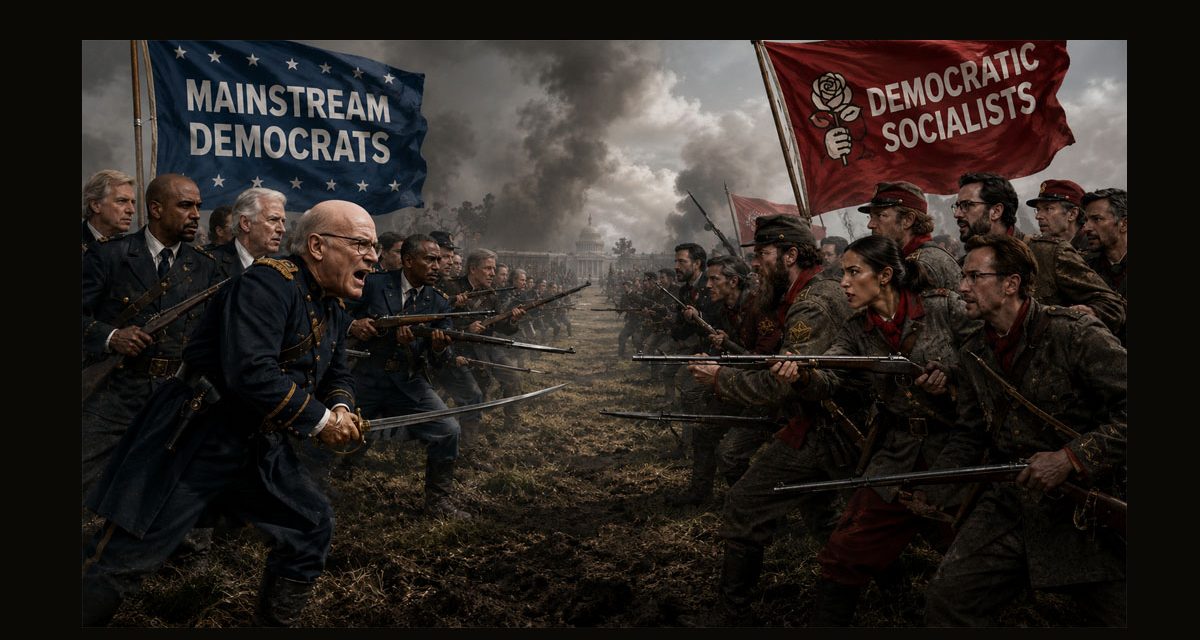
The Democratic Party’s internal struggle is no longer simmering beneath the surface. It is becoming an open political war between the party’s traditional leadership and the rapidly growing Democratic Socialists of America (DSA). Recent primary victories by socialist-backed candidates, combined with increasingly blunt criticism from veteran Democrats, suggest that the conflict has entered a new phase. This fight is only beginning, and unless one side decisively prevails, it could fundamentally reshape the Democratic Party.
The DSA Smells Opportunity
The latest flashpoint came after Democratic Socialist-backed candidate Melat Kiros defeated 15-term incumbent Rep. Diana DeGette in Colorado. The victory prompted an unusually blunt celebration from Democratic Socialists of America national co-chair Megan Romer.
“We told you bro, we f— warned you,” Romer declared, putting the Democratic establishment on notice after yet another socialist primary victory.
Romer has become one of the leading voices for the Democratic Socialists of America, an organization that advocates policies including higher taxes on wealthy Americans, universal healthcare, greater support for Palestinians, and major expansions of government programs. The organization believes the Democratic Party has failed to offer voters a compelling alternative and intends to push the party significantly further to the left.
Rather than slowing down after recent victories, the DSA is accelerating. The organization has already begun surveying all 250 of its chapters to determine which democratic socialist should eventually carry its banner into the 2028 presidential campaign.
“What DSA represents is a real contrast to Democrats who have run the last couple of elections on fear,” Romer said. “You can’t run on that. You have to offer an alternative.”
The organization insists it will not simply crown a national figure such as Rep. Alexandria Ocasio-Cortez. Instead, it says every potential candidate must earn the support of its approximately 110,000 members.
Victories Are Beginning to Add Up
The Democratic Socialists of America has demonstrated that it is no longer confined to a handful of liberal districts.
According to the information provided, the organization endorsed roughly 150 candidates during this election cycle. About 35 have either won primaries or advanced without opposition in states including Oregon, California, Georgia, Pennsylvania, Colorado, New York, New Jersey, Kentucky, Ohio, Texas, and elsewhere.
Recent victories in New York drew particular attention after candidates backed by Mayor Zohran Mamdani defeated more establishment-oriented Democrats, including longtime incumbents.
Even supporters of the movement acknowledge they are attempting to reshape the Democratic Party from within rather than create an entirely separate political party.
The Democratic Establishment Pushes Back
Those victories have produced an increasingly sharp backlash from many of the Democratic Party’s most recognizable figures.
Veteran Democratic strategist James Carville has become one of the loudest critics.
“I actually do think it’s time for Democrats to talk the S-word: schism,” Carville said.
He argued that some DSA-aligned candidates “have no place in the Democratic party.”
Carville became even more direct regarding Democratic Socialist-backed congressional candidate Darializa Avila Chevalier.
“They should not seat her in the caucus,” he said. “She is not a Democrat.”
Carville went further still.
“Start your own movement! … Don’t use the Democratic Party to advance it.”
Former Democratic National Committee Chairman Jaime Harrison delivered a similar warning.
“If you hate the Democratic Party, then please don’t run for our nomination,” Harrison wrote. “Don’t use our resources. Don’t rely on our volunteers. Don’t use our infrastructure.”
Former Chicago Mayor Rahm Emanuel argued that the party has “lost the plot,” saying the socialist wing has focused on making already blue districts even bluer instead of expanding the party’s appeal.
Former New York Governor David Paterson warned that Democrats face something even more serious than losing elections.
“We’d better get that message and turn it around before we become extinct,” he said.
Meanwhile, a coalition of centrist House Democrats argued that the democratic socialists “should not be the face of our party,” reflecting growing concern that the party’s public image is drifting away from its traditional coalition.
House Minority Leader Hakeem Jeffries has taken a noticeably softer tone, congratulating newly nominated candidates while emphasizing affordability and opposition to what he called far-right extremism rather than escalating the internal fight.
How Much Support Do Democratic Socialists Have?
The polling paints a complicated picture.
One Pew Research survey cited in the source material found that 32 percent of Democrats said they viewed politicians identifying as democratic socialists favorably. Among self-described liberal Democrats, support rose to 52 percent. Moderate and conservative Democrats were far less supportive.
Other polling cited in the reporting suggested broader dissatisfaction with capitalism among Democratic voters and indicated that democratic socialists have become increasingly popular among some Democratic voters and leaners.
Regardless of which survey receives greater emphasis, the underlying trend is difficult to ignore. Democratic socialist candidates are winning more primaries, attracting enthusiastic younger voters, and increasingly challenging longtime Democratic incumbents.
These developments represent far more than an ordinary disagreement over policy. They reveal a struggle over the future identity of the Democratic Party itself.
For years, democratic socialists largely worked within the Democratic Party while remaining a relatively small faction. Recent primary victories suggest that strategy is beginning to pay dividends. At the same time, longtime Democratic leaders appear increasingly concerned that the party could lose control of its own direction if the socialist wing continues expanding its influence.
The calls by respected Democratic figures to discuss a “schism,” deny committee assignments, or even refuse to seat certain socialist candidates alongside the Democratic caucus would have been almost unthinkable only a few years ago. Today, those ideas are being discussed publicly.
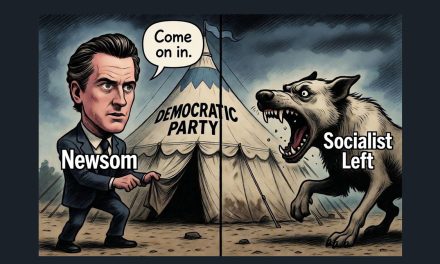
This conflict is likely to intensify as both sides recognize that the stakes extend well beyond individual elections. One side hopes to transform the Democratic Party into a vehicle for democratic socialism, while the other fears that doing so risks alienating moderates and independents who have traditionally been essential to winning national elections.
Whether those concerns ultimately prove justified remains to be seen. But if democratic socialists continue winning primaries while establishment Democrats continue resisting them, this internal struggle may become one of the defining political battles leading into the 2028 presidential election.
PB Editor: It seems that our education system is failing us badly that so many people don’t understand that socialism always fails.
Always.
If the Democrat Party abandons the socialists, then they will lose a chunk of their constituency – an all important younger chunk.
If the Democrat Party embraces the socialists, it may lose the mainstream and stop winning elections.




Yup, thanks to your partisan help, your ability to hate us, not listen to us, never compromise to get things done, we are now officially under stress from the DSA. Internally the issue is Israel and success working with Trump. Moderates have problems getting around that. Your party piles on by basically saying everything we say and do is wrong and we are traitors to our country.
Well, it’s on us, but thanks to you, it seems to work. You normalized Mamdani, perhaps that was the strategy, but it’s going to get frisky in Congress in 2027.