










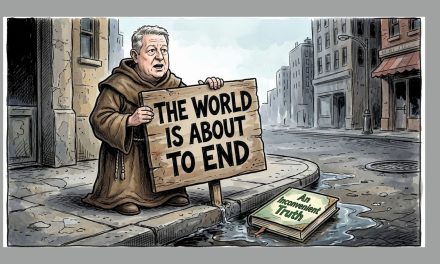



Has Trump Fallen into the War of Attrition Trap?
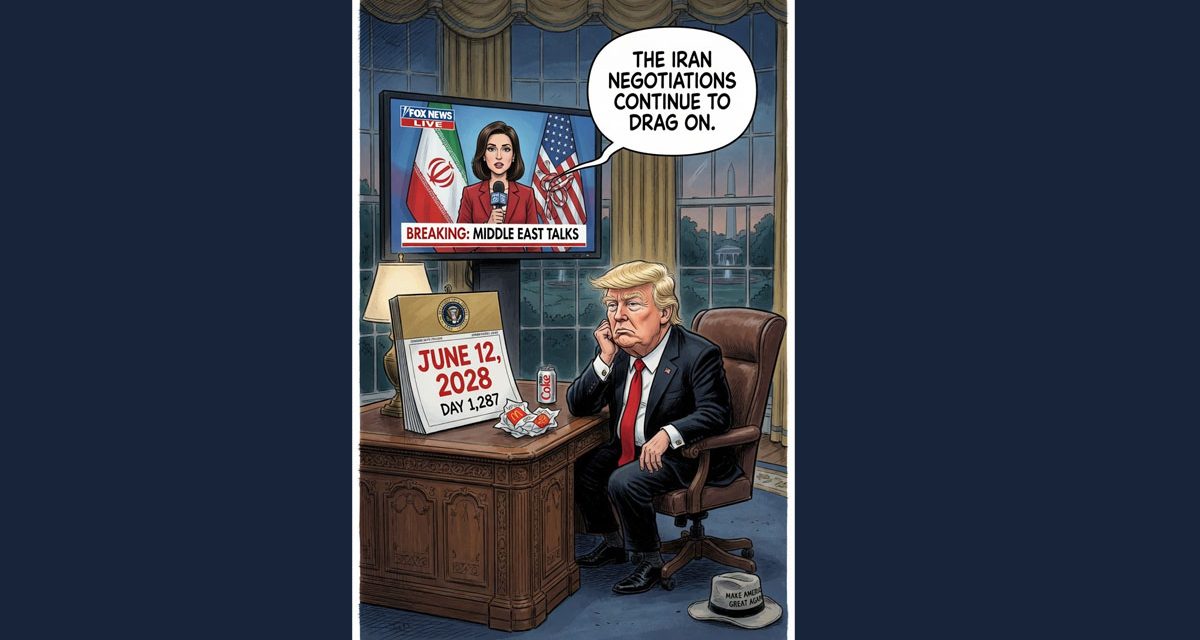
For more than eight decades, the United States has failed to secure outright military victory in any major conflict. The pattern is painfully familiar. America enters with overwhelming force, achieves early success, then succumbs to prolonged negotiations that lead inexorably to withdrawal or surrender. The results have been disastrous. In Korea, the nation remains divided, and the United States now confronts a nuclear-armed Kim Jong Un. In Vietnam, American forces cut and ran, handing the entire country to the communists. In Afghanistan, President Biden unilaterally pulled out and surrendered the country back to Taliban terrorists. In Iraq, the United States walked away before a stable, friendly government could take root, leaving a nation largely aligned with Iran. Since the decisive triumph over Germany, Japan, and the Axis powers in 1945, America has not won a single major conflict. Instead, it has accepted stalemate, defeat, or strategic retreat dressed up in diplomatic euphemisms.
President Trump began his confrontation with enemy powers in a manner that broke sharply from this sorry history. He took decisive, bold, and successful military action against the Venezuelan regime and in interdicting the flotilla of drug runners sailing out of Venezuela. Then came the strike on Iran’s nuclear program in June of 2025.
After forty-eight years of Iranian attacks on United States citizens and assets, after a slow-motion war waged against America, Israel, and Western civilization itself, Trump acted without compromise, weakness, or timidity.
The American military, in record time, crushed Iran’s air force, navy, and defense network. It eliminated scores of the regime’s most powerful and malignant leaders. The initial phase of the operation was a masterpiece of precision and overwhelming force. No one could accuse Trump of hesitation or half measures at the outset.
Yet rather than press the advantage to clear and total victory, Trump appears to have paused. The closure of the Strait of Hormuz by Iranian forces appeared to trip him up. That development was entirely foreseeable and could have been preempted with increased military pressure. Instead, he fell back on the tired mantra of “no boots on the ground,” even though boots on the ground may well have been required to topple the regime completely and secure the enriched uranium stockpiles.
Trump then called for a ceasefire. Most serious military strategists will tell you that one does not call for a ceasefire when the enemy is on the run and its command structure lies in ruins.
He set a two-week deadline for Tehran to comply with his demands. When that deadline passed without consequence, the pattern grew disturbingly familiar. Suddenly, it appeared that Trump and the United States were being jerked around by the mullahs in Tehran. The never-Trump radical left began attacking the President by parroting Tehran’s own propaganda talking points. The leaders in Tehran are now making a mockery of American resolve.
This situation bears an uncomfortable resemblance to the failed negotiation strategies pursued for decades by left-wing diplomats and politicians. These are not the “doves” of popular analogy who seek peace through prudent restraint. They are weak-willed and misguided “chickens” who would rather negotiate their way to defeat than commit to the hard work of winning a war.
They prefer endless talks, ceasefires without enforcement, and face-saving withdrawals over the decisive application of American power. The Obama-era Iran deal delayed nuclear ambitions for 15 years – if Iran complied– while leaving enrichment infrastructure intact and ignored terrorism sponsorship.
Biden’s chaotic exit from Afghanistan handed the country back to the very terrorists that harbored those who attacked America on 9/11. The same timid mindset that produced stalemate in Korea, capitulation in Vietnam, and strategic reversal in Iraq now threatens to undermine Trump’s early successes.
The current negotiations with Iran echo every previous diplomatic blunder. Deadlines come and go without penalty. Demands for the permanent elimination of Iran’s nuclear capability and the removal of enriched uranium soften into vague promises and future talks. The regime retains enough residual capacity to threaten the Strait of Hormuz and prolong the conflict. Proxy forces, though weakened, still operate. The mullahs sense American reluctance to finish the job and respond with defiance rather than submission. This is precisely how previous administrations allowed enemies to regroup, rearm, and return stronger. Trump, who campaigned on strength and America First, now risks repeating the very cycle he once condemned.
If the United States does not follow through to total victory, the consequences will mirror every prior failure. Iran will reconstitute its nuclear program. Terrorism sponsorship will resume. The region will remain unstable. America’s enemies will conclude once again that the United States lacks the will to win – is a paper tiger.
The pattern must end. Bold initial action is not enough. Decisive follow-through is required. Boots on the ground, if necessary, must not be ruled out. The enriched uranium must be removed. The regime must be rendered incapable of future aggression – even if that means regime change. Anything less repeats the old, failed policies that have cost American lives, treasure, and credibility for eighty years.
It is time to break the cycle. It is time to win a just and necessary war.
So, there ‘tis.




OK, now Larry’s spinning wheel o objectives is back to unconditional surrender. The circle of ever-changing objectives continues.
He calls em as he sees em: “For more than eight decades, the United States has failed to secure outright military victory in any major conflict.” Actually, our military has many victories in many major conflicts.
And he blames the left. Even for Afghanistan, he claims: “In Afghanistan, President Biden unilaterally pulled out and surrendered the country back to Taliban terrorists.” Gee, I coulda swore Trump surrendered, set the timetable for pullout which allowed the Taliban plenty of time to prepare for the Trump-determined-withdrawal with a terrible outcome. Yes, Biden failed in his implementation of Trump’s plan, almost as if set up, but he failed nonetheless on his watch. But Trump initiated the withdrawal.
I coulda swore Nixon left Vietnam, and Horist working for Nixon should of remembered.
DIdn’t the Republican Eisenhower, a general who forgets more about war than Larry can ever know, draw us down in North Korea?
And Iraq is another example of: “This situation bears an uncomfortable resemblance to the failed negotiation strategies pursued for decades by left-wing diplomats and politicians. These are not the “doves” of popular analogy who seek peace through prudent restraint. They are weak-willed and misguided “chickens” who would rather negotiate their way to defeat than commit to the hard work of winning a war.” WOW, just wow as the first Bush met his objectives and the second Bush backburnered Afghanistan to create the quagmire of Iraq over the lie of WMDs.
Now Larry is calling for full-scale war, WWII style unconditional surrender and all that it entails. We firebombed the living fuck out of Germany to obtain that; we dropped two nuclear bombs in Japan to obtain that, we lost over 400,000 of our kids in WWII and Larry wants that for Iran’s killing of 600 of ours. Then he wants us to reconstruct Iran like we did post WWII for over 1 trillion dollars in today’s money.
He wants unconditional surrender which calls for boots on the ground, grinding out a door-to-door urban campaign followed by years of police action to continue to hold the country while we create a puppet government to force Iran to our way of life. How many kids die to get Larry satisfaction for our 600 fallen?
This is a completely insane idea. Especially given Trump’s defunding of the Ukraine war, he is the last man I would trust to annihilate the Persian ethnicity.
The JCPOA was working; it is the greatest nuclear non-proliferation treaty in the history of the planet. Your guy tore it up and now, here we are, by his hand. Larry loves his policies, except Larry calls for full scale war to solve international issues to his liking. He wanted Iraq, Afghanistan, Syria, and Gaza too.
Eisenhower said: “I hate war as only a soldier who has lived it can, only as one who has seen its brutality, its futility, its stupidity.”
Grant on war: “I have never advocated war except as means of peace, so seek peace, but prepare for war.”
Churchill is probably more on Larry’s side: “In war as in life, it is often necessary when some cherished scheme has failed, to take up the best alternative open, and if so, it is folly not to work for it with all your might.” Twas the English that preferred night-time carpet bombing and firebombing for maximum civilian terror; the US proved daytime, precise tactical bombing of military targets is the superior strategy as experts concluded that England never did break German morale.
I disagree with Larry that we should wipe out Iran and Iranians in order to punish them for our 600 fallen. I hope Trump can negotiate a settlement that’s a win-win for the world. I am pretty sure he is getting closer and it will look like the JCPOA. I have no issue with what we did as a message re: our 600 fallen, with the message that we will do it again, harder, if they don’t change behavior. I do not want to lose our kids in order to free Iran, destroy Iran, or whatever Larry’s/Trump’s next top priority objective is. I am not sure how many dead we need to feel justice is served. I don’t need regime change, I don’t need to spread American freedom to Iran, or anything else. I just need them to stop hurting Americans.
Frank Danger … Frankie, Frankie, Frankie. You try so hard to be the evergreen critic and fail so miserably.
You contest my claim that America has not had a victory in any major conflict since WW II. You say there were many. Name them. And remember I am not talking about minor one—time military actions as in Venezuela, Panama, Pakistan, etc. We did not get a win in Korea Vietnam, Afghanistan, Iraq, Syria.
In terms of the awful surrender in Afghanistan, that is all on Biden. Trump initially called for a withdrawal by a certain date (which I strongly criticized). He later withdrew the date because the Taliban were not living up to the agreement. Now this is the critical part, and I will put it in big letters so maybe evn you will understand the point. BIDEN WAS IN NO … NADA … OBLIGATION TO WITHDRAW. HE WAS NOT LOCKED INTO ANY DATE OR AGREEMENT MADE BY TRUMP. HE COULD HAVE CONTINUED THE FIGHT. HE COULD HAVE ESCALATE U.S. INVOLVEMENT. Trump never “initiated” a withdrawal. He only proposed on in an agreement. Trump’s agreement was not a treaty and could be ended by Biden as easily as Trump ended the Obama Iran agreement.
And what is all that crap about Korea and Vietnam being ended by Republicans. You are so jade by partisan thinking and obsessive anti-Horistism that it addles your brain. I see no difference in who ended the wars. We did not win in Korea and Vietnam and THAT is the salient fact. I was not making a partisan statement. Just the objective facts. You know, the facts you ignore, twist or make up.
And you description of how things would unfold if we went in and finished the job in Iran is pure pulp fiction. At the time we bombed German and nuked Japan that were both dangerously formidable miliary forces with the command structure in place. Iran’s miliary is mostly crushed and the command structure gone and industry. Germany and Japan had allied nations in the fight. Iran has none.
So … your proposal is back to off on Iran. Let them reconstitution the terrorist machinery … go nuclear … and continue to more Americans and millions of others. You were obviously trained that the Chamberlain School of Diplomacy. Since diplomacy has not worked for 47 years, it that your answer to Iran’s terrorism and nuclear ambitions. You know the pop definition of insanity – doing the same thing over and over and expecting to get different results.
Horisty, while my writing is fair, spelling and grammar atrocious, I’m a fairly precise guy, years of working with labroids trained. If you read carefully, comprehend fully, you will see I said: “Actually, our military has many victories in many major conflicts” in response to your very narrowly constructed: “For more than eight decades, the United States has failed to secure outright military victory in any major conflict,” the key constraints being “outright military victory,” and“major conflict.” Outright and major being somewhat vacuous in definition. I took it to mean unconditional surrender. My response refers military victories only. Examples: Gulf War under Bush. We kicked Iraq out of Kuwait in 42 days with few casualties and specifically, the Battle of 73 Easting that showcased our use of GPS and thermal imaging. I guess you would call Operation Neptune Spear that got Bin Laden for justice for the 9/11 attacks an in and out, but seems like a major victory in a major conflict to me. Just not outright military victory, whatever that means. The first boot of the Taliban from Afghanistan was a major military victory; it went downhill politically especially after we re-entered Iraq. That was the subtle part of my point. You said our military fails is achieving outright military victory; my response is our military wins many victories. The outright victories require a political solution and that’s where we fail. Like this Iran war of choice, often because of unclear, confused, evolving, or misstated objectives triggered by some sort of lie, AKA — WMD’s, nukes in two weeks, the Afghans will die to hold democracy.
On the pullout from Afghanistan: BUSTED. When I covered that here years ago, I noted Trump’s actions. You are wrong: he did not formally change the date of withdrawal from May 1, 2021 as stated in the DOHA agreement of February 2020. Yes, the Taliban broke the agreement, but the only action Trump did in response was a feckless bombing, released Taliban fighters from prison, so they could attack our soldiers again and extracted more American troops than Biden ever did to lower our strength before the final extraction.
When I initially covered that here, I noted that, IMO, Trump set Biden up, first by announcing a formal extraction date way in the future, and second by pulling out the troops before they were ready for the final extraction. I also stated that while, IMO, Biden was set up, the final extraction was on Biden’s watch. Biden’s fault, he should not have been blindsided by Trump’s actions.
Trump gave them time to plan, prepare, etc. He added Taliban and Al Qaeda resources. He lowered our strength to bare bones by the time Biden took over.
Trump did not formally change the final withdrawal date established in the 2020 Doha Agreement, which set a deadline of May 1, 2021 as stated in the DOHA agreement. In October of 2020, to bolster his chances to win the election, he tweeted “home by Christmas” but forgot to tell the military who did not change the plan.
After his election loss, Trump signed an unclassified memo ordering an immediate withdrawal of all forces from Afghanistan by January 15, 2021 (five days before his term ended). This “immediate withdrawal” order was rescinded one week later and replaced with an order to draw down from 13,000 to 2,500 troops by mid-January, which was carried out. I call that a premature extraction and withdrawal. During this time, the Taliban continued attacks, and even added Al Qaeda terrorists into their leadership. Trump’s DOHA specifically stated they could not do that. The US strikes the Taliban in retaliation in Helmand Province, aka nowhere and nowhere else. In March of 2020, Trump lets 1,500 Taliban fighters out of prison to rejoin their forces. As the Taliban increases attacks, Trump pulls more troops out. By November of 2020, then Senator Rubio states that Afghanistan, under Trump, is “a Saigon-type of situation.” The Taliban keeps attacking, Trump keeps withdrawing troops down to 2,500 by January 15th, 2021.
Biden then extends the date from May 1, 2021 to 9/11/2021 but ultimately pulls out by 8/30/2021. Trump had never formally changed his date from the original agreement. Biden knew the Taliban continued attacks, that they were supported by Al Qaeda, but our troop strength was at it lowest since 2001, etc. but I guess he gambled that the risk of leaving was lower than the risk of resuming our forever war when it was obvious Afghanistan was not a democratic republic, not even aspirations of that. As I have always said, the extraction was on Biden’s watch, he should have seen the set-up, the Taliban strength, and his own strength in region. Trump set the stage and Biden walked right into it.
As to Biden not locked in, you are correct. However, we Americans live by a code, a code of honor, where we do what we say, we honor our commitments, we tell the truth, or at least we strive to. We said we were leaving, one way or another. Biden could have easily said the Taliban did not honor their commitment and restarted the war, but that meant bringing back thousands of troops over 22,000 boots just to get to 2020 strength. As you say, “the awful surrender” is on Biden but the die was cast by Trump, and the stage in exfiltration was set and mostly accomplished by Trump pretty much putting Biden in a box. Still on Biden’s watch, he should have known better.
“And what is all that crap about Korea and Vietnam being ended by Republicans.” Uh, those are the Presidents in charge during our withdrawals/stalemates. Eisenhower in Korea and Nixon in Vietnam. “I see no difference in who ended the wars.” So why bring it up?
“Trump’s agreement was not a treaty and could be ended by Biden as easily as Trump ended the Obama Iran agreement.” Hmm. How did that work out?
”Germany and Japan had allied nations in the fight. Iran has none.” Can you say Russia? China still buying oil. Can you say: Hezbollah (Lebanon), Houthis (Yemen), Hamas and Palestinian Islamic Jihad (Palestine). BUSTED. It’s 90M people in a place twice the size of Texas that has over 30M residents. So, like taking 2 or 3 Texas’s in size and population.
“So … your proposal is back to off on Iran.” I have stated that I am OK with what Trump has done so far IF his objective was to gain a modicum of justice for our 600 fallen over the past 50 years. Too bad that’s not how he frames it.
My recommendation is to 1) negotiate a deal similar to the JCPOA that ends the nuclear, allowing global monitoring, etc. 2) be sure they understand peace is commensurate with their ending their terror war by proxy or else we unleash death-from-above again, only twice as bad. I am pretty sure at this point, that’s where we end up except Trump will say the new JCPOA is better in every way. I can live with that too.
Is your proposal to wipe them out, dig up the uranium, get an unconditional surrender, and then police them until they look like us? Pour in a trillion dollars from our taxpayers facing $4/gal gas to free the Iranian people from authoritarian theocracy? A democratic republic that honors the force of law with free and fair elections? How long, how much, and how many patriots must die for you? How many Iranians need to die to satisfy your justice for our 600 fallen. After assassinating their general, their entire leadership, some of these killings right after peace talks, and then bombing 150 schoolkids, killing thousands of innocent civilians, I really don’t see a WWII type victory in all this.
Frank Danger … Answer the essential question. Was Biden obligate to follow the Trump agreement? Just in case you are having a problem grappling with that simple question, the answer is “no.” Ergo, it was Biden’s decision to surrender … period. Just like Biden reversed a lot of Trump’s Executive Orders. And of course you failed to note any MAJOR military conflict we won since WWII. I made it clear is was no address quickie in and out incursions, such as capturing Maduro or killing Bin Laden. And with regard to you last statements. Iran is a MAJOR military operation, but not WW II. And wed have not won it … yet. And maybe we will not. Just another in the series of American loses from those more devoted to appeasement than victory. It has been that approach that has enabled Iran to spend 47 years as the world’s number one terrorist nation.
Exsqueeze me oh petulant one: did you forget the magic word: please? I did answer it:
“As to Biden not locked in, you are correct. However, we Americans live by a code, a code of honor, where we do what we say, we honor our commitments, we tell the truth, or at least we strive to. We said we were leaving, one way or another. Biden could have easily said the Taliban did not honor their commitment and restarted the war, but that meant bringing back thousands of troops over 22,000 boots just to get to 2020 strength.”
I already acknowledged your point that he could have torn up Trump’s agreement. But our code is to honor commitments to allies and even enemies internationally. We don’t tarnish the American brand by tearing up agreements, having peace talks followed by taking out the opposition, dumping on our NATO allies, or stopping agreed-upon payments for the UN. That may be BAU for you; not us.
These actions of yours have weakened our alliances by loosing the trust of our allies enemies alike as you extinguish that shining light upon the hill.
EO’s are not international agreements, they are not even law. It’s a non sequitur piece of faulty logic and fake comparisons. There is no equivalency except in your spin.
I said, ultimately, it’s on Biden’s watch, please comprehend that for the fifth time.
I listed a number of major military victories in many major conflicts after rephrasing my answer due to your narrow construction designed to serve your spin. If you comprehend the 1977 Additional Protocols to the 1945 Geneva Convention, you can see that the concept of “unconditional surrender” that you narrowly construct your comparison to is pretty much rendered impossible by the Additional Protocols, especially dealing with civilian vs. military infrastructure. It was a bridge, pun intended, too far even for Trump (or maybe the military just said no since illegal orders are to be disobeyed.) We will never know. IOW, you have defined something that cannot be. So, I rephrased my answer and as far as I can tell: it stands.
FYI: I disagree that Bin Laden’s death is not the end of a major military conflict as noted in my post. But I understand and respect your viewpoint on it.
Your turn: I just proved Trump did not change the timeline as you alleged he did. Can you step up and acknowledge your error in fact? Or prove me wrong? I am betting: crickets!!
Frank Danger … You are getting nuttier by the moment. LOL What a crop of crap. Where did not find that “code of honor” LOL Presidents routinely undo what predecessors have done. Only actions that a codified by congress are immune. That is the only code I have seen in Washington. I think a future President is going to undo all those things trump named after himself — as they should. Trump initially wanted US troops out by Christmas of 2020. He later extended that date to May 1 2021. Biden then extended it to April 1, 2021. What? Biden did not follow through on Trump’s date. What happened yo your Code of Honor? Actually the Biden move proves that he had 100 percent ownership of the disastrous surrender, Dare I say BUSTED? LOL I hope you did not bet to much … maybe just your credibility.
“You were obviously trained that the Chamberlain School of Diplomacy. Since diplomacy has not worked for 47 years, it (sic) that your answer to Iran’s terrorism and nuclear ambitions.” That has got to be one of the stupidest things you have ever claimed. Then again, you admit your bias right in your banner: news from a conservative perspective is not even news —- that’s called opinion, not news. A fractured fairytale by definition. And you make money on said bias. Chamberlain my sweet, white, redneck, ass.
I am all for kicking ass when ass kicking is called for: more ass kicking than this guy. Ass kicking on par with you or greater. The difference is I also believe in walking softly with the big stick and realize when your the biggest lion in the jungle, you should act like it and not just beat up everyone who pisses you off. If I say go, I say go whole hog, level the place, fuck civilian infrastructure — it’s military too in my mind, just don’t drop em on civilians and hospitals. But Sherman was right, burn a path to the sea.
The difference is I don’t send our kids in on a whim, a feeling; I want clear, concise, objectives and goals. Especially in today’s world where unconditional surrenders seem to be a thing of the past, by definition. I knew a guy born in North Vietnam. His parents had money, they moved South and just kept moving. He related a story how, when five or so, he would be asleep, lifted from his bed and deposited on the floor from the US bombs. He got up and got back in bed falling asleep. I realized then that our military was stronger, better, etc., but we were never going to beat these guys unless we killed them all. That’s modern warfare made even stupider by the fact that if we use our bestest weapons, there is no more Earth —- at least as we recognize it.
So yeah, I favor the in and outs, sending a message, attempting behavior modification over extermination, or worse yet — a police state we create which is a slow death for all.
I know, I know, 47 years of terrorism by proxy, 600 dead. But what happened recently in Iran? The JCPOA is the greatest nuclear non-proliferation treaty ever completed in the history of the world. PERIOD. Name a better one. Name another one. Name what was so terribly wrong with it. It was working. If we had stayed the course, perhaps we could have ended the terrorism by proxy as well, ended the ballistic missile program, who knows. Your reasons to want changes are mostly valid, but not unworkable, and not worthy of burning the agreement without a equal or superior alternative. History has shown sanctions were not that. And then you start the sneak attacks assassinating generals and even their entire government demanding unconditional surrender.
“Chamberlain School,” I love it. Apparently, you don’t have a clue who I am.
I quoted Eisenhower, Churchill, and Grant; one hawk and two pragmatic men who thought the best war was the one avoided. I stand with them. What’s your problem with that, them, and my opinion? Grant was known as The Butcher and Eisenhower is responsible for D-Day, the largest air, seaborne, and amphibious, invasion in history. Designated Operation Overlord, it involved nearly 7,000 naval vessels, 13,000 aircraft, and over 156,000 Allied troops landing on the beaches of Normandy, France, to begin the liberation of Western Europe. My family had a dozen+ sons, fathers, and husbands in that War. We steamed to Pearl, got hit in France, left one in Italy, flew the Berlin Airlift, worked to keep the Panama Canal open, and more. My Irish side went, my Slovak side went, our English side went and the Italian side went back behind the lines to protect family at home. Both our fathers lost their first wives while over there. I did not serve, but I get it: I am a son of WWII who came of age during Vietnam. I know first-hand growing up with PTSD — used to wake my father with a stick; you didn’t want to be within arm’s reach.
IMO, when it comes to war, a good war, then we go all in with clear, concise, objectives and goals. On this war, you put a dozen objectives up, you change priorities daily, and then continue to mouse around about what we are doing over there. Don’t lie about objectives. If it’s war, then it’s to win, win at all costs. You saying Chamberlain to me is a fucking joke. Only a fool to even say it.
Why? Well, for over 75 years since we dropped the big one, we live by a code that we, our allies, all follow, and we punish those who do not. It’s the code that sets the stage and I can say, if it’s war, fuck the code.
I believe in the 1949 Geneva Convention but would disobey, like Grant, Eisenhower, and Churchill, the 1977 Additional Protocols that reduce actions that might affect innocent citizens. If I was King Trump, I would have done that in Iran. If it’s war, I have no issue with taking out bridges, tunnels, highways, power plants, urban centers, and more. I would have done it already IF I was running the first attacks on Iran: if it’s war. Seems stupid to say “unconditional surrender,” and then avoid bombing infrastructure IMO. Based on their actions, I think the reluctant warriors, Grant and Eisenhower, agree with me. Churchill would be more extreme, but after London, we can forgive. Also, IMO, the Iranian people are complicit in this; some may protest, but it’s their country and they have been there for 50 years of terrorism against Americans. These are the people whose effort fund the government who funds terrorism. Don’t bomb them, but have no issue with taking out any piece of infrastructure we can find. How can you bomb them back to the stone age if the bridges stand? Another stupid thing to say if you avoid bombing infrastructure. You couldn’t be more wrong about me and Chamberlain. You are the one often wrong about wanting to go full bore in situations not calling for it. Frankly, I do not see why you lie down on Ukraine in favor of Iran, because that’s what you are doing by opening a second front in the world’s wars. By choice no less.
The difference is that I feel war is the last resort after all other options have been exhausted and you can’t find a war you don’t want to go all in for. I feel that putting our kids at risk to protect our nation is the most serious request we can make. It must start with clear, concise, objectives, goals, and expectations. At different times you have called for regime change, derailment of nuclear ambitions, spreading American-style democracy across the globe, ending terrorism by proxy, and more, changing priorities with each new article. Trump with every utterance. Yours is not a serious plan.
Our kids should not die for lies, for nebulous, ever-changing objectives. The 600 Americans dead over 50 years is worthy of justice, punishment, but is not an imminent threat. Is not 3,500 dead Iranians enough justice? What’s your number to reach your goal? The Uranium is buried deep and we can see if they are digging. There is no imminent nuclear threat, getting a bomb in two weeks is a lie. You can’t get regime change by bombing military assets. How many times have we seen that? Never have, never will, that’s a lie. You can send a message though, you can get some justice for your fallen, and you can repeat if the message is not heard, complied with.
Given where we are, I am for ending this war with some honor, getting something better than before it started, but don’t want our kids to die for bringing freedom to Muslims. That’s not in our Constitution. Don’t want to police Iran until Democracy flourishes, that’s too high a cost in American lives and not Constitutional.
Where are we? We bombed the fuck out of them and they still stand. Hormuz is blocked; Iran has a governor on the world’s economy. The regime is intact or even more hard-lined than before. For our 600 perished Americans, we have 3,500+ perished Iranian soldiers and civilians. We have defanged them, but not destroyed them. Our message to them is confused and mercurial. We have extended our ceasefire a number of times now and offers from Iran seem to be occurring. It’s the path I said we would be on; I hope it continues and accomplishes its goal of ending this soon.
The JCPOA was signed by the Security Council 5+1: US, Russia, China, France, UK, plus Germany and Iran. The JCPOA was working in implementation, could have been made even better over time. Ripping it up with the same old sanctions being your superior alternative did not work, it has never worked almost everywhere it has been tried, and you had no other replacement or alternative. There’s your diplomacy by the stupid, negotiations by the braindead, and now war for a dozen reasons and seemingly no end in sight because Israel offered partnership. Note Israel has no reason to end this war and every reason to continue pummeling Iran with our cover.
You went in with a plan to destroy miliary assets and you did. They destroyed some stuff in the region, including our $350M radar plane, one of only 17, and close the Strait, probably with Russian intelligence. You screwed up with Hormuz and gave Iran and Russia a monetary gift by dropping oil sanctions. Tens of billions. More money to Iran and Russia than Biden ever did; you set the record. And now a cease fire ultimatum we have extended multiple times. Larry wants to restart the fight, go in full bore, take down the regime, dig out the uranium, and then rebuild this Muslim nation in our image. I do not want to lose our kids for that effort and conclusion that will take decades.
Chamberlain? In the beginning, I would have bombed more, hit infrastructure like bridges, tunnels, power, etc. and actually bombed them to the stone ages. I would have had clear objectives: stop your terrorism by proxy or face this again, only harder, and give up your nuclear bomb ambitions. Then I would send in experts, not a couple of rubes from the real estate world, one even working for the Muslims in his day job, but real experts to negotiate a deal starting with the JCPOA as the template —- they signed it once. Trump can get a few enhancements, and let’s call this a day, move on, and monitor their nuclear progress and any future funding of terrorists. If we find either, resume the bombing. Harder. Nailing all elements of infrastructure. That’s my Chamberlain, bitch, suck on i
Frank Danger…. You sure get your undies in bunch. LMAO So thin skinned. So Defensive. So nasty (as usual). I hope your taking your blood pressure meds.
Your use of the Mirror Technique makes for a great betting game. All part of your mantra to pick a fight and then blame the other guys for starting it.
I noted your thin-skinniness a few days ago, and boom—- there it is, mirrored back to me. Larry OC Horist: OC for Original Copy, rarely sees a criticism that he doesn’t mirror back to the sender in a few days. Like clockwork orange, folks, you can make this monkey dance without even putting a coin in the organ grinder’s cup.
And then you said “so nasty” and for what? The word “petulant?” Oh my, the horror of it all. Who is thin-skinned now? You were petulant, want the proof?
So defensive? Yeah, let’s see the proof. Such a good accusation; how can anyone come back on that without looking defensive? Clever trick.
Speaking of proof, I answered you question, rudely put as it was. You ducked and completely failed on yours. Second change: how about; “Your turn: I just proved Trump did not change the timeline as you alleged he did. Can you step up and acknowledge your error in fact? Or prove me wrong? I am betting: crickets!!”
And crickets it is folks: this guy can spew, this guy can spin, but when it comes to stepping up to support his own statements, CRICKETS.
And thanks for asking, yes I am taking the blood pressure meds but proud to say I’m coming in with the results of a 17-year-old. Happy about that.
Frank Danger … More defensive whining. More childish insults. LOL Glad you are taking you blood pressure meds — and that they are working. I Don’t take any because I never needed them. That’s because I don’t let things get to me — especially fools like you. I know you like to believe you do, but sorry. You can file that with all the other bogus things you say and assume about me — and everyone else, for that matter. I always get a kick out of how you always talk ABOUT me, rather than TO me — as if you are reporting to some imaginary audience that values your opinions of me. When I do communicate, my comments are addressed TO you. Did you ever wonder why you do that? Weird. LOL You have proven yourself to be a very defensive, insecure, argumentative individual. I really question how much time you have for a life away from PBP.
Dunger you’re more interested in kissing ass than kicking ass
Penis Dungoff: I’d say bring your ass over and we will see which treatment you get. But never mind; it’s probably way too big and easy a target for kicking. H U G E.