


















China Strategically Encircling India – King in Check?
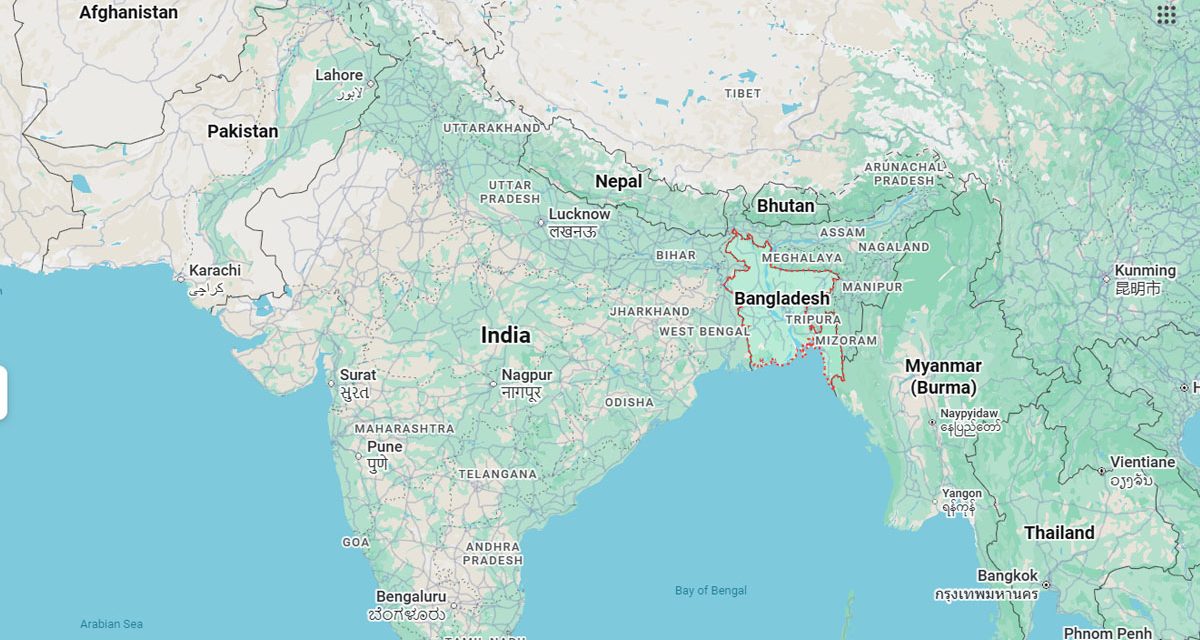
Across South Asia, a pattern is becoming harder to ignore. China is not simply expanding trade or diplomacy one country at a time. It is steadily positioning itself around India’s borders, tightening pressure from multiple directions at once. Recent moves in Bangladesh are only the latest and most visible piece of a much larger strategy, one that critics increasingly describe as deliberate encirclement.
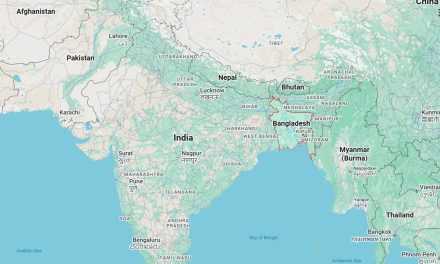
India already faces China directly along a long and disputed Himalayan border. To the west sits Pakistan, Beijing’s closest regional partner. To the east, Bangladesh is drifting toward China amid a collapse in relations with New Delhi. To the southeast, Myanmar remains closely aligned with Beijing. Taken together, these relationships form a rough arc around India that carries serious strategic implications.
The Big Picture: A Ring That Constrains, Not Conquers
Encirclement does not require invasion or open war. In fact, critics argue that China is unlikely to seek a wholesale invasion of India at all. The costs would be enormous, unpredictable, and unnecessary.
Instead, the value of encirclement lies in pressure.
By shaping India’s security environment, China can keep New Delhi cautious, distracted, and inwardly focused. A country that must constantly watch its western border with Pakistan, its northern border with China, and its eastern flank with Bangladesh and Myanmar has far less freedom to project power or take bold positions elsewhere.
In this sense, encirclement is not about conquest. It is about constraint.
Why Holding India at Bay Matters to Beijing
This strategy becomes especially important in scenarios where China faces major international confrontations.
If China were to move against Taiwan, for example, the last thing Beijing would want is a large, capable regional power like India taking a clear and active position against it. Even without direct military involvement, India could apply diplomatic pressure, provide intelligence cooperation to rivals, disrupt supply chains, or tilt regional opinion.
Encirclement helps reduce those risks.
A strategically boxed-in India is more likely to stay cautious, avoid escalation, and focus on its immediate neighborhood rather than broader coalitions. Preventing India from confidently taking sides against China during a Taiwan crisis or other major confrontation would be a significant strategic advantage for Beijing.
The same logic applies to major negotiations, sanctions disputes, or great-power standoffs. A constrained India is a quieter India.
Pakistan: The Constant Western Drag
Pakistan remains central to this pressure strategy. Its role is not to defeat India outright, but to force India to allocate attention, troops, and resources westward at all times.
China’s deep military partnership with Pakistan, including joint weapons programs and diplomatic backing during crises, ensures that tensions never fully disappear. Each flare-up reinforces India’s need to hedge and restrain itself elsewhere.
From Beijing’s perspective, Pakistan is not just a partner. It is a lever.
Myanmar: Quiet Leverage on the Southeast
Myanmar’s alignment with China adds another layer of pressure, particularly along India’s eastern and maritime approaches.
Chinese access to ports, pipelines, and transport corridors through Myanmar strengthens Beijing’s reach into the Indian Ocean while subtly complicating India’s regional security calculus. Again, this is not about Myanmar confronting India directly. It is about narrowing India’s room to maneuver.
Bangladesh: The Emerging Eastern Pressure Point
Bangladesh is where this strategy becomes most dynamic and dangerous.
The collapse of India’s close relationship with Sheikh Hasina removed a major stabilizing pillar on India’s eastern flank. Her flight to India after being ousted in 2024 turned Dhaka’s anger directly toward New Delhi and created an opening Beijing has exploited quickly.
China’s defense agreement to build a drone factory near India’s border is particularly telling. It adds a military dimension to what had previously been largely economic engagement and signals that China is willing to operate close to India’s sensitive regions.
At the same time, China has expanded trade and investment just as Indian commercial influence has stalled. Beijing is presenting itself as the partner of the future while India is associated, fairly or not, with Bangladesh’s political trauma.
Domestic Anger Makes Strategic Drift Easier
China’s advance is aided by a surge of anti-India sentiment inside Bangladesh, especially among younger voters.
Many Bangladeshis believe India enabled Sheikh Hasina’s increasingly authoritarian rule and then sheltered her after a deadly crackdown. Graffiti, protests, and political rhetoric reflect a broader belief that India treats Bangladesh as a subordinate rather than an equal.
This public mood limits Bangladesh’s strategic options. Even leaders who understand the importance of India may find it politically impossible to rebuild trust quickly. That hesitation works to China’s advantage.
Why This Strategy Is So Effective
Encirclement works best when it is indirect.
China does not need formal alliances, troop deployments, or declarations of hostility. It only needs to ensure that India faces enough friction on enough fronts that caution becomes the default posture.
In a crisis over Taiwan, a trade war, or a major diplomatic showdown, even neutrality from India would be a win for Beijing. Encirclement increases the odds of that outcome.
What Comes Next
Bangladesh’s upcoming election will shape the immediate future, but the broader strategy is already visible. Analysts widely agree that Bangladesh cannot fully ignore India, yet worsening relations create powerful incentives to lean further toward China.
China does not need to rush. Time favors the strategy.
If India remains stretched, cautious, and preoccupied with its borders, Beijing gains leverage far beyond South Asia. That is why critics warn that China’s slow, methodical encirclement of India is not about today’s headlines, but about shaping tomorrow’s balance of power.
And in that context, this could indeed be very bad.
PB Editor: In the chess analogy, Trump has taken many of the Russia/China pieces off the board including Syria and Venezuela, and working on Iran, Cuba and more. Taking India off the board would be a major move for China, since it is a major regional power. The great game continues at a rapid pace.




They are messing around in Kamuchea (Cambodia) too and I say they want a naval base on the Indian Ocean.
Wait, I thought we were safer under Trump. What’s going on with that here?