



















Supreme Court Got it Right on Campaign Financing

This writer has been a critic of the 1974 Campaign Finance law since it was passed — and I have expressed my opinion in commentaries several times since.
Restricting contributions to campaigns was a boneheaded idea that never worked to curb the flow of money into campaigns — but has had many unfortunate unintended consequences. The Supreme Court, however, has on key occasions recognized the constitutional defects in these restrictions and has correctly acted to protect core First Amendment rights to political speech and association.
The most significant of these decisions came in Citizens United v. Federal Election Commission (2010). There the Court held, by a 5-4 margin, that the government cannot prohibit corporations, unions, and other associations from making independent expenditures to advocate for or against candidates. The ruling struck down key provisions of the Bipartisan Campaign Reform Act of 2002 that had extended the regulatory regime first imposed after Watergate.
Building on the earlier Buckley v. Valeo (1976) precedent — which invalidated limits on candidate expenditures, including the use of personal funds — the Court affirmed that spending money to express political views constitutes protected speech. The government may not silence voices or ration expression simply because amplification requires resources. These decisions correctly rejected the premise that Congress could engineer a perfectly level political playing field by micromanaging who may speak, how much they may spend, and through what vehicles.
The 1974 law and its subsequent amendments instead produced a system that systematically advantages the super-rich – which explains the proliferation of self-funded candidacies in the past half century. By enabling candidates to spend unlimited amounts of their own money, the regulatory structure — as shaped and limited by the courts — allowed billionaires to immediately outspend less wealthy opponents by wide margins.
That advantage is compounded because billionaire candidates possessed the funds from day one rather than having to assemble them piecemeal from thousands of smaller donors over months or years. They also retained full use of those resources without paying the substantial fundraising fees, commissions, and consultant costs that burden every traditional campaign.
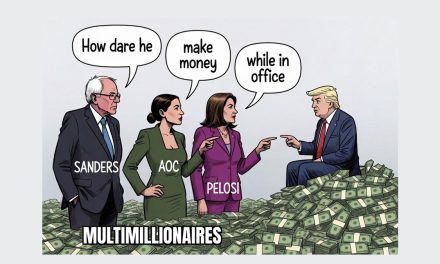
Millionaires and billionaires could — and repeatedly have — deployed sums that no reasonable grassroots or small-donor program could possibly match. As this writer warned decades ago, the 1974 framework produced a steadily growing roster of wealthy self-funded candidates. High-level politics has increasingly become a game played by those who can write seven- or eight-figure checks without blinking. The result is fewer genuine grassroots challengers and more contests decided before most voters have even focused on the race.
The same law created loopholes that generated glaring imbalances between segments of society that could donate or spend more effectively and those that remained tightly restricted. Individual citizens faced low per-candidate caps that limited their direct voice. Organized interests, by contrast, could form Political Action Committees enjoying higher contribution limits and the ability to aggregate support across members or employees. Labor unions possessed structural advantages in mobilizing coordinated member activity that scattered individuals could not replicate under the caps.
Before the 2002 reforms, unlimited “soft money” contributions to political parties for party-building activities allowed wealthy donors and corporations to pour resources into both major parties until public backlash forced a ban — only for the funds to migrate into new vehicles. These imbalances did not eliminate large money; they merely rechanneled it toward those sophisticated enough to navigate the regulatory thicket. Average citizens found their ability to support favored candidates artificially constrained, while well-heeled or well-organized factions retained multiple pathways to substantial influence. The reformers stated goal of reducing the power of money produced instead a system that rewarded regulatory arbitrage.
The restrictions also triggered the proliferation of a confusing and often opaque mix of Political Action Committees, Independent Expenditure Committees (commonly called Super PACs), and what became known as dark money organizations — nonprofit entities that engage in political advocacy without full public disclosure of their donors.
These structures did not emerge in a vacuum. They arose as direct, predictable adaptations to the contribution limits, source bans, and expenditure rules imposed by the 1974 law and later amendments. Rather than cleansing politics of big money, the regulatory regime merely drove it into increasingly complex and less transparent channels.
Voters now confront a bewildering array of funding vehicles, many of which obscure the ultimate sources of support. The complexity serves the interests of compliance lawyers and professional fundraisers far more than it serves ordinary citizens seeking to understand who is trying to influence their votes.
The irrationally and unrealistically low limits on individual contributions — which have grown even more restrictive in real terms as campaign costs exploded with television, digital advertising, data analytics, and staffing — have forced candidates into a state of near-constant fundraising.
In this writers judgment, there should be no limit on individual political contributions. The original caps, only modestly adjusted for inflation over half a century, bear no sensible relationship to the cost of communicating with millions of voters in a modern media environment. Candidates spend endless hours dialing for dollars or attending donor events rather than debating ideas, meeting ordinary citizens, or developing policy. This perpetual money chase heavily favors incumbents with established donor lists and disadvantages challengers and political outsiders.
Eliminating arbitrary caps on what a citizen may voluntarily give to a candidate of his or her choice would restore an element of freedom, reduce the professionalization of fundraising, and allow campaigns to be supported more efficiently by those most committed to the outcome. Meaningful transparency through timely disclosure of significant gifts would still allow the public to evaluate patterns of support.
Finally, the low reporting thresholds for small donations generate enormous lists of contributors that are so lengthy and cumbersome they are never meaningfully examined by average voters. Citizens obtain their understanding of donor patterns almost exclusively from news outlets — and even the media focuses attention on only a small handful of the largest contributors.
Public disclosure of donations remains beneficial, but only large contributions need detailed and prompt reporting — perhaps those of $5,000 or more in an election cycle. Beyond full and timely disclosure of significant gifts, the money should flow freely and voters should decide what weight to assign to particular donations, including their size and source. The current regime of micro-disclosure overwhelms databases and privacy without delivering useful information to the electorate. It substitutes government-mandated volume for genuine transparency.
The Supreme Court got it right when it refused to let the government impose the full menu of speech restrictions dreamed up by left-wing post-Watergate reformers. The 1974 Campaign Finance law and its descendants have not reduced the influence of money in politics. They have entrenched advantages for the super-rich through self-funding, spawned a labyrinth of workarounds that obscure rather than illuminate funding sources, and imposed a fundraising treadmill that distracts candidates from substantive engagement with voters. The proper path forward lies in robust, timely disclosure of major contributions combined with the freedom of individuals, candidates, and groups to support the political speech they believe advances their values. Let the voters weigh the information and render their judgment at the ballot box. Government attempts to ration political expression in the name of equality have repeatedly proven both unconstitutional and counterproductive.
So, there ‘tis.



Geez, Larry saying I don’t know my stuff seems insulting. I would be offended, but consider the source. It’s all…
Frank Danger ....You really do not know your stuff. You argue that the fact that since Congress consents to presidential…
Frank Danger .... good try, but no cigar The usual Frank Danger insults and misinformation. Not all those agencies you…
I have written many a speech for executives; I have constructed more business cases asking for development dollars than I…
Postmarked by election date says they are in the hands of the government on time. The fact that a final…