













The UN Near Financial Collapse (Yawn)
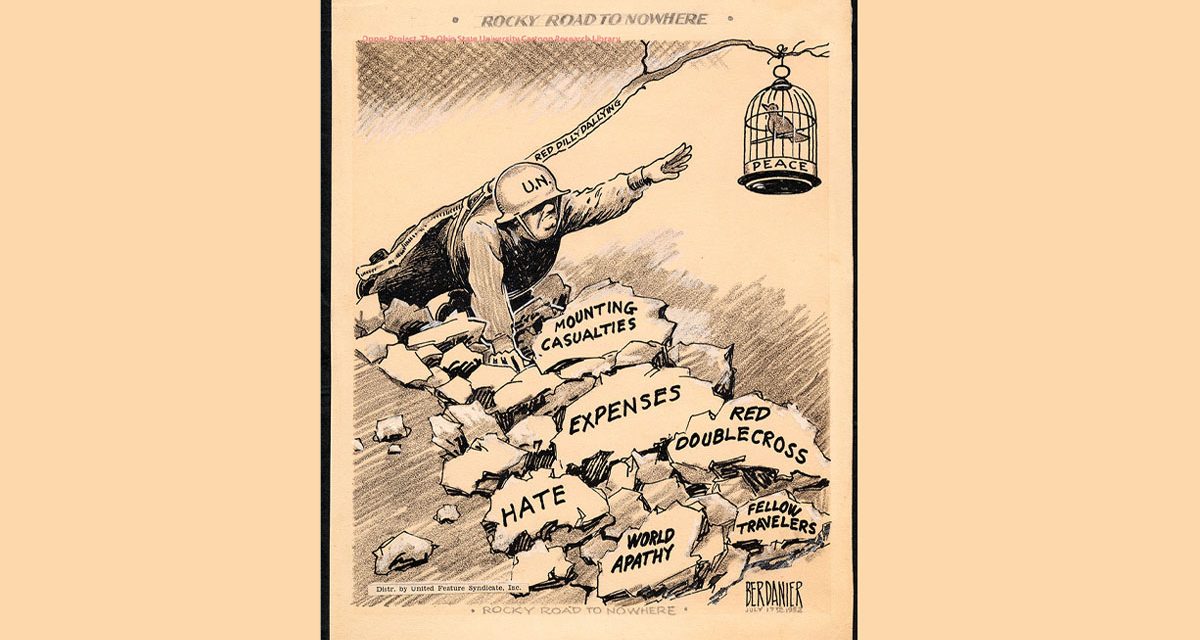
United Nations Secretary‑General António Guterres recently warned member states that the organization is facing an “imminent financial collapse.” To which many people around the world—particularly Americans who have been footing a disproportionate share of the bill—responded appropriately with a collective yawn. The UN going broke is like a career politician announcing retirement — dramatic headline with zero real‑world consequences, and most folks wondering why it did not happen sooner.
After all, the UN has been teetering on the edge of irrelevance for decades. Guterres’ announcement simply gives the bureaucracy a new storyline. The organization was founded to “save succeeding generations from the scourge of war.” Instead, it has spent most of its existence providing a very expensive stage for diplomats to deliver speeches no one remembers and pass resolutions no one enforces. If the UN were a business, it would have been liquidated shortly after the Korean War.
The idea that the UN is suddenly in trouble is adorable. This is an institution that has been in trouble since the Eisenhower administration. Back in the 1960s, critics were already chanting, “Get the U.S. out of the UN and the UN out of the U.S.” That was six decades ago. The only thing that has changed since then is the size of the UN’s budget and the number of bureaucracy-laden agencies it has created to justify its existence.
Meanwhile, the world has continued to be plagued by regional conflicts, proxy wars, and humanitarian crises—many of which the UN has observed with the enthusiasm of a bored security guard at a shopping mall. Syria burned. Yemen starved. Ukraine was invaded. The UN held meetings. Lots of meetings. If talking could stop wars, the UN would be the most powerful force on Earth.
And then there’s the uncomfortable fact that major diplomatic breakthroughs in recent years have happened outside the UN entirely. President Donald Trump, for example, brokered several peace agreements without any meaningful involvement from the UN. The Abraham Accords—normalizing relations between Israel and the United Arab Emirates, Bahrain, Sudan, and Morocco—were negotiated directly between the parties, with U.S. mediation, not UN intervention. Whatever one thinks of Trump, the accords demonstrated something the UN has spent decades trying to avoid admitting — peace can be negotiated without a blue‑helmeted chaperone.
The UN’s defenders insist that the organization is essential for global stability. But if the UN is essential, why does the world look the way it does? Why do conflicts persist? Why do rogue states sit on human‑rights councils? Why does the Security Council spend half its time deadlocked by vetoes? The UN is like a fire department that shows up after the building has burned down, hoses in hand, ready to “condemn” the flames.
Now we are told the UN is facing a liquidity crisis. The irony is rich. The organization that has spent decades lecturing the world about sustainability cannot sustain its own finances. The same institution that demands accountability from member states cannot balance its own books. And the same UN that insists it is indispensable is now rattling a tin cup, hoping someone will refill it.
The United States, of course, has historically been the UN’s biggest donor—paying far more than its proportional share. American taxpayers have been underwriting this global debating society for generations. And what has the U.S. received in return? A lot of criticism, a lot of finger‑wagging, and the privilege of hosting an organization that cannot even pay its own electric bill.
If the UN were to actually collapse financially, the world would not descend into chaos. Diplomats would simply have to find another place to talk. Regional alliances would continue to function. Nations would still negotiate treaties. Conflicts would still be resolved—or not—based on the same geopolitical realities that have always shaped them. The UN’s financial crisis is only a crisis for the UN – not the world.
The truth is that the organization has long been too costly for the results it produces. Its bureaucracy is bloated, its mission unfocused, and its track record unimpressive. If the UN wants to survive, it will need more than another round of emergency funding. It will need to prove that it can actually accomplish something meaningful in the 21st century.
Until then, the world will keep spinning, wars will keep ending or continuing based on real diplomacy, and the UN will keep doing what it does best — talk.
So, there ‘tis.




Since I see the “tis,” tis seems to be Larry. The bottom line here, IMO, is that the world with a UN, even as much a tower of babel and indecision as it is, the art of the deal is to get 198 nations to agree on things.
Instead, Trump stiffs em on the bill, does not pay, and it’s NJ’s Atlantic City all over again.
You guys are great on attacking, demeaning, deporting, burning things down, defunding, destruction and such.
You seem pretty weak on creating, building, and fixing to make things work, to make things better.
Your “art of the deal” is a one trick pony —- using overwhelming power to force a decision your way. You can’t spell compromise, you can’t even spell deal.
The world without a UN is not as good as a world with a UN, even this UN.
The world with a fractured NATA is not as safe as a world with a united NATO.
Trump is making us less safe, not more safe.
And he’s being a cheap bastard to do it, diverting UN funds to his deportation budget that already exceeds many sovereign armies in $$$ spent.
His deficit for 2025 is just under Biden’s in 2024 and way over 2022, 2023’s. When you add in the tariff taxes that we citizens paid in tax and in price via inflation, his 2025 deficit exceeds Biden’s 2024, 2023, and 2022. That’s right, he’s already spending you into the toilet and hiding it with tariffs. Now, put the $2B plus he owes the UN for 2025, and 2026 pending, and his deficit goes up another $2B of your money.
As of February 2026, the estimates for 2025 GDP growth are 2.3%, pretty paltry. So, he’s spending more and earning less, not a MAGA direction. Fact is he went negative in 1Q so his surprising 4+% in 4Q (estimate still) helps, but not enough. Worse yet, China, Southeast Asia, India, all doubled our GDP growth or better as spending and investment move out of the US.
The bottom line is under Trump, our GDP/debt ratio in 2025 stays about even with Biden’s 2024, but much worse than 2023 or 2022. And it’s 120% worse than Trump 1.0 where Trump set the GOAT deficit that only Trump can beat. With your money.
So sure, fuck the world, stiff em on the bills, bitch and moan they don’t pay enough and when they do, take credit and tell them you want Greenland. Now the world spends less here, we buy less from the world here, our unemployment keeps going up, and our solution: cut the ties that bind us for even more isolation. Good deal, huh.
The fact the world economy is better than ours under Trump is something new America has not dealt with. Are you ready? What’s in your wallet, cuz it appears a rainy day is coming and this guy can’t spell umbrella. Hell, he can’t tell Iceland from Greenland.
The TDS is strong in this one. The US has been supporting the rest of the world since WW2 started and its time they pay their own damned bills instead of expecting the US to do it.
Earl: is your answer is destroy it, don’t fix it, they owe us, we can roll or own?
Remember the support after 9/11, who stood next to our kids in Iran, Afghanistan, Syria and more. Who holds our debt.
You can act like we can go it alone, but even the biggest gorilla in the jungle benefits from family. It’s better to build than to destroy. It’s harder to build than to destroy. I thought this was the deal maker, the guy who gets everyone pulling on the oars the same way. Seems more like The Hulk: smash all with his green hands and then take a nap.
Mr. Danger, if you knew anything about history you would know that the UN has been a thorn in the side of the US since its inception. I don’t know if you served your country as I have but i can tell you this, the UN has never done any meaningful peacekeeping since the beginning. When I was in Germany in 1976, my company commander asked me about volunteering for a UN peacekeeping mission. I told him flat-out “No sir”. He asked why and I gave him this response, “I would not be able to stop any violence against helpless civilians because UN rules would not allow me to kill the ones responsible for the killing of innocent civilians. I could not in good conscience stand by while innocent people were being slaughtered”. That being said, he understood and agreed with my decision not to volunteer.
So before you keep praising the UN maybe you should research its history and its do nothing attitude, its drain on the American pocketbook and its berating of America because we stand for freedom and justice.
I don’t know you but I like you.
Mr. Yankee: Thanks for the name respect and I will return same by avoiding your tacky opening as a failure of the education system vs. you attempting to scold me :>) I thought I was clear “that the world with a UN, even as much a tower of babel and indecision as it is, the art of the deal is to get 198 nations to agree on things.” That’s not a glowing endorsement, but an objective view of getting 198 of anyone to agree to anything is tough. I just conclude it’s better to fix, to make better, than to destroy. Given Trump’s only attempt at a replacement in GAZA sucks, and does not even replace the UN security team, I will give him credit for doing better than his exalted ObamaCare replacement, only ten years in the planning, not.
Since you focused on peacekeeping in active war zones, I suggest “if you knew anything….” OK, sorry, tacky back, but the point is the UN has a number of very successful programs that you overlooked well beyond their security mission which you passed on. Trump is about to destroy without a replacement or alternative the following: World Food Programme (WFP): The world’s largest humanitarian agency, awarding the Nobel Peace Prize in 2020. UNICEF (United Nations Children’s Fund) oh my, no more little change boxes, UNDP (United Nations Development Programme): Focuses on reducing poverty, between 2022 and 2024, it helped 132 countries reduce multidimensional poverty and assisted 100 million people with sustainable energy solutions. UNHCR (The UN Refugee Agency): Provides essential, life-saving aid to refugees, internally displaced people, and stateless individuals. WHO – well, we already scuttled that one and now depend on RFKjr to help us. There’s quite a few more, all without replacement or alternative. Just avoid the parenthood planning ones; I get your opinion there.
As you can see, the UN does much more than peacekeeping which might be its weakest program. Point is there is no global replacement offered by Trump; these folks can just die. In GAZA, he has ousted the UN with his new guidance team from Israel, Egypt, Qatar, UAE, Saudi Arabia, Bahrain, Jordan, Turkey, Hungary, Argentina, Vietnam, Kazakhstan, Morocco, Armenia, Azerbaijan, Pakistan, Uzbekistan, Belarus. What a bunch of second string back-benchers. The biggest fox in the henhouse action I have ever seen on the world stage to cut up GAZA and use the real estate for their own developments is my guess. Note though Yankee, that Trump has kept UN peacekeeping there but run by US General Jasper Jeffers who reports to Trump. Even if GAZA goes well, a big if, that still is not a global solution. Apparently the UN peacekeeping team is still good-enough-for-Trump even as he takes the legs out from the UN organization
Point is that I feel “The world without a UN is not as good as a world with a UN, even this UN. The world with a fractured NATA is not as safe as a world with a united NATO. Because of destroying the UN, damaging NATO, destroying WHO, Trump is making us less safe, not more safe. I think expecting the US to go it alone, dump on our allies frequently to make it so, makes the world much riskier for us. And the world is speaking as investment leaves the US and heads to India, China, and Southeast Asia. Our massive debt and growing deficits do not make us stronger either; we may need an ally before long.
I thank you for your service.
As I suspected, ‘ol danger is NOT as bright as he believes himself to be. on the economy, he ignores what has been accomplished and He wants it perfect NOW, and that’s after what Biden did to destroy it. And I guess he likes criminal illegals, since he is more concerned with funding an organization KNOWN to be hostile to the U.S. as observed by several U.S. officials down through the decades. The UN has NEVER benefitted the U.S., period. He speaks negatively to safety, when we are safer NOW both outside and INSIDE the Country. TDS does that to people, they simply hate so much, they’re blind. The well documented attacks by Cinton, Obama and Biden on Conservatives also seem to go right over his head. Such horseshit. So much faith in an organization as the UN that has proven itself worthless to its stated mission.
Good guess: I don’t believe I am bright at all on the economy; I do make a good salary with what I do know, so at least that good. I never said I wanted it perfect NOW. Nor am I a believer in the guy who says it’s the best ever. Hey, did Biden destroy it, or did he just recover from Trump 1.0 damage. Fact is Biden brought down Trump’s GOAT deficit in year one and blew him away on deficit on year’s two and three. He failed on year four while trying to get someone elected. I had hoped he would be better than that, but then again, thought one and done too. Power corrupts, eh.
Trump on year one, did minimally better, as I noted, than Biden’s last year, his worst out of three. And Trump’s deficit tanks against Biden’s years two and three. IOW – Biden tried and made some headway. Trump did not even try. And now, I need not wait to see where that’s going, there’s nothing but red ink pending for 2026. Heck, before the elections, he will probably give you a blank check for your vote.
As to the rest, you seem to have some points, but no facts to support them. For example, you claim that I: “likes criminal illegals, since he is more concerned with funding an organization KNOWN to be hostile to the U.S.” Myself, and every Democrat I know, have zero issue with deporting criminals. You just use that lie to rationalize the harm you do to all those innocents. Obama may have done more criminal deportations than Trump so far (although 8 years). How you tie in the UN to all that mess is magic I guess. Not to mention dancing all over the place in regard to the subject. You, and Trump feel we are safer without a UN and NATO: I, and many experts, disagree. You claim: “The well documented attacks by Clinton, Obama and Biden on Conservatives” and you are right: I do not have a clue what you are talking about. Feel free to clarify, but I would just move on or stay on point with the topic.