












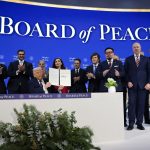


Trump tells UN to keep out of Gaza … and for good reason

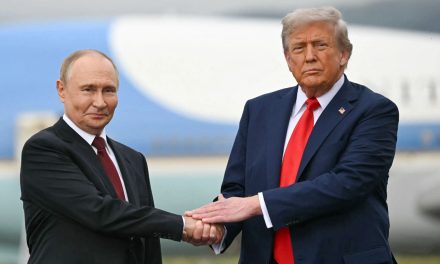
President Trump does not want the United Nations to play any role in stabilizing and reconstructing Gaza following the Hamas-Israeli war. He sees the UN as an ineffective organization that is overly influenced by anti-democratic authoritarian regimes.
Trump and others have long criticized the UN as a lumbering bureaucratic organization incapable of decisive action – seeing it as a forum for empty diplomatic rhetoric. The UN’s history of antisemitic rhetoric and anti-Israeli pronouncements is an additional disqualifier in addressing the issues involving Israel and Gaza.
Trump has proposed the creation of an International Stabilization Force (ISF) — a coalition of Arab and Western nations – led by the United States — that would secure areas vacated by Israeli forces. This force would be tasked with maintaining internal security and overseeing humanitarian aid, regime change and reconstruction — without UN oversight.
Trump’s 20-point peace plan for Gaza explicitly excludes the UN from governance or security roles. It calls for a technocratic Palestinian administration and emphasizes bilateral and regional cooperation — particularly with allies like Qatar, Egypt, and Jordan to rebuild and stabilize the Gaza territory.
Trump’s criticism of the UN is not new or unique – and it goes much further than the current issue. But Trump’s specific reference to the UN does invite a more comprehensive look at the history of the organization as the world peacemaker it was designed to be – or more accurately its failure to fulfill that mission.
Since its founding in 1945, the United Nations has promised to prevent war, promote peace, and foster international cooperation. Yet, over the past eighty years, the UN has consistently failed to deliver on these lofty goals. From the Korean War to the ongoing conflicts in Ukraine and Gaza, the UN has been more of a passive observer than an active peacemaker. Its inability to act decisively stems from a combination of structural paralysis, diplomatic inertia, and increasing influence from authoritarian regimes that undermine its credibility and mission.
A Failed Legacy of Inaction
The UN’s record in major world conflicts is riddled with failure. In the Korean War (1950–1953), the UN intervened only after the United States pushed for action, and even then, the conflict ended in a stalemate. During the Vietnam War, the UN was virtually silent, unable to mediate or prevent escalation. The Rwandan Genocide in 1994 stands as one of the UN’s most shameful episodes. Despite clear warnings, the UN failed to act, resulting in the massacre of nearly 800,000 people. The UN does not address the genocides and civil conflicted throughout sub-Saharan Africa today – including the massacre of Christians in Nigeria.
In the Balkans during the 1990s, UN peacekeepers were powerless to stop ethnic cleansing in Bosnia and Kosovo. The Srebrenica massacre, where over 8,000 Bosniak men and boys were killed, occurred under the watch of UN forces. More recently, the Syrian Civil War exposed the UN’s traditional impotence. Despite years of bloodshed, the use of chemical weapons and humanitarian catastrophe, the UN failed to broker peace or hold aggressors accountable. The UN failed to prevent the rise of ISIS and played no role against Hamas, Hezbollah and Houthis terrorism.
The ongoing war in Ukraine further illustrates the UN’s irrelevance. Russia, a permanent member of the Security Council, has used its veto power to block any meaningful action against its own aggression. Imagine that. The biggest war in Europe since World War II and the UN is atrophied. Suree … the UN has issued statements and held meetings, but these have amounted to little more than diplomatic masturbation – self-gratification without meaningful consequences.
Diplomatic Rhetoric Over Real Action
One of the UN’s most glaring weaknesses is its reliance on empty diplomatic language. Resolutions are passed, condemnations are issued, and special envoys are appointed — yet none of these gestures translate into real-world impact. The UN’s response to crises is slow, vague and toothless. Its statements are carefully worded to avoid offending powerful member states, resulting in watered-down rhetoric that fails to address the root causes or realities of seemingly endless world conflicts. (Has the UN even been the producing of peace? If you know of an example, I would like to hear it.)
In the face of Iran’s nuclear ambitions and support for terrorism, the UN has repeatedly issued cautious statements and ineffective resolutions. Meanwhile, Iran continues to destabilize the Middle East, support proxy militias, and threaten regional peace. The UN’s inability to enforce its own resolutions — or even to ensure compliance — makes its pronouncements little more than symbolic gestures. It took Israel to deal with the Middle East terrorist network – and Trump to deal with Iran’s nuclear program and its financial support for terrorism.
The Veto Problem
At the heart of the UN’s dysfunction is the structure of the Security Council. Five permanent members — the United States, Russia, China, France, and the United Kingdom — hold veto power. This means that any one of these nations can block action, regardless of the severity of the crisis. This structure was designed to prevent unilateral domination, but in practice, it has paralyzed the UN.
Russia and China, in particular, have used their vetoes to shield allies and themselves from accountability. Russia has blocked resolutions on Syria, Ukraine, and Georgia. China has vetoed actions related to North Korea and its own human rights abuses. This veto power ensures that aggressor nations can act with impunity, knowing the UN will be unable to respond effectively.
Authoritarian Influence and Anti-American Bias
Over the years, the UN has become increasingly influenced by authoritarian regimes. Countries like China, Russia, Iran, and Venezuela have gained disproportionate sway in UN bodies, often using their positions to deflect criticism and promote their agendas. This has led to a noticeable shift in the UN’s tone — one that is often critical of democratic nations, particularly the United States.
A glaring example of this bias was the appointment of Iran to chair the UN Human Rights Council’s Social Forum in 2023. Iran, a regime known for funding world terrorism, suppressing dissent, executing protesters, and violating women and gay rights, was given a platform to lecture the world on human rights. This appointment was not just ironic — it was a complete rejection of the UN’s stated values.
Similarly, the UN has repeatedly targeted Israel with disproportionate criticism, while ignoring or downplaying abuses by authoritarian regimes. The United States, as Israel’s ally and the UN’s largest financial contributor, has often found itself isolated or vilified in UN debates. This anti-American and anti-Israel bias undermines the UN’s credibility and alienates nations that uphold democratic values.
A Call for Reform — Or Relevance
The UN’s failures are not just historical footnotes – they are ongoing realities. As wars rage in Ukraine, Gaza, and elsewhere, the UN remains sidelined. Its peacekeeping missions are superficial, its resolutions ignored, and its credibility nonexistent. The rise of President Trump as a global peacemaker – brokering deals in the Middle East and confronting rogue regimes — highlights the contrast between decisive active leadership and bureaucratic stagnation.
Minimally, the United States should drastically reduce its financial commitment to the UN. Some counter that argument by saying such action would essentially put an end to the organization. Hmmm. Is that really a good counter argument? Methinks not.
Can the UN be reformed? Probably not. It is a Gordian Knot of bureaucratic red tape and intrigue. As early as the 1950s, there was a popular call for America to “get out of the UN and to get the UN out of America.” Sort of resonates today. Eh?
So, there ‘tis.


Dunger you don’t have to worry. Nobody is threatening you or your comrades Just don’t start any shit a there…
Federalizing the elections means honest and fair elections and ensuring non-citizens participating in the privilege afforded to legal citizens.
Long story to dance around the one-word truth: INCOMPETENCE.
You got a point, Michelle. I would have passed on the half-time show for snacks n meal, but the hoopla…
Dungle Tom: glad you read the piece, read again. Actually, as I wrote, the girl-bites-dog story is in the files,.…