
















Trump Not Looking Good in Retribution Campaign
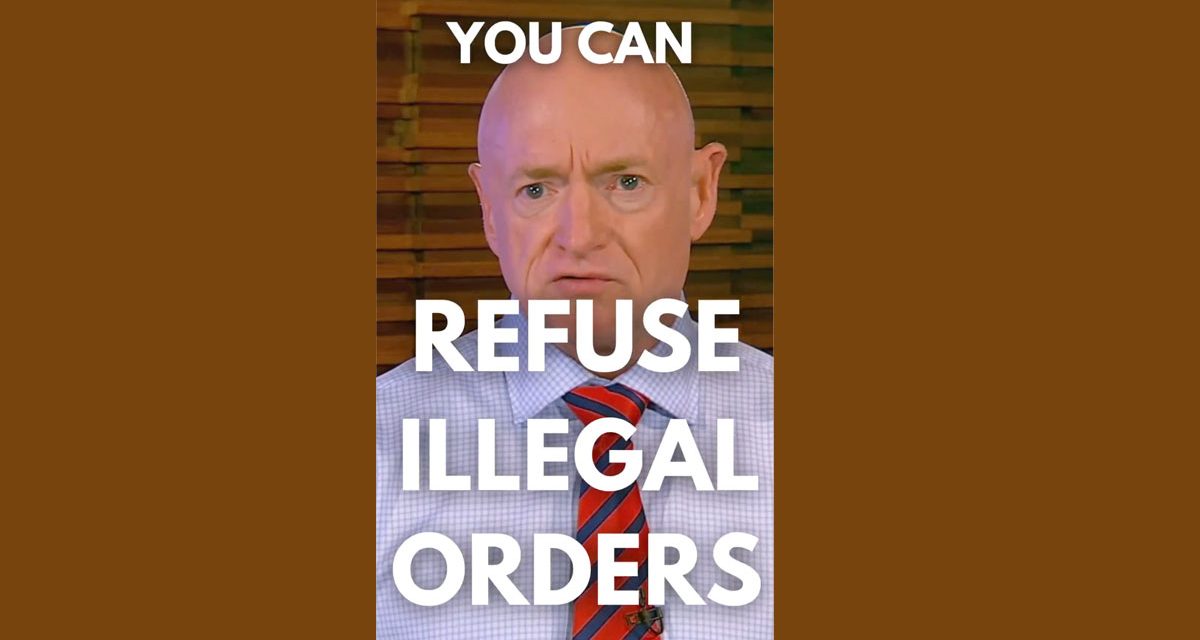
There is an old saying in legal circles that a determined prosecutor can “indict a ham sandwich.” The point, of course, is that grand juries tend to follow the lead of prosecutors, who control the evidence they see. Yet in the unfolding effort by the Trump administration to pursue criminal charges against many of the President’s most outspoken critics, that maxim has not held true. In fact, the opposite seems to be happening. Grand juries are pushing back, and the results are undermining the credibility of the entire retribution campaign.
The most recent and most embarrassing setback came when a federal grand jury declined to indict six Democratic members of Congress who had recorded videos reminding military personnel that they are not obligated to obey unlawful orders. As a matter of constitutional law, that statement is correct. Service members are bound by the Uniform Code of Military Justice, which requires disobedience of manifestly illegal commands. But the timing and framing of the videos—released amid left‑wing accusations that President Trump was issuing illegal directives—were clearly intended to encourage resistance within the ranks.
Even so, the legal theory advanced by the Department of Justice was extraordinarily thin. Prosecutors reportedly sought charges under 18 U.S.C. § 2383 (Rebellion or Insurrection), which criminalizes “inciting, assisting, or engaging in any rebellion or insurrection against the authority of the United States.” The grand jury refused to stretch that statute to cover political messaging, however provocative. It was a case the DOJ should never have brought. Instead of projecting strength, it reinforced the perception that the administration is using the justice system to settle political scores.
This failure also casts a shadow over the other high‑profile cases the DOJ has pursued. Indictments have been brought against New York Attorney General Letitia James, former FBI Director James Comey, Senator Adam Schiff, and former National Security Advisor John Bolton. In the cases of James and Comey, prosecutors failed to secure indictments on their first attempt—an unusual outcome in federal practice—but succeeded on a second round of grand jury presentations.
Two things can be true at once. Given the political history between Trump and these individuals, it is understandable that many observers view the charges as retaliatory. At the same time, the DOJ has presented evidence that, on its face, supports bringing the cases to court.
In the indictments of James and Schiff, prosecutors relied on 18 U.S.C. § 1014 (False Statements to Financial Institutions), alleging that both officials misrepresented secondary residences as primary homes in order to obtain favorable mortgage terms. The evidence reportedly includes loan applications, residency affidavits, and financial disclosures that contradict one another. While mortgage fraud of this type is not commonly prosecuted, especially when the financial institutions did not suffer losses—it still meets the statutory definition of fraud. The rarity of enforcement is precisely what fuels accusations of political motivation.
The case against Bolton appears more straightforward. He is charged under 18 U.S.C. § 793 (Unauthorized Retention of National Defense Information), the same statute used in the prosecution of General David Petraeus. Prosecutors allege that Bolton knowingly retained classified documents after leaving government service and failed to return them despite repeated requests.
The most serious allegations, however, are those leveled against Comey. He faces charges under 18 U.S.C. § 242 (Deprivation of Rights Under Color of Law) and 18 U.S.C. § 1519 (Destruction, Alteration, or Falsification of Records), based on claims that he abused his authority and violated FBI protocols in initiating the original Trump‑Russia investigation – which exonerated Trump and the campaign of conspiring with Russia. Whether the charges against Comey will hold up in court remains to be seen, but the political implications are undeniable.
Taken together, these developments paint a picture of a retribution campaign struggling to gain legitimacy. When grand juries push back, it becomes harder to argue that justice—not politics—is driving the prosecutions.
The entire retribution campaign is founded on accusations that these individuals all led efforts to bring down Trump’s first presidency and to head off a second term. In running for Attorney General, James repeatedly promised to “get Trump.” Schiff lied when he said he saw hard evidence that Trump conspired with the Russian interference in the election. Comey testified to Congress that he leaked information about Trump in the hope of having a special counsel appointed – which led to the appointment of James Mueller.
There is a Chinese saying that if you pick up the tiger, you need to be able to carry it to the cage. That is Trump’s problem. If charges keep getting dismissed or fail to win convictions, the retribution campaign is going to look awfully shallow.
So, there ‘tis.



Long story to dance around the one-word truth: INCOMPETENCE.
In DC, there is never going to be an indictment of the Anti-Trump/Anti-American persuasion.
Yeah, the whiners always claim it was rigged when they lose.
Magnanimous in victory, gracious in defeat is the exact opposite of the crybaby.
As I look at the democrats and seeing how much determination they are exhibiting to take back control of government, Iseethe work of Satan in their engagement.
The temptation of Jesus by Satan in the wilderness when the devil offered Jesus the kingdoms of the world if he would just “worship” him are actually being manifested by the democrats. The Devil “IS” the ruler of this world. God did give him that. He does have the capacity to give all the power and control to whoever worships him, and I see the sin of ” pride of life” in their efforts to do so. And I do believe that the democrats have gotten away with controlling our nation through lies and deceits because Satan is on their side.
Just consider all the democrats have accomplished over the republicans. The democrats control most of the policies dealing with abominations. It is they that control power over the policies of abortion, Lawlessness, vile hatred and violence, the persecution of Christianity and worship of God. Transgender and immoral issues. Unaccounted for crimes such as rape, murder, crimes against citizens. Who is fighting for the thugs that have infiltrated, (again through unaccounted for illegal entry), our sovereign nation? Democrats!
Their president of the previous administration corrupted our DOJ and its tenants, to go after American citizens who stood up against unlawful policies directed at them, and even the president himself gave the order to “(stop him, Trump, from running for president)”, our present president duly elected by a very wide majority, to put America back to common sense government. The democrats are even using activist left leaning judges and corrupt judges to obstruct a mandated policy of removing the illegals. democrats let in unlawfully. And on top of that, you can call it “an invasion” by foreigners.
The Republicans have the Houses and the White House. But you wouldn’t believe it, because it seems they stop every policy that makes sense. Why do the democrats seem to win at every turn? Why is it they get their own way? SATAN!
Until Americans can see all the abominations and unlawful policies democrats enforce, America will always be on the way to destruction. And maybe it “must” happen. I see prophecy being fulfilled every day. Every day we are drawing closer to globalism! New World Order.
God does use people to fulfill his will to what is coming.
Sory if you believe that Satan controls any person. I believe that God is in charge not Trump. the Republicans or Democrats.
God doesn’t use perfect people. If He looked for perfect people nothing would get done.
You evidently have never served in the military and know nothing about The Uniform Code of Military Justice. What he die was beyond despicable, it was treasonous and he belongs in prison, as well as losing his pension.
Richard, these patriots did nothing but reiterate what everyone in the military hears, and what everyone in the military should do. You are 100% wrong; the court confirmed it, and your wannabe generals what-be-in-charge are way off base.
Kelly is a real hero. What’s really in your wallet?