
















Personal Reflections on the Passing of David Keene

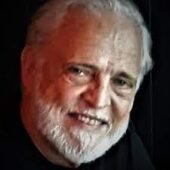
The news of David Keene’s passing has left a quiet, unmistakable ache in the hearts of those who walked beside him—some for a season and others, like me, for nearly a lifetime. His departure marks the end of an era for the conservative movement, but more personally, it marks the loss of a friend whose wisdom, humor, and steadfastness shaped the lives of many.
David was one of those rare figures whose influence was both vast and understated. Long before he became a household name within conservative circles, he was part of a small, determined band of young activists who refused to let the Goldwater defeat of 1964 become the final word on the future of their movement. We were thinkers, strategists, and idealists—people who believed that ideas mattered and that perseverance could bend the arc of history. David was among the most gifted of us. He had a strategist’s mind and a friend’s heart, and he carried both with him into every battle, every meeting, every quiet conversation over coffee.
Those early years forged in him a conviction that the movement could rebuild, refine itself, and ultimately return stronger. And history proved that conviction right. The election of Ronald Reagan in 1980 was, in many ways, the culmination of the work David and others began sixteen years earlier. David never claimed credit for that victory, He was far too modest for that—but those of us who knew him understood how deeply his fingerprints were etched into the architecture of that resurgence.
If David had done nothing else, that alone would have secured his place in the story of American political life. But of course, he did much more.
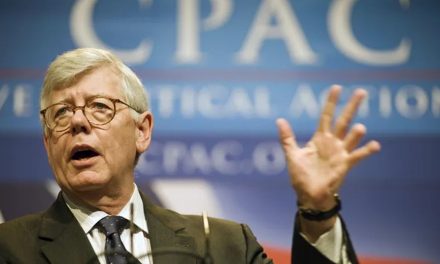
For decades, David Keene was the steady hand and guiding force behind the Conservative Political Action Conference—CPAC. When he first stepped into leadership, CPAC was still a relatively modest gathering, a place where activists, thinkers, and elected officials could exchange ideas and debate the future. Under David’s stewardship, it grew into the most influential conservative conference in the nation, a place where the movement’s direction was shaped, challenged, and renewed year after year. It was my honor to take to the stage on occasion.
I watched him build CPAC not through bluster or force, but through relationships. David understood people—what motivated them and what inspired them. He had a gift for bringing together individuals who might never have shared a room, much less a cause. He believed that a movement was strongest when its members were talking to one another, learning from one another, and occasionally arguing with one another. CPAC became the embodiment of that belief.
I remember walking with him through the crowded hallways of CPAC. He moved slowly not because of age or fatigue, but because every few steps someone would stop him—an old friend, a young activist, a journalist, a donor, a student who had read one of his columns. And David always stopped. He listened. He asked questions. He made people feel seen. That was his quiet superpower. I never saw him angry. He took setbacks quietly – and moved forward with resolution and confidence.
His influence extended beyond activism and organizing. As editorial page editor of The Washington Times, David brought the same clarity of thought and steadiness of judgment that had defined his political work. He believed deeply in the role of a free press—not as a weapon, but as a forum for ideas. Under his editorial leadership, the paper became a place where arguments were sharpened, perspectives were broadened, and readers were challenged to think more deeply. He never sought to dominate the conversation. He sought to elevate it.
In private moments, David spoke often about legacy—not his own, but the legacy of ideas, institutions, and friendships. He believed that the true measure of a life was not found in titles or headlines but in the people he educated and motivated,
David tended to his friendships with the same care he gave to the causes he championed. And those of us who were fortunate enough to call him a friend and political ally will carry that gift with us for the rest of our lives.
David leaves behind a legacy that will be studied, debated, and remembered for generations. But for me, his legacy is simpler. He was a good man, a loyal friend, and a steady presence in a world that often feels unsteady. His absence will be felt deeply, but his influence—on the movement he helped shape and on the people he touched—will endure.
David Keene fought the good fight and earned his joyful rest. He will be missed.
So, there ‘tis.

Dunger we are trying to get rid of the very real problem known as voter fraud. It’s real. It exists.…
I have no issue with providing ID to register and to vote. I am pretty sure Mika did not take…
Bendoverandtakeit performs as expected, not even adequate. A loser. I did not expect this low-life lying sack of suds to…
Dunger you keep referencing Trump’s made up charges. Good for you and your kind. But just so you know, you…
Bendung: got to love a guy who gets called a liar so he does not push back on any of…