










Mexico Explodes After Mexican Forces Kill Cartel Leader El Mencho

A Cartel Empire Leader Finally Falls
Mexico was thrown into chaos after one of the world’s most powerful drug lords, Nemesio Oseguera Cervantes, known as El Mencho, was killed during a military operation on February 22, 2026. His death triggered an immediate wave of violence across the country, with cartel gunmen launching coordinated attacks, burning vehicles, and targeting security forces.
Yet despite the bloodshed that followed, his killing represents one of the most significant victories against organized crime in Mexico in more than a decade. Authorities believe the fall of El Mencho sends a powerful message that even the most entrenched cartel leaders can be taken down.
Who El Mencho Was
El Mencho was not just another cartel boss. He was the longtime leader and founder of the Jalisco New Generation Cartel, known as the CJNG, which grew into one of the largest and most dangerous criminal organizations in the world.
Born into poverty in Michoacán, he began his criminal career decades ago and eventually built a vast trafficking empire. Around 2009, he founded the CJNG after earlier criminal networks fractured. Under his leadership, the cartel rapidly expanded across Mexico and internationally.
Authorities say the CJNG had a presence in at least 21 of Mexico’s 32 states and operated across the United States and other continents. The organization trafficked fentanyl, methamphetamine, cocaine, and migrants, and maintained global connections to criminal groups in Latin America, Europe, Asia, and Africa.
The cartel’s scale and brutality made El Mencho one of the most wanted criminals in the world. The United States and Mexico together offered millions in rewards for information leading to his capture.
The CJNG earned its reputation through both massive drug trafficking and extreme violence. The group was notorious for direct attacks against government forces and officials who opposed it.
During the operation that killed El Mencho, Mexican forces seized armored vehicles, drones, tactical equipment, and high-powered weapons often associated with battlefield combat rather than policing. Rocket launchers were also seized, including weapons capable of shooting down aircraft.
That capability was not theoretical. In 2015, the cartel shot down a Mexican army helicopter with a rocket-propelled grenade while soldiers were pursuing a convoy, killing multiple troops.
This level of firepower is one reason the cartel was designated a terrorist organization by the United States. It also explains why El Mencho himself was classified as a Specially Designated Global Terrorist.
How Big the CJNG Was Compared to Other Cartels
The CJNG became one of Mexico’s leading criminal organizations in a relatively short time. Authorities described it as one of the country’s most feared and powerful groups, with trafficking routes reaching deep into the United States.
His killing was described as the most significant blow against Mexican organized crime since the capture of Joaquin “El Chapo” Guzman about ten years earlier.
Unlike older cartels that were often regionally focused, the CJNG grew aggressively and adapted to market demand. When drug markets shifted, the organization shifted with them, moving from methamphetamine production into heroin and fentanyl trafficking.
How the Operation Unfolded
The operation that ended El Mencho’s life involved Mexican special forces supported by intelligence from the United States. Authorities tracked one of his romantic partners and followed her to a meeting with him, which revealed his location.
Mexican forces launched a coordinated assault by air and land. A firefight erupted between his bodyguards and the military commandos sent to capture him. El Mencho was seriously wounded during the confrontation and later died while being transported by helicopter for medical treatment.
Mexican Defense Secretary Ricardo Trevilla said authorities located him after tracking the partner he was meeting. Officials also reported that several of his security guards were killed during the operation.
The CIA’s Role
Intelligence support from the United States played a crucial role. Mexican officials acknowledged that U.S. agencies provided “complementary information” that helped identify his network of contacts.
According to individuals familiar with the operation, the CIA’s contribution was decisive. One person briefed on the raid said the intelligence had been “instrumental in removing” the cartel leader.
The United States had been increasing intelligence cooperation with Mexico, including surveillance efforts aimed at fentanyl labs and cartel leadership networks. A specialized intelligence task force based in Arizona also provided analysis to help identify leadership structures, finances, and logistical networks.
Mexican authorities emphasized that while U.S. intelligence helped locate him, the operation itself was carried out entirely by Mexican forces.
Violence Erupts Across Mexico
The cartel’s response to its leader’s death was swift and widespread. Armed men set up roadblocks, burned vehicles, and launched attacks across large parts of the country.
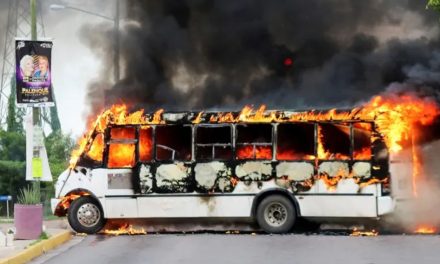
Authorities reported more than 250 roadblocks across 20 states. Vehicles were torched, highways blocked with spikes, and buses hijacked and burned in the streets. In some areas, shootouts broke out between cartel gunmen and security forces.
The violence was deadly. At least 25 Mexican National Guard troops were killed in Jalisco in six separate attacks. Officials also reported more than 30 cartel members killed in counter operations, along with additional casualties in other states. A prison guard, a state prosecutor’s agent, and a civilian were also among the dead.
The unrest spread into tourist areas. In Puerto Vallarta, visitors described panic as smoke rose from burning vehicles near hotels. American tourists were caught in the violence, and airlines suspended flights to major destinations.
The U.S. State Department said it had received “hundreds” of calls from American citizens stuck in Mexico during the crisis and urged people in affected cities to shelter in place.
Massive Military Deployment
Mexico responded by sending thousands of troops to restore order. Officials said about 9,500 soldiers were deployed overall, including 2,500 additional troops sent to western Mexico after the violence erupted.
President Claudia Sheinbaum urged calm and emphasized the government’s control over the situation. She stated, “There is calm, there is government, there are armed forces, and there is a lot of co-ordination.”
Authorities later announced that the roadblocks had been cleared and that much of the country had returned to normal activity.
The CJNG retaliation campaign included coordinated attacks across multiple states.
Roads were blocked with burning trucks and buses. Spikes and nails were thrown onto highways to immobilize traffic. Armed gunmen attacked security forces in several locations. Banks and local businesses were set on fire. In some towns, residents were ordered to stay indoors while violence unfolded outside.
These tactics demonstrated both the cartel’s reach and its ability to mobilize quickly after losing its leader.
Influence and Suspected Corruption
El Mencho’s power was not limited to violence. His organization grew through territorial expansion and by corrupting officials. The CJNG also penetrated legitimate economic sectors, including agriculture businesses such as avocado and lime production.
Analysts noted that in some areas, the cartel exercised such strong control that government forces rarely challenged it directly. One security advisor stated, “The Jalisco cartel has almost total control of the state of Jalisco.”
This level of influence is what made his death so significant. Removing a leader with deep institutional reach is far more difficult than arresting lower level criminals.
What U.S. Officials Are Saying
U.S. officials highlighted the importance of intelligence cooperation. American agencies provided data that helped locate El Mencho and supported Mexican forces in tracking his network.
Military intelligence leaders described their mission as targeting the financial and logistical systems that support cartel operations. One commander explained the strategy by saying, “It’s identifying that entire network, and identifying how much of that entire network helps generate revenue for those bigger cartels. Obviously, that’s what we want to disrupt.”
The United States also responded to the violence by warning citizens and activating emergency assistance services for Americans stranded during the unrest.
What Mexican Officials Are Saying
Mexican officials framed the operation as proof that their security forces are capable of striking major criminal targets.
President Sheinbaum praised the raid and stressed coordination among government agencies. Experts described the operation as a major political victory for her administration. One analyst called it her “most resonant triumph” since taking office.
Officials also emphasized sovereignty. While acknowledging U.S. intelligence support, Mexico made clear that Mexican forces carried out the operation without foreign troops on the ground.
The violence that followed El Mencho’s death was severe, but it also revealed how central he was to the cartel’s structure. His removal creates a leadership vacuum inside one of the world’s most powerful criminal organizations.
His son and likely successor is imprisoned in the United States, which further complicates the cartel’s future. Analysts warn that internal power struggles could weaken the organization over time.
El Mencho was one of the last major drug kingpins who had remained free for decades. Taking him down demonstrates that intelligence cooperation, sustained pressure, and military capability can reach even the most protected figures in organized crime.
Despite the explosions of violence that followed, the broader message is unmistakable. Even the biggest cartel leaders are not untouchable.



Making it a PBP February Funnies Trifecta, and even funnier than female genitalia or the frequency of the f-word, Ernest…
Larry often picks a fight while blaming the other guys for starting it. That's not just my conclusion. One wonders…
ICE should kick you out too. There’s nothing wrong with kicking illegal wetbacks out of here.
Larry, You do love your bullshit don't you-tastes great, makes you strong, right? No, the democrats did not want to…
AOC is a national embarrassment and should not speak for the US ever again. Democrats should change their party to…