


















Is It a Government Shutdown if No One Notices?
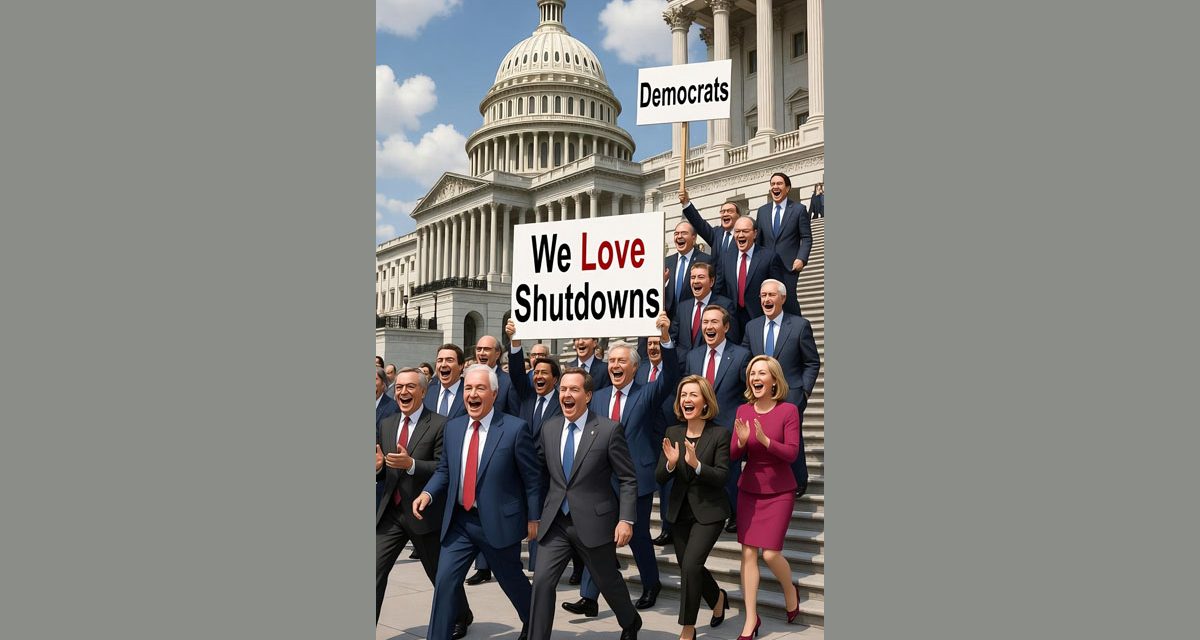
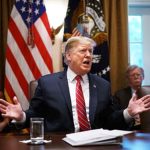
In case you have not noticed – and most folks probably have not – we have been in the midst of a partial government shutdown since February 14. If it looks to you like nothing has shut down, that is because … nothing much has shut down – at least not yet. The lights are still on for most of the federal bureaucracy, paychecks are clearing, and the average American is not missing a beat. Welcome to the theater of the absurd that is modern congressional budgeting.
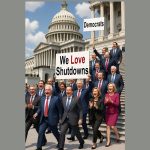
This partial lapse hits only the Department of Homeland Security – you know, the folks supposed to keep airports safe, borders secure, and terrorists at bay. Democrats blew up a bipartisan funding deal over demands tied to immigration enforcement reforms. They are holding the line on policy changes for ICE, warrants, and oversight — using the funding deadline as leverage. Sound familiar? It should. This is the same playbook they have run repeatedly, turning routine appropriations into high-stakes partisan poker.
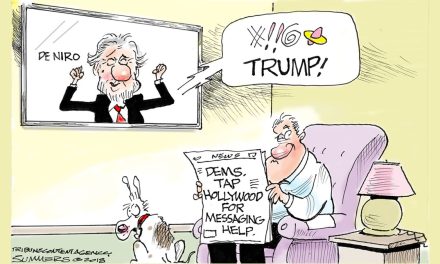
In recent years, Democrats have weaponized shutdown threats – and the Senate filibuster – as a blunt instrument to jam through their left-wing wishlist. That is not how the system is supposed to function. Traditionally, when deadlines loom, and no full budget agreement exists, both sides swallow hard and pass a clean Continuing Resolution (CR) — extending current spending levels. No new programs, no new taxes, no drama. Keep the lights on while negotiations continue on legislative issues. It is how adults would handle it.
But Democrats have shattered that tradition. They block clean CRs unless their partisan demands get met – whether it is extending Obamacare subsidies, blocking immigration crackdowns, or piling on unrelated spending. Last year, in 2025, their refusal to support straightforward funding legislation delivered the longest government shutdown in American history — a whopping 43 days from October 1 to November 12. Despite all the hysterical predictions of chaos – airports crumbling, Social Security checks vanishing, the economy in freefall – the sky did not fall. A few Democrats eventually caved, the government reopened, and life went on with minimal impact on the public. That should have been a wake-up call. These manufactured crises are mostly performative nonsense.
Yet, here we are again in 2026, repeating the folly. To dodge a full repeat of the 2025 debacle, Democrats grudgingly agreed to fund most of the government while holding out on Homeland Security. DHS had enough carryover funds to limp along for weeks, which is why you have likely missed the “shutdown” entirely. No long TSA lines (yet), no visible gaps in border patrols (for now), no headlines screaming about unpaid FBI agents chasing bad guys. It is the stealth shutdown – invisible until the money truly runs dry.
And when it does? Brace for the crocodile tears. No security screeners checking for bombs and guns at airports. No FBI tracking drug cartels and terrorists. No Border Patrol stopping illegal crossings. No ICE removing criminal aliens from our streets – which, let us be honest, seems to be exactly what some Democrats prefer. No CIA monitoring international threats. All because one party insists on using the power of the purse not for governing, but for scoring political points.
The good news? It probably will not reach that apocalyptic stage. Once the grandstanding hits critical mass – perhaps amid heightened threats from abroad or domestic pressure – enough Democrats will fold, declare it a “symbolic victory” for accountability or whatever buzzword they choose, and vote to reopen. They always do. Then we limp to the next funding cliff for a replay.
But the real scandal is not just the Democrats’ tactics. It is Congress as a whole abdicating its most basic constitutional duty. The framers gave the legislative branch the power of the purse for a reason — to force deliberate and annual budgeting. Instead, members hide behind endless CRs – temporary Band-Aids that let them avoid tough choices, skip real oversight, and punt accountability to the next deadline. Year after year, decade after decade, Congress operates on autopilot extensions because actually passing a budget means confronting priorities, cutting waste, and risking voter backlash.
Congress loves to crow about its powers – declaring wars (which it rarely does), controlling immigration (ditto), reining in the executive (only when it suits the party out of power). But when it comes to budgeting? Crickets. They have abrogated their responsibility, turning what should be routine governance into recurring crises that inconvenience federal workers, rattle markets, and erode public trust – all while achieving zilch in policy terms.
This cycle of shutdown brinkmanship is futile, expensive, and downright embarrassing. It solves nothing, highlights everything wrong with Washington, and proves once again that the only thing bipartisan in Congress is the refusal to do the job they were elected were elected to do. Until members grow spines and start passing real budgets expect more of the same — shutdowns that achieve nothing.
So, there ‘tis.






Having worked as a DoD civilian during government shutdowns, I can tell you that whether or not one agrees with the existence of a particular government function, there are definitely those who are expected to continue working while their pay is deferred until the shutdown is over.
Those I experienced weren’t long, and I can afford a few postponed paychecks. But not everyone performing an essential (even indisputably genuinely essential) government job can deal with that so easily.
We do need TSA screeners, even if we don’t love them or all their procedures. And the lines are getting longer.