<p class="wp-block-paragraph"><strong>An Industry That Lost Its Momentum</strong></p>


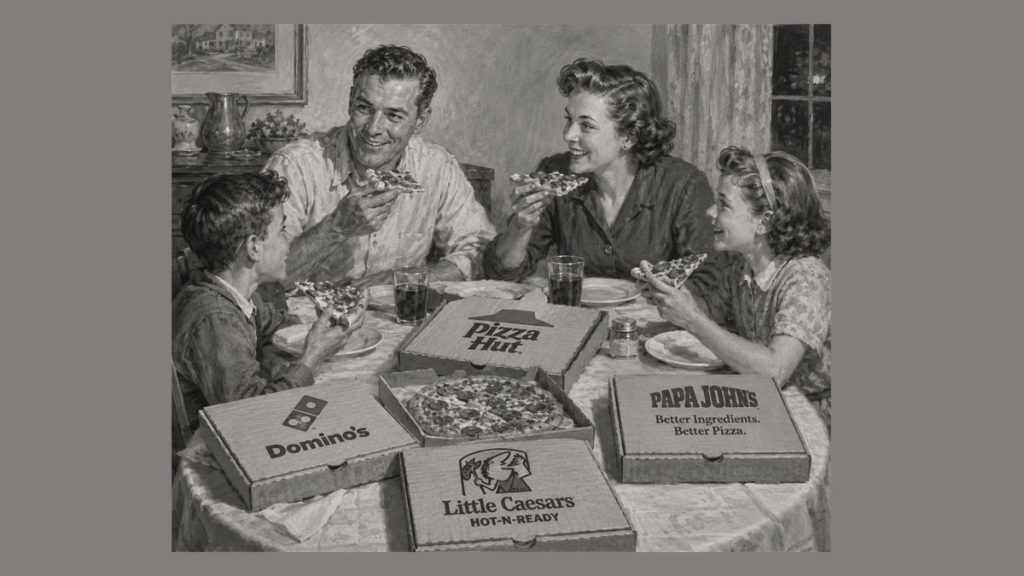
<p class="wp-block-paragraph">For decades, pizza was one of America&#8217;s safest restaurant investments. Families gathered at Pizza Hut for dinner, Domino&#8217;s built an empire on dependable delivery, Papa John&#8217;s expanded rapidly across the country, and Little Caesars became synonymous with inexpensive carryout. Investors rewarded these companies with steadily rising valuations, particularly during the COVID-19 pandemic when consumers stayed home and ordered takeout in record numbers.</p>


<p class="wp-block-paragraph">That picture has changed dramatically. Pizza stocks and sales have cooled across much of the industry as consumers return to restaurants, explore a wider variety of food choices, and face tighter household budgets. The key question for investors is whether Americans are simply moving on from pizza or whether the industry is merely settling back to normal after an extraordinary pandemic boom.</p>


<p class="wp-block-paragraph"><strong>Domino&#8217;s: Still the Industry Leader Despite a Sharp Decline</strong></p>


<p class="wp-block-paragraph">Domino&#8217;s remains the strongest publicly traded pizza company, but even it has not escaped investor pessimism. The company&#8217;s shares have fallen nearly 40 percent over the past year as slowing sales and management changes rattled Wall Street. First quarter same store sales grew only 0.9 percent, prompting management to abandon its previous growth target for 2026.</p>


<p class="wp-block-paragraph">The broader competitive landscape has also changed. Delivery services such as DoorDash and Uber Eats have eliminated one of Domino&#8217;s greatest competitive advantages by allowing local pizza shops to compete alongside national chains on the same platform. Consumers shopping for dinner now see local pizzerias alongside Domino&#8217;s, while tacos, chicken, burgers, and frozen pizzas compete for the same dollars.</p>


<p class="wp-block-paragraph">Yet many analysts believe Domino&#8217;s remains the best positioned company in the sector. It continues to expand while Pizza Hut and Papa John&#8217;s are shrinking, and its share of sales among the three largest public pizza companies has climbed from 38 percent in 2016 to 54 percent in 2025. The company&#8217;s efficient supply chain, strong franchise economics, growing free cash flow, dividends, and aggressive share repurchases have led some analysts to argue that the recent selloff has created an attractive long term buying opportunity rather than signaling permanent decline.</p>


<p class="wp-block-paragraph"><strong>Pizza Hut: From Industry Giant to a Company for Sale</strong></p>


<p class="wp-block-paragraph">Few stories illustrate the industry&#8217;s struggles more clearly than Pizza Hut. Once the dominant force in American pizza, the company has steadily lost market share over the past decade. Its share among the three largest public pizza chains has fallen from 41 percent in 2016 to just 27 percent in 2025.</p>


<p class="wp-block-paragraph">The decline became significant enough that parent company Yum! Brands decided to sell Pizza Hut&#8217;s operations in two major transactions totaling approximately $2.7 billion. The sale marks the end of an era for one of the most recognizable restaurant brands in America.</p>


<p class="wp-block-paragraph">Pizza Hut has struggled to compete in an environment where delivery apps reduce the value of large national chains and consumers increasingly seek variety beyond pizza. Store closures and shrinking market share have reflected those challenges, making the chain one of the clearest examples of how difficult the pizza business has become after the pandemic surge.</p>


<p class="wp-block-paragraph"><strong>Papa John&#8217;s: From Pandemic High to Investor Disappointment</strong></p>


<p class="wp-block-paragraph">Papa John&#8217;s has experienced one of the sharpest reversals among the major pizza companies. During the pandemic, investors viewed the company as a major beneficiary of stay at home dining. Its stock climbed from roughly $110 during mid 2021 to an all time high near $140 later that year.</p>


<p class="wp-block-paragraph">That enthusiasm faded quickly. Rising labor and food costs, slowing delivery demand, weaker consumer spending, and leadership changes combined to pressure profits. Comparable store sales frequently disappointed investors, and the stock entered a prolonged decline.</p>


<p class="wp-block-paragraph">By 2026, shares had fallen to roughly $34, leaving the company trading about 70 percent below its pandemic peak. Reports that the company has explored a possible sale underscore the challenges facing the business. While Papa John&#8217;s remains one of the nation&#8217;s largest pizza chains, investors have become increasingly skeptical about its ability to regain the rapid growth that once justified much higher valuations.</p>


<p class="wp-block-paragraph"><strong>Little Caesars: Declining Sales but Relative Strength</strong></p>


<p class="wp-block-paragraph">Unlike its publicly traded rivals, Little Caesars is privately owned, so investors cannot track its stock price. Instead, industry observers focus on sales performance.</p>


<p class="wp-block-paragraph">The company experienced record demand during the pandemic, with estimated U.S. systemwide sales reaching approximately $4.2 billion in 2021. As consumer behavior normalized, those sales declined to roughly $3.5 billion by 2024, representing a drop of about 17 percent from the pandemic peak.</p>


<p class="wp-block-paragraph">Even so, Little Caesars has performed better than many competitors. It remains the nation&#8217;s fourth largest pizza chain with approximately 4,285 locations and average restaurant sales of about $900,000 annually. While much of the pizza industry reported declining sales during 2025, Little Caesars actually posted modest growth, supported by its value oriented business model and inexpensive carryout offerings. Rather than signaling collapse, its recent performance suggests that the company has successfully adapted to a more challenging market.</p>


<p class="wp-block-paragraph"><strong>Bubble or Changing Consumer Tastes?</strong></p>


<p class="wp-block-paragraph">The central debate surrounding the pizza industry is whether America has permanently lost its appetite for pizza or whether investors are simply witnessing the end of an unsustainable pandemic bubble.</p>


<p class="wp-block-paragraph">There is evidence supporting both views. Market research indicates pizza&#8217;s share of U.S. restaurant spending has slipped as consumers increasingly choose chicken, Mexican food, and other dining options. Delivery apps have also intensified competition by placing independent restaurants on equal footing with national chains.</p>


<p class="wp-block-paragraph">On the other hand, the pandemic created unusually favorable conditions that were unlikely to last indefinitely. Families confined to their homes ordered far more pizza than normal, producing exceptional profits and inflated stock prices. As life returned to normal, some decline was almost inevitable.</p>


<p class="wp-block-paragraph">For investors, that distinction is critical. If Americans are permanently abandoning pizza, the industry&#8217;s best years may be behind it. If the recent weakness simply reflects the unwinding of an extraordinary COVID era bubble, today&#8217;s lower valuations, particularly for companies like Domino&#8217;s, could represent an attractive long term opportunity. Time will determine which interpretation proves correct, but one thing is already clear: the easy gains that once made pizza one of Wall Street&#8217;s favorite restaurant investments have become much harder to find.</p>


<p class="wp-block-paragraph"></p>

Is America Tired of Pizza?