





















Russia is Losing the Ukraine War
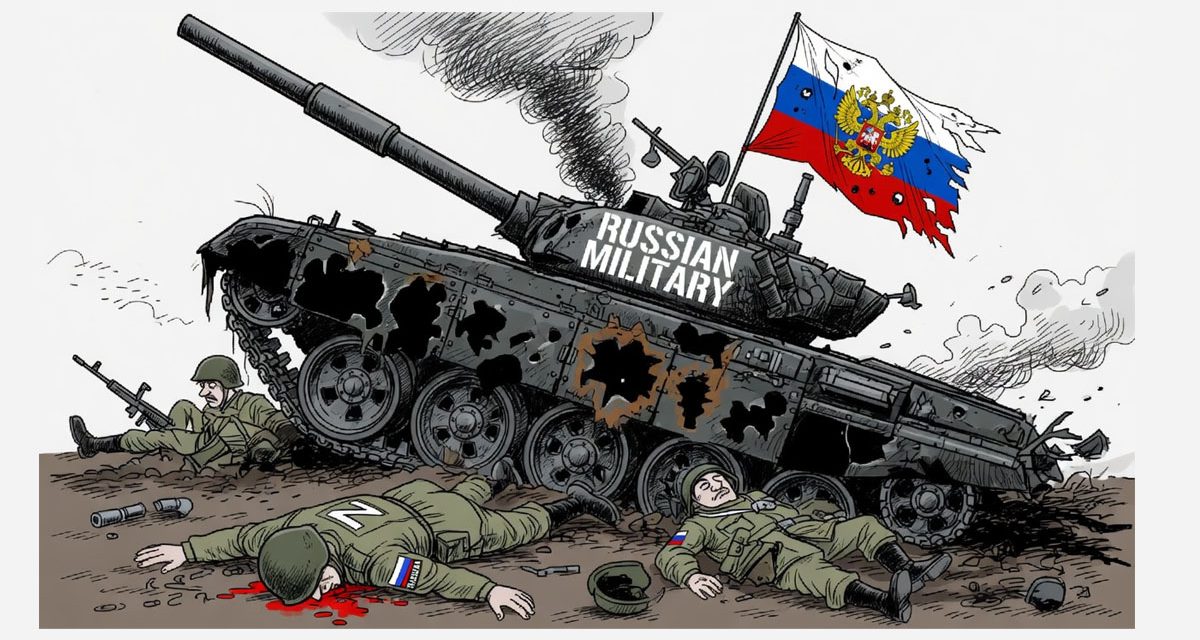
In a previous commentary, I wrote about the personal impact of the Ukraine war on Russian President Vladimir Putin. He is showing early signs of the agony of defeat. And given the situation on the ground, that is understandable. The tide of war seems to have shifted in Ukraine’s favor.
At the time of his invasion, Putin anticipated that he would take over all of Ukraine in a matter of days – as did many observers, including the feckless Biden administration. But for the next four years, Russia and Ukraine engaged in a seesaw conflict without decisive victories on either side. More recently, however, we seem to be seeing Ukraine gaining a clear advantage. Russia appears to be losing the war. (No wonder Putin is looking like Hitler hiding in his bunker in the final days of World War II).
Putin launched his so-called special military operation with the arrogant assumption that Kyiv would fall within days to the superior military forces of Russia. Putin’s war machine rolled across the border in February 2022, expecting capitulation. Instead, Russian forces encountered determined resistance from a nation that refused to bow.
The initial blitz stalled outside major cities. Ukrainian defenders, armed with Western-supplied anti-tank weapons and bolstered by national resolve, turned the invasion into a quagmire. Many credit the turnaround to Ukraine’s impressive deployment of drones. What Putin envisioned as a lightning conquest became a protracted nightmare of attrition.
For much of 2024 and 2025, Russian forces clawed forward in slow, incremental advances across the Donbas and other eastern sectors. They seized pockets of territory through grinding assaults at enormous costs. Those gains, however, have now plateaued and begun to reverse.
Recent battlefield assessments show that Russia has suffered a net loss of approximately 116 square kilometers of Ukrainian territory in recent months. This reversal marks a stark departure from the modest progress of prior years. In April 2026 alone, Russian forces recorded their first net territorial loss in years, shedding dozens of square kilometers across multiple sectors. Ukrainian counterattacks have liberated settlements in the Kupyansk direction, western Zaporizhzhia Oblast, and areas near Hulyaipole and Oleksandrivka. What Russia gained through blood and treasure is slipping away under Ukrainian pressure.
The human toll on the Russian side is staggering. Estimates place Russian casualties – killed, wounded, and missing – at more than 1.2 million at the end of 2025. That figure exceeds the losses of any major power in any conflict since World War II. In 2025 alone, Russia absorbed roughly 415,000 casualties.
The pace has not slowed in 2026. Reports indicate more than 85,000 Russian troops became casualties in the first three months of 2026, with single months like March exceeding 35,000. These figures outpace recruitment rates, which have dipped below replacement levels for the first time in the war. Russian commanders now rely on lower-quality recruits, foreign volunteers, convicts pressed into service and forced mobilization schemes that target businesses and regions. The military machine is devouring its own people at a rate that no society can endure indefinitely.
Equipment losses compound the crisis. Ukrainian forces report the destruction of thousands of Russian tanks – more than 11,900 in total – along with over 24,000 armored fighting vehicles, hundreds of aircraft, and vast quantities of artillery systems.
Russian assaults depend on infantry-heavy infiltration tactics, with small groups attempting to creep forward or dash across open ground on mopeds, horses, and even golf carts.
Ukrainian First-Person-View (FPV) drones and loitering munitions detect these movements almost immediately. Persistent intelligence, surveillance, and reconnaissance quadcopters blanket the battlefield, turning roads, river crossings, and supply lines into kill zones. FPV drones swarm Russian armor and infantry before units can consolidate positions. The result is slaughter before any tactical gain. Logistics have ground to a halt under constant observation. Russian men and machines lack the ability to maneuver effectively. Concealment has become nearly impossible.
This is no longer a war of traditional battlefield maneuvers. It has evolved into a robotized conflict where drones and unmanned ground vehicles dominate. Ukraine has embraced unmanned systems to preserve its own limited manpower amid severe demographic challenges.
What was once thought to be impossible is now routine, with Ukraine attacking military assets deep inside Mother Russia.
Tracked unmanned ground vehicles handle ammunition delivery, casualty evacuation, mine placement, and even direct assaults. In some operations, Ukrainian forces have captured Russian positions using only drones and ground robots, with no infantry casualties. Drone swarms conduct intelligence gathering and large-scale targeting, suppressing defenses before human forces advance. Russia attempts to copy these tactics, but Ukraine maintains a clear edge in innovation and deployment.
Ukrainian unmanned systems have neutralized Russian air defenses and intercepted thousands of enemy drones in recent months. What once required divisions now falls to cheap, persistent machines that Ukraine is producing by the tens of thousands each month.
Putin has begun to show cracks in his public demeanor. For years, he maintained a maximalist rhetorical stance, demanding total victory and Ukrainian capitulation. Lately, however, his language has shifted. He has hinted that the conflict is winding down and suggested – without specifics — that his war is “coming to an end.”
This represents a departure from his earlier defiance. The recent Victory Day parade in Moscow offered further evidence of strain. The event was scaled back significantly, with fewer pieces of heavy armor on display and heightened security concerns that kept the spectacle modest. For the first time in years, the traditional column of tanks and ICBMs was absent or minimized. Such displays once projected Russian power. Now their absence reveals shortages and vulnerability.
The economic burden weighs heavily as well. Russia has diverted massive resources to sustain the war, yet manufacturing shows signs of decline, inflation persists, and long-term productivity lags. The Kremlin faces labor shortages and mounting costs that no amount of oil revenue can fully offset.
On the diplomatic front, the Trump administration has pushed aggressively for peace through a framework that includes ceasefire lines, territorial realities, and security guarantees. Russia seeks formal recognition of its occupied lands, sanctions relief, and limits on Ukrainian alliances. Ukraine has no reason to acquiesce to those demands.
Russia entered this conflict with overwhelming advantages in numbers, equipment, and territory held at the start. Four years later, those advantages have evaporated under the weight of Ukrainian resilience, Western support, and technological adaptation.
Putin’s forces bleed territory, manpower, and materiel at rates that signal exhaustion. The agony of defeat is not merely personal for the Russian leader. It is systemic, visible on every map, in every casualty report, and in the hollowed-out displays of former military glory. Russia is not advancing toward triumph. It is retreating.
It is now conceivable that the Ukraine military may drive Russian forces out of the entire country – including the Crimea and all of eastern Ukraine. The tide has turned, and history will record that Vladimir Putin’s grand ambition ended not in conquest, but in costly, undeniable defeat.
This is the time for NATO and the United States to double down on the commitment to Ukraine.
So, there ‘tis.





Larry, You aren’t holding your breath waiting for Hegseth or trump to ramp up support for Ukraine are you? Because Vlad still has those pix of the whores pissing on Trump-the trump card (no pun intended) that he has yet to play. I do have to admit that your basic support for Ukraine has been unwavering since Vlad started this war, but what has changed is how you now see the outcome. Early on, you wrote that the Ukraine resistance was futile, because the Russian military was so much better equipped, however, even with insufficient support from the West, Ukraine has shown what determination and perseverance can achieve. The world opinion of the people (and government) of Ukraine is so much different than how they view the US, where we have a President who worships any demagogue who flatters him in the least, and instead of following the words of Theodore Roosevelt (yes, he was a great Republican President) “speak softly and carry a big stick”, instead believes “brag a lot and bully anyone who you think won’t retaliate too much….”
While I expect to differ with Larry on issues and on spending, I also expected him to be a decent, upstanding man, and citizen. Based on this story, I am thinking I might be wrong. At least I admit it.
I think Larry has a rosy-colored view of his past statements on Ukraine and he’s totally out of line on Biden on this. At least in comparison to his choice for President. I think his present view is delusional as he goes on his knees under the resolute desk to pull a Monica on his Liar-Felon-King. Starting to wonder if he doesn’t have a few graven images like the DOJ headquarters banner festooning his abode in South Florida.
Larry says: “At the time of his invasion, Putin anticipated that he would take over all of Ukraine in a matter of days – as did many observers, including the feckless Biden administration.” What a stupid thing to say. Especially given him being gung-ho for TACO tactics and our standdown in Ukraine ala TACO. Larry loves our VZ snatch n grab that’s now heading towards statehood, wants bigger, better wars in both Ukraine and Iran, Lebanon, Gaza. He supports a guy who slaps a star-burst logo with the words: “brand new” at a 45-degree angle on the Iranian flag to prove it’s a brand-new regime. And smells Spring-fresh nicer too. Then he pivots to the dangerous imminent threat of “nuclear” after being told nuclear was obliterated completely never to be rebuilt ever except in a few months when what was formerly obliterated magically reincarnated to become a bomb in two weeks. Reincarnated just like the Iranian missiles and sites that appear to have magically been replenished. Yeah, we can believe these guys.
Some facts: The supposed feckless Biden ponied up $175B in financial aid to Ukraine from 2022 to 2024 directly causing the current wartime status (the final numbers can differ slightly as definitions between wartime aid and humanitarian aid are considered). Trump stopped all that and gave a LOAN to Ukraine for $20B in 2025. Probably 18% interest. Catch a load of the bar chart in this puppy to see how stupid Larry is to say that Biden is feckless over the Ukraine war: *https://www.cfr.org/articles/how-much-us-aid-going-ukraine*
President Trump has significantly slowed and restricted US aid to Ukraine. He’s not feckless, he’s TACO.
Ukraine stands and is winning because of Biden; feckless my sweet white ass Larry. Maybe he was not as fast or hit as hard as you wanted, but Ukraine stands independent of your armchair calls. And for your guy, Trump, there’s a different story, the story you ignore in your story. Ukraine is winning in spite of Trump. Following his inauguration, his administration placed an official hold on all pending military aid and arms shipments. A HOLD LARRY: that’s not feckless, that’s fucked up. It’s TACO. FUBAR. Then he lowered sanctions on Russian oil pouring in scads of cash to be used to kill Ukrainians.
The Trump White House issued an order pausing and reviewing all military aid to Ukraine, effectively freezing congressionally mandated shipments and assistance. Trump stopped Congressional mandated support in Ukraine. But you love the policies, right? He’s tough, Biden is feckless, right? Trump did this to force Ukraine to acquiesce in peace negotiations to Russia. Typical Trump extortion; Ukraine has seen it before. You can find it online.
Trump officially ended direct US funding to the Russia-Ukraine conflict in 2025, shifting lower payments through NATO, and making them loans, not aid.
Trump stopped Biden’s direct, large-scale financial aid and major weapon supply shipments. Trump continued to allow limited, specific, background weapons transfers. IOW – he let others buy our arms for Ukraine.
How stupid are you to swallow this shit and not call it out in your article? Instead you say: “On the diplomatic front, the Trump administration has pushed aggressively for peace through a framework that includes ceasefire lines, territorial realities, and security guarantees. Russia seeks formal recognition of its occupied lands, sanctions relief, and limits on Ukrainian alliances. Ukraine has no reason to acquiesce to those demands.” Let me see if I got this: the guy who gave them all the money for weapons is feckless, but the guy who extorts them to give up lands and alliances and is willing to end our sanctions for that is the strongman? Larry —- who is the Chamberlain in this story? Who is the feckless one oh sage of Boca?
War, I mean real, in-your-face, up front and personal war is the best learning experience on the planet for proving weapons, men, strategy and tactics. The Ukrainians are tough, smart, and industrious. Now they out-drone us technically and strategically offering their support and weapons to OUR allies in the middle east. Yeah, our allies look to Ukraine, not us, for this support. Biden’s support money made this happen and now Trump has the US leave them in the ditch. They spend $40K to down a missile, we spend $1M. And Hegseth says we be the best and can I have $1.5T more to waste like this? Or worse. Not only are the Ukrainians beating Putin, but they are beating our military in drone technologies with their advancements. And Trump is standing down when we should stand up. TACO.
When Obama was President and began his drone wars, the kids in Northern Pakistan used to stay indoors on sunny days and only played outdoors when the weather would not let the drones fly. Today, in Russia, they called off their special Red Square parade even though Zelenski offered safe passage for that day. That was a moment. Ukraine gives Russia permission. Our allies in the middle east are beginning to buy their weapons.
Larry says: “This is the time for NATO and the United States to double down on the commitment to Ukraine.” I am sorry Larry; but doubling down on Trump’s zero equals zero. The time is now for Trump to start supporting Ukraine. Start by putting the sanctions back on Russian oil. Then scale up Ukrainian drone production and flood the zone in Iran. But blaming Biden when it’s your team that dropped the ball: shameful.
Frank Danger … Your use of disinformation (lies) is getting worse — as impossible as that would seem. You start off with a whopper. You say, “Especially given him (me) being gung-ho for TACO tactics and our standdown in Ukraine…” In view of my occasional but consistent criticism of Trump’s Ukraine policy, and you myopic attention to everything I write, that is an outrageous lie. Not an opinion, spin or interpretation — but a boldface lie. Biden refused all sorts of military aide to Ukraine– fighter jets, advance weapons systems, etc. Of course it was Biden fecklessness that enabled Putin to invade — including his assurance the the U.S. would not get involved. At the bottom line, Trump has provided more military aide to Ukraine than Obama and Biden combine — and that is a fact. Finally, you rebutted my call for NATO to “double down” by changing the doubling down reference to what you falsely claim is “zero” from Trump is downright stupid. I was speaking of NATO not Trump –and despite you desire to go negative on everything, you just spew bullsh*t — as usual. I would say — and have in past commentaries — that neither Biden nor Trump have been as supportive of Ukraine as I would like. Get a grip, old man. Your consistent negativism is making you look more and more like a moron — and a dishonest one at that.
If you click your heels and lie three times, it may come true.
There Larry goes again, lying through his teeth while blaming the other guy of lying instead. And many other nasty things and names. Every time he has attempted to catch me in a lie, he has failed and had it shoved where the sun no shine. This time is no different: BUSTED. Here’s my return volley and I do return-in-kind. I really am not picking a fight, just making the point that for all his “fecklessness” attributed, some of which I agreed to at the time, Biden pulled it off and TACO as it was team Trump, including Larry, that stands down. He still says Trump did well.
This pugnacious partisan prick dares to say: “Trump has provided more military aide to Ukraine than Obama and Biden combine — and that is a fact.” Here’s the fact, Jack: Biden is at $180B for 2022 through 2024; Trump a $20B LOAN in 2025. A fucking LOAN, Larry. How did you miss that? Where’s your $160B+ for Trump, chump? I even sourced a nice bar chart indicating your severe symptoms of head up the ass disease.
In my comments, I duly noted your lament of WHY you think he’s feckless: “Ukraine stands and is winning because of Biden; feckless my sweet white ass Larry. Maybe he was not as fast or hit as hard as you wanted, but Ukraine stands independent of your armchair calls.” I understand why you thought him feckless, but Larry, it’s 2026, Ukraine may be winning, and, if so, it’s partly due to what Biden did in 2022, 2023, and 2024, even IF he didn’t get your better weapons, faster, etc. I am sorry, but I find your use of “feckless” to be outdated at best, shameful and wrong today for sure. More so given your guy who you drone on (pun intended) about being a peace-seeking reincarnation of Jesus himself, and never mention how he stood down for Ukraine in 2025. And yes you cherry-picked these policies for disagreement Larry, but fuck — in for a peck, in for a pound, this is war Larry and you have to pick a side. You didn’t even mention Trump much, much less what Trump is actually doing, or not doing, over there. Shameful again. Partisan trash.
You say: “Of course it was Biden fecklessness that enabled Putin to invade — including his assurance the the U.S. would not get involved.” There is no proof that Putin invaded because he thought Biden feckless and “not get involved” stated by you was actually not get “directly involved,” no boots on the ground that you love as stated by Biden. Spin much? As to your “fighter jets, advance weapons systems, etc,” I am sure you have the inventory of those that Trump provided? Start with the f16 parts deal where Trump steals mineral rights for parts. A $300M trade, not aid, a trade. Trump profited on Ukraine’s loss on the deal. And as I noted, a LOAN was his other 2025 offer. Probably at credit card interest rates. Got more?
You failed miserably last time, here’s yet another chance, an easy one, numbers: SHOW US THE TRUMP MONEY that proves your point. Or is it crickets one more time, just like the last time, just like every time. Weak tea from a weak guy who bays at the moon, barks at his perceived “enemies,” and has no bite.
Was the 2/25 Trump Whitehouse public shaming gangbang of Zelenski an example of Trump support for Ukraine? How does that actually work? And Zelenski beat all those tough conservatives just by being the better man amongst a gaggle of grumpy Gus’s.
Larry, I think your current Biden “feckless” is the proven lie. On the numbers. On the current results. Again, you may not like the timing OR the types of support weapons allowed, but the current status PROVES Biden was not feckless. That is my point. As to Trump, I am right that doubling down on nothing is nothing. Your weasel words that you meant NATO, not Trump when you said: “This is the time for NATO and the United States to double down on the commitment to Ukraine.” Gee, Larry, isn’t United States different than NATO, and are not those your words? And is not ONLY the President holds the sole primary responsibility for the conduct of US foreign relations and international affairs. Acting as Chief Diplomat and Commander in Chief, the Congress does hold the responsibility to declare war. Or are you stupid enough to think NATO would double-down without the US? You seem very confused.
The other point you conveniently ignore is where I said: “Trump stopped Biden’s direct, large-scale financial aid and major weapon supply shipments. Trump continued to allow limited, specific, background weapons transfers. IOW – he let others buy our arms for Ukraine.
How stupid ar
e you to swallow this shit and not call it out in your article?” Still looks spot on and without a peep from the Larry gallery.
Again, I get what you say, and got it when you said it. Might have even agreed as the war continued. At that time. But to say it today, in retrospect, given what Ukraine has accomplished, and in comparison to your guy that you think is better when he clearly is far worse is bogus. Have you no shame, no ability to admit things have changed and you might be wrong on your initial assessment? And to conveniently leave out the truth of Trump’s failures for Ukraine is your lie.
Frank Danger … Another huge pile of Danger dung — misinformation, disinformation and outright lies from a guy whose life is taken over by inane bickering. You seem to like the bickering better than facts and truths. Bickering for bickering’s sake. Pitiful. But if it makes you feel important or relevant, so be it.
I showed the numbers, I provided the source, I specified the simple numbers you said you had to prove me wrong and your response is crickets of the facts.
Prove your statement about Trump support being superior to Biden and Obama support combined.
You got nothing. You proved nothing. HACO.
Frank Danger … Allow me to explain it AGAIN. I have no intention of wasting a lot of my time rebutting every one of your many misstatements, lies, insults, etc. Readers can judge your comments for themselves. I have much better things to do with my time. You write loooong rants that virtually no one reads. Your hissy fits have no impact on the world or me. So why should I bother? Also your uneducable. You cannot hook my\e like I seem to hook you. I am sorry, by am not going to accommodate your desire to use me to provide you with a false sense of relevancy in your life. You can stop begging for attention. or trying to provoke it. Sorry … you lose.
Mr Horist: except for the truth, there was nothing to win…..
I showed the numbers, I provided the source, I specified the simple numbers you said you had to prove me wrong and your response is crickets of the facts.
I simply asked: prove your statement about Trump support being superior to Biden and Obama support combined. On the numbers.
Dismissed. Sigh. Oh well.
I spell my name: D A N G E R. Let the dangerous light of truth overwhelm the weak darkness of lies.
Most of what Larry says is shameful. While he has always blamed Biden for ‘not doing enough for ukraine’ he has never responded when it has been pointed out that Biden did so much more than trump ever would (or will). But that’s Larry, he never responds to issues raised about his writing, instead preferring to call his detractors ignoramuses or idiots. (BTW-I have never thought that Larry was anything other than a POS who writes slanted observations on the political state of the country for people that are too uneducated to do their own research to discover that he totally ignores the much larger amount of BS that his side does-definitely not ‘decent’)
The war that Trump promised to end in 24 hours of his taking office continues 18 months later while he has started a new one in the Middle East at the behest of his masters in Tel Aviv and Americans are now buying gas at an average of $4.55, and counting. So good luck selling people this Ukraine victory fiction.