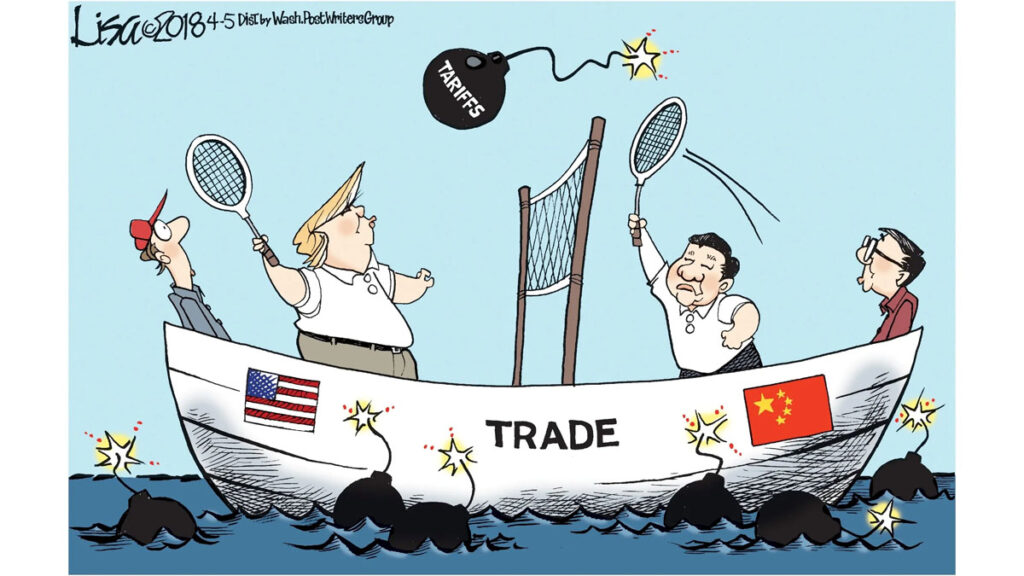
<p class="wp-block-paragraph">One of the questions that permeates the debate over tariffs is WHO pays for them? ; As is unusual, the public debate is extremely theoretical.</p>


<p class="wp-block-paragraph">President Trump says the nation upon which they are imposed pays them – and the money from tariffs makes a significant contribution to federal revenues. ; His opponents say that the cost of the tariffs are paid by consumers in the increased cost of goods – and that it is essentially a sales tax.</p>


<p class="wp-block-paragraph">Before getting into the details, I feel the need to add a disclaimer. I believe in free trade and, therefore not a fan of tariffs. I understand their temporary utility when dealing with unfair trade practices or high tariffs imposed on the United States by other nations. In those cases, tariffs are not a policy but a weapon – and they should be short-lived.</p>


<p class="wp-block-paragraph">Now to the headline question?</p>


<p class="wp-block-paragraph">While Trump is correct that tariffs produce revenue for the federal government &#8212; and so far, his tariffs have generated an estimated $20 billion for Uncle Sam. ; But Trump is wrong when he says that the tariffs are automatically paid by the nation upon which they are imposed. ;</p>


<p class="wp-block-paragraph">But &#8230; the Trump critics are also wrong when they say that the American consumer will pay them. ; Actually, the consumer has a lot of other options rather than paying for whatever additional cost slips through to the shelf price. ; You can rest assured that it will not be the full or theoretical cost calculated by economists and hyped by politicians.</p>


<p class="wp-block-paragraph">There are a number of reasons why the average consumer may not feel the full impact of the tariffs.</p>


<ol class="wp-block-list">
<li>First and foremost, there is still uncertainty about the level of tariffs to be imposed on which nations that produce different products. Most of the numbers floating around the political sphere are speculative, hypothetical and unrealistic.</li>


<li>If all goes well – and that is an “if” &#8212; the Trump tariffs will be temporary – either eliminated or reduced. Since the impact of tariffs is delayed, there may be no impact on consumer prices by a tariff that is imposed and withdrawn in a short time – usually after a deal has been struck.</li>


<li>Some nations will cover all or part of a tariff to keep their export products competitive – but not 100 percent as suggested by Trump. China already subsidizes exports – essentially covering the cost to keep their products competitive. That is one of the unfair trade practices.</li>


<li>Businesses affected by tariffs may consume all or some of the cost without increasing prices – increasing less than the tariff. A LOT of businesses have already indicated they will do that – at least in the short run.</li>


<li>The most obvious way for a consumer to avoid tariff increases is to not buy items with high tariffs. They can purchase domestically produced items. The wide variety of groceries and department stores offer lot of options. Trump critics say that tariffs will add $4000 in costs to the average American. But that is only if that hypothetical “average American” purchases the tariffed items at the hypothetical maximum cost increase. It is a hypothetical number, but not a real number.</li>
</ol>


<p class="wp-block-paragraph">It is going to take some time before we even know what the overall tariff situation looks like – and even longer to know the impact. ; But we consumers have a lot of flexibility in dealing with our budgets. ;</p>


<p class="wp-block-paragraph">(On a personal note, the cost of gas to fill my old 2009 Chevy Impala (I love that car) has dropped. ; And a couple months ago, it was going to buy a nice T-bone steak but took a pass at the $28.99 price &#8212; for one steak!!! ; I was back at the same grocery store today, and that same steak is $17.99. ; Eggs have also come down. ; But I digress.)</p>


<p class="wp-block-paragraph">There may be price increases in our future – and some of them due to the tariffs and some due to economic growth &#8212; but the situation is not nearly as bad as what we have already gone through with the Biden inflation. ; We have not gotten completely over that yet – but it is getting better.</p>


<p class="wp-block-paragraph">So, there ‘tis.</p>

Who really pays the tariffs?