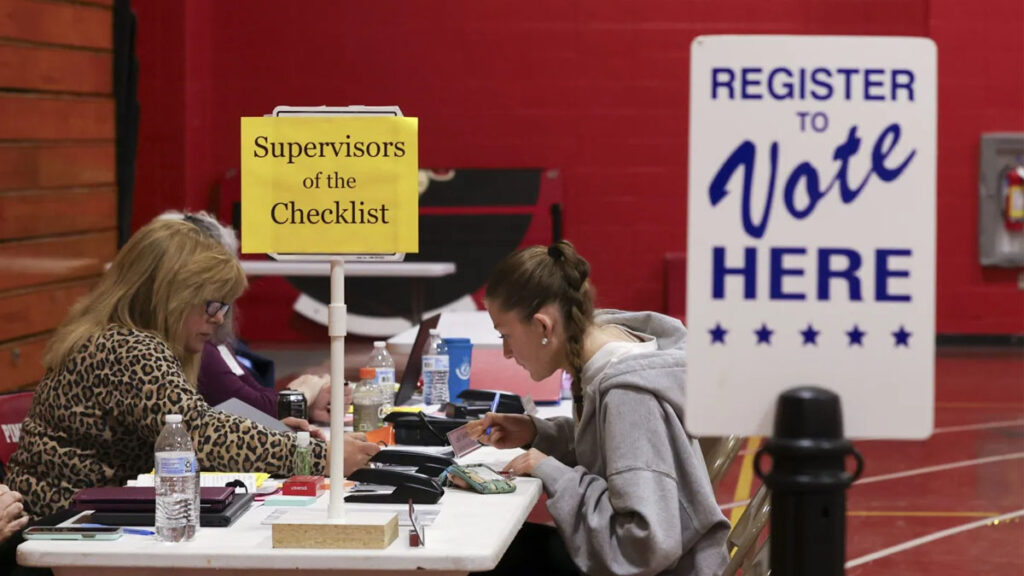
<p class="wp-block-paragraph">On March 25, 2025, President Donald Trump signed a sweeping executive order that he said would restore fairness and integrity to the American voting system. The order requires that all individuals registering to vote in federal elections must show government-issued proof that they are U.S. citizens. It also includes several other changes to how elections are run, including stricter rules for mail-in ballots and new standards for voting technology.</p>


<p class="wp-block-paragraph">“This is a great honor,” Trump said before signing the order in the Oval Office. “I sign all of them, but to sign this one is a great honor. There are other steps that we will be taking in the coming weeks. We think we’ll be able to end up getting fair elections.”</p>


<p class="wp-block-paragraph">Supporters of the order believe it will help prevent voter fraud and strengthen trust in the election system. Critics argue that the order is illegal and would take voting rights away from millions of eligible Americans.</p>


<h4 class="wp-block-heading">What the Executive Order Says</h4>


<p class="wp-block-paragraph">The executive order includes several key mandates that would change how federal elections are conducted. The most important part of the order is the requirement for documentary proof of citizenship. This means that anyone registering to vote in a federal election must now provide a specific form of identification issued by the government that shows they are a U.S. citizen.</p>


<p class="wp-block-paragraph">Acceptable forms of ID under the order include a U.S. passport, a REAL ID driver’s license that states citizenship, or a military or other federal identification card that proves the person is a citizen. Notably, birth certificates are not listed as an acceptable form of proof, even though they are often used in other citizenship-related matters.</p>


<p class="wp-block-paragraph">The order also gives the Department of Justice new powers to work with state election offices to search for what Trump called “ineligible voters.” Federal agencies are being directed to review state voter rolls to look for cases of potential voter fraud or violations of election laws. The attorney general has been instructed to enter into agreements with state officials for information-sharing on these matters.</p>


<p class="wp-block-paragraph">In addition, the order tells the Election Assistance Commission (EAC) to update the national voter registration form. The new form will require applicants to state what type of citizenship document they presented when registering. This change would apply to anyone registering to vote in a federal election, even if they use a state-issued form.</p>


<p class="wp-block-paragraph">Another major part of the order deals with how mail-in ballots are handled. It bans the counting of any ballots that are received after Election Day, even if they were postmarked on time. “Free, fair, and honest elections unmarred by fraud, errors, or suspicion are fundamental to maintaining our constitutional Republic,” the executive order states. “Yet the United States has not adequately enforced Federal election requirements that, for example, prohibit States from counting ballots received after Election Day or prohibit non-citizens from registering to vote.”</p>


<p class="wp-block-paragraph">The order also includes new rules for voting equipment. It bans machines that use QR codes or barcodes to read votes, which would force some states to replace their current equipment at great cost.</p>


<h4 class="wp-block-heading">The Background: A Long-Running Concern for Trump</h4>


<p class="wp-block-paragraph">Trump’s focus on voter fraud and noncitizen voting is not new. He has spent years arguing that the U.S. election system is weak and prone to abuse. He made these claims after losing the popular vote in 2016 and again after his 2020 election loss, which he continues to call “rigged.”</p>


<p class="wp-block-paragraph">Though federal law already makes it a serious crime for noncitizens to vote, Trump has claimed that noncitizen voting happens more often than the public realizes. However, multiple studies and court cases have shown that noncitizen voting is extremely rare in the U.S., and when it does happen, it often results in criminal charges.</p>


<p class="wp-block-paragraph">The order builds on Republican efforts in Congress to pass the Safeguard American Voter Eligibility Act, also known as the SAVE Act. That bill would require all voters to show documentary proof of citizenship, including birth certificates, which Trump’s executive order does not allow. While the SAVE Act has support in the House of Representatives, it is unclear if it will pass the Senate.</p>


<h4 class="wp-block-heading">Supporters Say It’s About Protecting Elections</h4>


<p class="wp-block-paragraph">Many Republicans welcomed Trump’s executive order, calling it a necessary step to protect elections from fraud and to make sure only citizens vote. Georgia Secretary of State Brad Raffensperger said in a statement, “This is a great first step for election integrity reform nationwide.”</p>


<p class="wp-block-paragraph">Supporters argue that asking for proof of citizenship is a common-sense measure that most Americans already agree with. They say it would make it harder for ineligible individuals to register and would increase confidence in the results of elections. “Election fraud—you’ve heard the term—we’ll end it, hopefully,” Trump said during the signing.</p>


<p class="wp-block-paragraph">The order’s supporters also believe that the federal government has the right to require citizenship checks when it comes to federal elections, even though states control most other parts of the process.</p>


<h4 class="wp-block-heading">Critics Say the Order Is Illegal and Unconstitutional</h4>


<p class="wp-block-paragraph">Legal experts and civil rights groups quickly criticized the executive order, calling it a clear case of presidential overreach. They say the Constitution gives states—not the president—the power to control how elections are conducted, and Congress can regulate some aspects of federal elections. But the president alone does not have this power.</p>


<p class="wp-block-paragraph">“The president does not have the authority to require this,” said Wendy Weiser, vice president for democracy at the Brennan Center for Justice at New York University’s School of Law. “This executive order is unlawful. The president cannot override a statute passed by Congress that says what is required to register to vote on the federal voter registration form.”</p>


<p class="wp-block-paragraph">Others pointed out that many of the ID documents listed in the order do not actually prove citizenship. For example, not all REAL ID licenses include citizenship status, and some military IDs do not either. About half of Americans do not have a valid passport, and many working-class, elderly, and rural Americans do not have easy access to the required documents.</p>


<p class="wp-block-paragraph">Rick Hasen, a law professor at UCLA, wrote, “The aim here is voter suppression pure and simple.” He added, “This executive order, if it could survive the inevitable judicial challenge, would severely shift power over federal elections into the hands of the presidency.”</p>


<h4 class="wp-block-heading">Lawsuits and Court Battles Are Expected</h4>


<p class="wp-block-paragraph">Legal challenges to the order are already underway. Michigan Secretary of State Jocelyn Benson said, “If the election denier-in-chief tries to interfere with our citizens’ right to vote, with this or any other action, we’ll see him in court.”</p>


<p class="wp-block-paragraph">Experts believe that the order will face major obstacles in the court system. Justin Levitt, a constitutional law scholar at Loyola Law School, explained, “The president’s got almost no power over federal elections—by design.”</p>


<p class="wp-block-paragraph">Some legal scholars believe the order was written with the Supreme Court in mind. Richard Pildes, a law professor at NYU, suggested that the order is part of a larger push to expand presidential control over independent federal agencies like the EAC. “The Court is well on the way to establishing that all federal agencies must be conceived as within the executive branch,” he wrote.</p>


<h4 class="wp-block-heading">What Happens Next</h4>


<p class="wp-block-paragraph">It is not clear how quickly or even whether the executive order will take effect. Court cases could delay or block it before the 2026 elections. States may resist the changes, especially those with Democratic leadership. Meanwhile, Republican lawmakers are pushing forward with legislation like the SAVE Act to turn some of the order’s provisions into permanent law.</p>


<p class="wp-block-paragraph">Even if the order is struck down, it is already reshaping the national debate over voting rights and election laws. Whether one sees it as a step forward for election security or as a dangerous attempt to restrict access to the ballot, Trump’s order has reignited a battle over who gets to vote and who decides the rules.</p>


<p class="wp-block-paragraph"><strong>NP Editor: </strong> This is the completion of a major campaign promise and it goes a long way in preventing the rampant election fraud that very likely cost Trump his 202 election. Trump is sensitive about this, look for him to fight tooth and nail to keep this in motion.</p>

Voter ID Required Nationwide: Trump Signs Order Requiring Proof of Citizenship to Vote