<p class="wp-block-paragraph">Venezuela this month held a Putin-esque referendum to determine whether its electorate supports the decision to claim sovereignty over <em>Guayana Esequiba, </em>a mineral-rich area located west of the Essequibo River.</p>


<p class="wp-block-paragraph">Commonly referred to as Essequibo, the region encompasses roughly 99,000 square miles of neighboring Guyana and is home to more than 15% of Guyana’s population. Residents of Essequibo were not allowed to participate in the referendum, which asked voters if Essequibo should become a state of Venezuela and its inhabitants citizens.</p>


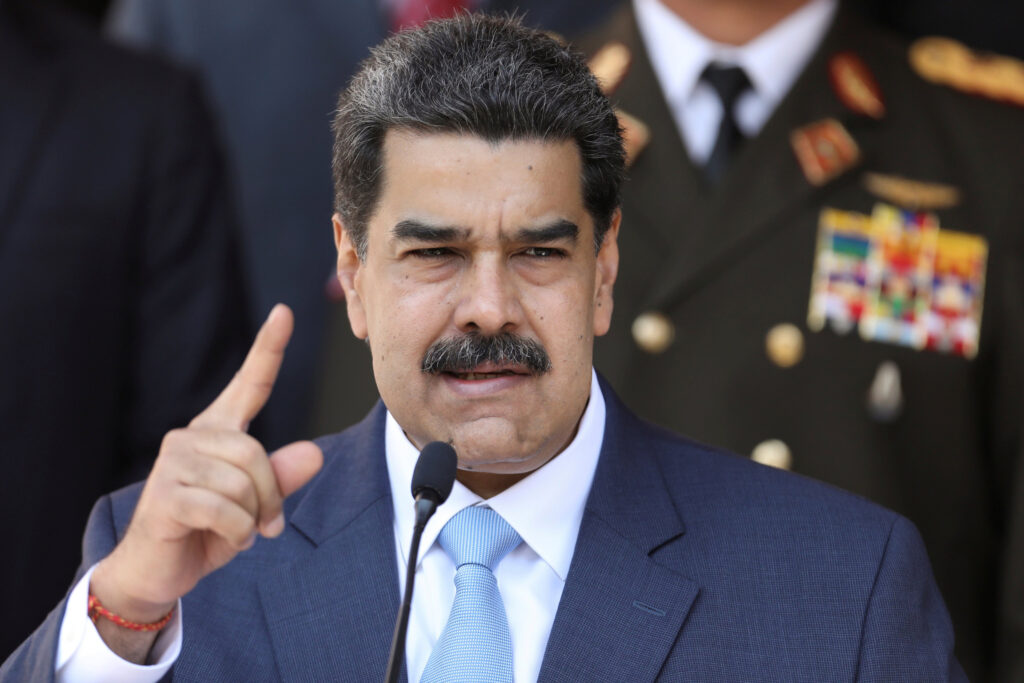
<p class="wp-block-paragraph">Venezuela claims the results of its referendum suggest overwhelming support for the decision to annex Essequibo and the nation’s president has already announced official ownership of the region. “It has been a total success for our country, for our democracy,” said Venezuelan President Nicolás Maduro, hinting that new maps were being drawn and that oil expeditions into the region would soon be underway. ;</p>


<p class="wp-block-paragraph">It is unclear how Maduro plans to enforce his baseless claim of ownership and some worry he may decide to take military action against Guyana. Brazil, which also borders Essequibo, has already ramped up military presence in the area. The International Court of Justice (ICJ), which in 2020 was tasked with solving the territorial dispute over Essequibo, has made it clear that Venezuela is not permitted to take action against Guyana’s ownership of the region. </p>


<p class="wp-block-paragraph">“[It appears that Venezuela] is taking steps with a view toward acquiring control over and administering the territory in dispute,” said ICJ President Joan E. Donoghue. “Furthermore, military officials announced that Venezuela is taking concrete measures to build an airstrip to serve as a ‘logistical support point for the integral development of Essequibo.&#8217;” ;</p>


<p class="wp-block-paragraph">Guyana&#8217;s President, Mohamed Irfaan Ali, encouraged his citizens to remain calm and promised to do his best in order to ensure the nation&#8217;s borders &#8220;remain intact.&#8221; </p>


<p class="wp-block-paragraph">His message to Venezuela and Maduro: “I want to advise Venezuela that this is an opportunity for them to show maturity, an opportunity for them to show responsibility, and we call upon them once more join us in…allowing the rule of law to work and to determine the outcome of this controversy.” ;</p>


<p class="wp-block-paragraph"><strong>A bit of history on the Essequibo dispute: ;</strong></p>


<p class="wp-block-paragraph">The territorial dispute over Essequibo dates back to the Spanish colonial period, when Venezuela was controlled by Spain and Guyana was controlled by the Netherlands and the United Kingdom. The disagreement has been exacerbated over the years by the presence of gold (discovered in the 1800&#8217;s) and oil (discovered in 2015).</p>


<p class="wp-block-paragraph">Based on the Paris Arbitral Award (an agreement signed in 1899 to solve territorial disagreements between Venezuela and the United Kingdom), Essequibo belongs entirely to Guyana. </p>


<p class="wp-block-paragraph">Venezuela, which won its independence from Spain in 1811, has opposed the Paris Arbitral Award from the beginning. Its chief complaints are: 1) Borders were decided by arbitrators from Russia and Britain and 2) Venezuela was represented by the United States due to a recent severing of diplomatic ties between Venezuela and Britain and thus had no say in the agreement. </p>


<p class="wp-block-paragraph">The Paris Arbitral Award was thrown into question during the 1940’s and the territorial dispute continued. The Geneva Agreement was drawn up and signed in 1966 to provide a temporary solution. Per the Geneva Agreement, Essequibo would remain under the control of Guyana until the parties involved came to a &#8216;peaceful, satisfactory resolution.&#8217;</p>


<p class="wp-block-paragraph">Guyana gained its independence just months after the Geneva Agreement was signed, further complicating matters between itself and Venezuela. ;Despite the Geneva Agreement, a resolution was not reached and the original agreement from 1899 went back into effect in 1982. The issue was placed in the hands of the United Nations in 1983 and referred to the International Court of Justice in 2020. </p>


<p class="wp-block-paragraph"><em>Since Venezuela&#8217;s claim of ownership dates back to the colonial years preceding the Paris Arbitral Award, analysts say the largest mistake made by Venezuela was that fact that it agreed to allow British Guiana to become a full state before requiring a solution to the border conflict; as a result, Guyana would carry more weight in negotiations and its previous rulers were not as involved. From Guyana’s point of view, its claim to Essequibo was established in 1899 and finalized in 1966; thus Venezuela is simply trying to re-open a case that has been long closed in order to gain access to natural resources. </em></p>


<p class="wp-block-paragraph"><strong>Sources: </strong></p>


<p class="wp-block-paragraph"><a href="https://www.voanews.com/a/venezuelans-approve-referendum-to-claim-sovereignty-over-swathe-of-guyana-/7383104.html">Venezuelans Approve Referendum to Claim Sovereignty Over Part of Guyana ;</a></p>


<p class="wp-block-paragraph"><a href="https://en.wikipedia.org/wiki/Geneva_Agreement_(1966)">Geneva Agreement (1966)</a></p>


<p class="wp-block-paragraph"><a href="https://en.wikipedia.org/wiki/Guyana%E2%80%93Venezuela_territorial_dispute">Guyana-Venezuela territorial dispute ;</a></p>

Venezuela Follows Putin’s Lead – Annexes Region of Guyana