<h4 class="wp-block-heading">Ukraine’s Drone Strike on Orenburg May Signal a Turning Point in the War’s Economics</h4>


<p>When Russia invaded Ukraine more than three years ago, Moscow assumed it would control the tempo of battle and the economy behind it. Ukraine had limited reach and few tools to strike back inside Russia. That calculation is starting to change. The weekend attack on the Orenburg gas processing complex—one of the largest in the world—marks a new phase in Ukraine’s drone warfare, one that could alter how Russia measures the cost of continuing the war.</p>


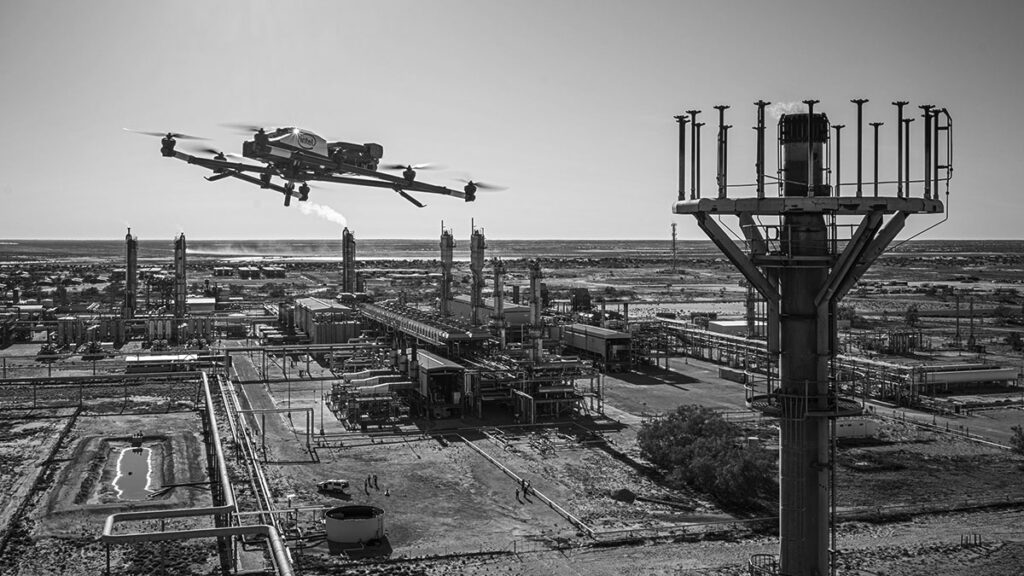
<p>According to Russian regional governor Yevgeny Solntsev, Ukrainian drones struck a workshop at the Orenburg facility, sparking a major fire and forcing operations to stop. “An emergency situation has developed following a drone attack,” Kazakhstan’s Energy Ministry said in a statement, confirming that the plant had to suspend processing gas from Kazakhstan’s Karachaganak field. Ukraine’s General Staff added that a “large-scale fire” engulfed one of the plant’s purification units.</p>


<p>The Orenburg complex, run by Gazprom, is not just another energy site. It processes roughly 45 billion cubic meters of gas per year—about four percent of Russia’s national output—and handles gas from both Russian and Kazakh fields. The facility is a cornerstone of regional energy infrastructure and one of Gazprom’s most valuable assets.</p>


<h4 class="wp-block-heading">Ukraine’s Expanding Strike Reach</h4>


<p>This was no isolated hit. Russia’s Defense Ministry admitted that 45 Ukrainian drones were launched across several regions that night, including one downed over Orenburg. Ukraine’s air force reported that Russia responded by launching 62 drones into Ukrainian airspace, 40 of which were shot down or electronically diverted.</p>


<p>In recent months, Ukraine has developed a range of long-distance drones capable of reaching deep into Russian territory. Their aim, Ukrainian officials say, is not only to disrupt logistics but to cripple the economic base that sustains Russia’s war machine. President Volodymyr Zelensky has called such operations “the most effective sanctions—the ones that work the fastest.”</p>


<p>“There should be zero Russian energy in Europe,” Zelensky said in a statement after the attack, adding that Western nations should stop financing Moscow’s aggression by buying its oil and gas. He insisted that Ukraine’s growing drone capability is meant to “force the Kremlin to feel what it has inflicted on others.”</p>


<h4 class="wp-block-heading">A Blow to Gazprom’s Cash Flow</h4>


<p>The economic implications are serious. Using market benchmarks, the Orenburg complex’s 45 billion cubic meters of annual capacity equates to roughly 18 billion dollars in sales at current European prices, or around 5 to 6 billion dollars at U.S. domestic price levels. Even temporary outages could cost Gazprom hundreds of millions of dollars in lost throughput and contract penalties.</p>


<p>Kazakh officials said they received no word on how long repairs would take. Russian authorities have offered few details about the extent of the damage. But independent analysts noted that even partial disruptions at such a large complex can have cascading effects on pipeline pressure, feedstock allocation, and export volumes.</p>


<h4 class="wp-block-heading">A New Kind of Pressure</h4>


<p>Ukraine’s strikes are targeting more than symbolic assets. Since summer, at least 18 Russian oil and gas facilities have been hit by drones, including the Novokuibyshevsk refinery in Samara, which processes 4.9 million tons of crude a year. Each successful strike compounds the perception that Russian energy infrastructure is vulnerable, forcing Moscow to divert resources to defend plants hundreds of miles from the front.</p>


<p>Russia’s fossil fuel exports have already fallen to their lowest point since the invasion began. The Centre for Research on Energy and Clean Air reports that daily fuel export revenues dropped to about 637 million dollars in September, down twenty-six percent from a year earlier.</p>


<h4 class="wp-block-heading">Changing the Strategic Equation</h4>


<p>What makes this strike different is not just the damage, but the distance. Orenburg lies more than 900 miles from the Ukrainian border, deep inside Russian territory. A few years ago, it would have been unthinkable for Kyiv to reach that far. Now, Ukraine’s drones are not only crossing that distance but hitting high-value industrial targets with precision.</p>


<p>This newfound reach is changing Moscow’s strategic calculus. In 2022, Russia could wage war with relative confidence that its energy facilities were safe. Today, the equation includes a risk that one of its most profitable sectors could become a battlefield. Each hit compounds the financial strain on an economy already stretched by sanctions and war costs.</p>


<h4 class="wp-block-heading">The Broader Economic Risk</h4>


<p>If Ukraine continues this campaign, the potential losses mount quickly. Even conservative modeling suggests that disabling a dozen major facilities across the Volga-Urals region could threaten more than 70 billion dollars in annual revenue. On European benchmark prices, the figure rises above 200 billion dollars. These numbers do not reflect total collapse—only partial outages and rerouting—but they show the scale of the vulnerability.</p>


<h4 class="wp-block-heading">A War Entering a New Phase</h4>


<p>While President Donald Trump has suggested that Ukraine may have to concede some territory to achieve peace, the battlefield reality is that Kyiv is now able to strike targets once considered untouchable. The Orenburg fire proves that Ukraine can attack not just soldiers or supply lines, but the energy assets that bankroll Russia’s invasion.</p>


<p>For Moscow, this forces a new and uncomfortable question: Can it afford to keep fighting if the cost is measured not just in troops and tanks, but in billions of dollars of lost energy revenue?</p>


<p>The war began with the assumption that Ukraine could only defend. With every long-range strike, that assumption weakens—and a new balance of power begins to emerge, one measured not just in territory, but in economic survival.</p>


<p><strong>PBP Editor:</strong> These attacks are not decisive just yet, damage can be repaired in the short term, but Ukraine is getting better at it &#8211; while at the same time getting weaker militarily. The point of the article is that this might BECOME a lever in getting Putin to the table, but Putin still has a lot more destructive force at his fingertips.</p>


<p>BTW, this is a fine example of asymmetric warfare, tiny cheap methods affecting massive expensive operations. </p>


<p></p>

Ukraine Drones Strike Gas Plant – Russia’s War Economics Changing?