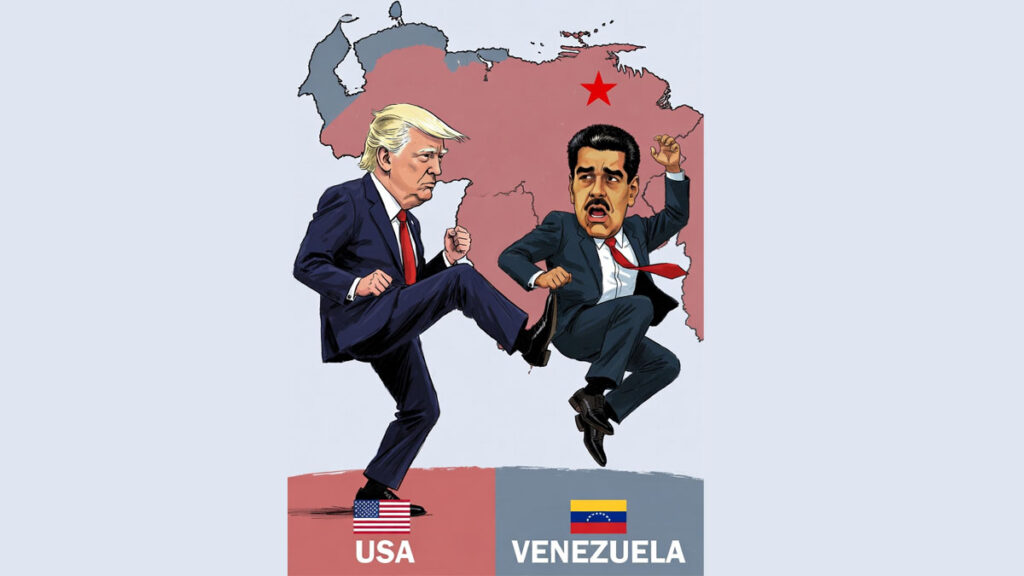
<p class="wp-block-paragraph">President Trump’s second term has been defined by bold foreign policy moves, and nowhere is this more evident than in his approach to Venezuela. His administration has launched strikes against suspected drug trafficking boats in the Caribbean, a campaign designed to reduce the flow of deadly narcotics into the United States. These operations, though controversial, are presented by Trump as a matter of national security. Every shipment intercepted represents numerous lives saved from the scourge of fentanyl, cocaine, and heroin that devastates American communities.</p>


<p class="wp-block-paragraph">Critics on the left have condemned these actions as reckless, even labeling them violations of international law. Yet this criticism reveals a deeper divide. Democrats often appear more sympathetic to the so-called ‘rights” of traffickers, smugglers and illegal border crossers than the victims of their crimes &#8212; and the plight of law enforcement officers risking their lives to keep drugs and criminals off the streets of America.</p>


<p class="wp-block-paragraph"><strong>Reversing Biden’s Policies</strong></p>


<p class="wp-block-paragraph">Trump has also positioned his Venezuela strategy as a reversal of what he calls the failures of the Biden administration. Under Biden, immigration enforcement was lax, allowing gangs, such as Tren de Aragua—a Venezuelan criminal syndicate notorious for extortion, kidnapping, and drug smuggling—to infiltrate U.S. communities. Reports of Venezuelan migrants linked to organized crime have fueled fears that Biden’s policies gave cartel affiliates legal protection rather than prioritizing public safety. Trump’s hardline stance, by contrast, emphasizes deportation, interdiction, and military pressure to ensure that criminal networks cannot exploit America’s borders.</p>


<p class="wp-block-paragraph"><strong>Saving American Lives</strong></p>


<p class="wp-block-paragraph">The logic behind Trump’s naval and aerial strikes is straightforward. ; Narcoâterrorist boats are the arteries of the drug trade. By severing them, the administration believes it is cutting off the flow of poison before it reaches U.S. cities – and discouraging others from undertaking the journey. Every ton of cocaine destroyed at sea is a ton that will never be sold in Miami, New York, or Los Angeles. Trump has framed this as a war for the survival of American families, insisting that the lives saved far outweigh the diplomatic discomfort caused by Venezuela’s protests.</p>


<p class="wp-block-paragraph">Law enforcement officials have echoed this sentiment. Former State Department envoy Ellie Cohanim praised Trump’s crackdown on narcoâterrorism, noting that it represents a decisive break from years of acquiescence.  ;The administration has reopened military bases in Puerto Rico to serve as launchpads for Caribbean operations, underscoring the seriousness of its commitment. ;</p>


<p class="wp-block-paragraph"><strong>Popularity Among Venezuelans</strong></p>


<p class="wp-block-paragraph">Despite the fiery rhetoric from Nicolás Maduro’s regime, Trump remains wildly popular among Venezuelans. For citizens suffering under authoritarian rule, Trump’s willingness to confront Maduro is seen as a beacon of hope. His tough stance signals that the United States has not abandoned Venezuela to dictatorship. In fact, Trump’s actions have earned praise from international figures, including prominent voices in the peace and human rights community. Reports note that his efforts to pressure Maduro have been welcomed by activists who see regime change as the only path to restoring democracy.</p>


<p class="wp-block-paragraph">This popularity is not accidental. Trump has consistently spoken directly to the Venezuelan people, promising that America stands with them against tyranny. His administration’s sanctions and military pressure are framed not as punishment of the Venezuelan nation, but as a strike against the criminal elite that has hijacked the nation through fraudulent elections. For many Venezuelans, this distinction matters deeply, and it explains why Trump’s approval remains strong in communities desperate for liberation.</p>


<p class="wp-block-paragraph">If not specifically stated, Trump’s policies are directed at regime change. ; In a recent telephone conversation with Maduro, Trump advised him to leave the country before it is too late.</p>


<p class="wp-block-paragraph"><strong>A Broader Vision</strong></p>


<p class="wp-block-paragraph">Trump’s Venezuela policy is not just about narcotics—it is about restoring American strength abroad. By confronting Maduro, Trump signals to allies and adversaries alike that the United States will not tolerate regimes that export crime and instability. His critics argue that this risks escalation, but his supporters counter that deterrence requires resolve. Weakness, they say, invites aggression; strength compels respect.</p>


<p class="wp-block-paragraph">The broader vision is clear. ; America will no longer be a passive victim of transnational crime. Instead, it will take the fight directly to the traffickers, wherever they operate. This doctrine resonates with Trump’s base, who see it as a return to lawâandâorder principles abandoned under Biden.</p>


<p class="wp-block-paragraph">The Trump doctrine is reminiscent of President George H. W. Bush sending troops into Panama to depose and arrest its drug trafficking dictator Manuel Noriega.</p>


<p class="wp-block-paragraph">Trump’s Venezuela policy is a lightning rod for debate, but its core message is unmistakable &#8212; protect American lives and interests by dismantling criminal networks at their source. His strikes on narcoâterrorist boats, his reversal of Biden’s permissive immigration stance, and his popularity among Venezuelans all reinforce the narrative of a President willing to act decisively where others hesitated. Democrats may continue their Trump-hatred reflexes, but his actions bode will for America’s national security, world leadership and the protection of American lives.</p>


<p class="wp-block-paragraph">So, there ‘tis. ;</p>

Trump’s Venezuelan Policy Producing Solid Benefits