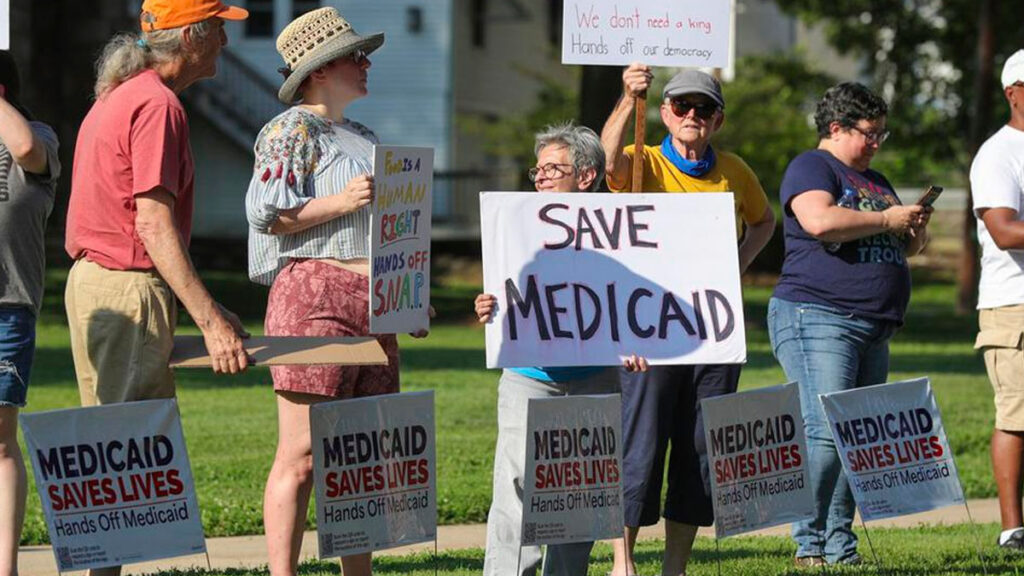
<p class="wp-block-paragraph">A controversial provision in President Donald Trump’s sweeping “One Big Beautiful Bill” has ignited fierce debate: mandatory work requirements for able-bodied Medicaid recipients. While critics call the policy a bureaucratic disaster in the making, supporters argue it’s a long-overdue reform rooted in personal responsibility and economic dignity. As the Senate takes up the bill, the stakes are high for millions of low-income Americans—and for the broader direction of welfare policy in the United States.</p>


<h3 class="wp-block-heading">What the New Work Rules Would Require</h3>


<p class="wp-block-paragraph">Under the proposed federal rules, adults aged 19 to 64 who are receiving Medicaid through the Affordable Care Act’s expansion program would be required to complete at least 80 hours per month of work, job training, education, or volunteer service. Exemptions exist for pregnant women, parents of dependent children, and those with physical or mental disabilities.</p>


<p class="wp-block-paragraph">The goal, according to Speaker Mike Johnson, is “common sense.” He said, “You find dignity in work, and the people that are not doing that, we’re going to try to get their attention.” For Johnson and many Republicans, Medicaid was never meant to be permanent support for able-bodied adults. “These programs were intended to be safety nets, not hammocks,” said Sen. Katie Britt of Alabama.</p>


<p class="wp-block-paragraph">Rep. Nancy Mace put it even more bluntly: “If you&#8217;re an able-bodied worker, get a damn job.”</p>


<h3 class="wp-block-heading">The Georgia Trial Run: A Warning Sign</h3>


<p class="wp-block-paragraph">Georgia is currently the only state enforcing work requirements for Medicaid, and the early results have raised red flags. Since the launch of its “Pathways to Coverage” program in July 2023, Georgia has spent close to $100 million, with over half going toward administrative costs. Out of nearly 250,000 eligible residents, only about 7,500 enrolled. That’s less than 5 percent participation.</p>


<p class="wp-block-paragraph">The state’s own data shows that 64 percent of those eligible were already working, but many could not navigate the state’s digital verification system. Georgia has since reduced its verification frequency from monthly to annually, acknowledging the administrative burden.</p>


<p class="wp-block-paragraph">Critics like Pamela Herd, a social policy expert at the University of Michigan, say Georgia’s experience is instructive. “The majority of people already meet the requirement or are exempt, but they’re going to get caught in paperwork. That’s not a policy success. That’s failure by design.”</p>


<h3 class="wp-block-heading">What Happened in Arkansas and New Hampshire</h3>


<p class="wp-block-paragraph">Before Georgia, Arkansas tried work requirements between 2018 and 2019. The result: more than 18,000 low-income adults lost coverage in six months. A federal judge struck down the requirement, citing increased uninsurance rates with no evidence of higher employment. New Hampshire faced similar problems in 2019 and suspended its work rule before it could take full effect.</p>


<p class="wp-block-paragraph">In both states, a significant number of enrollees lost coverage not because they failed to meet the requirements, but because they were confused about the process or couldn’t submit the correct paperwork in time.</p>


<h3 class="wp-block-heading">California’s Potential Crisis</h3>


<p class="wp-block-paragraph">In California, where nearly 15 million people rely on Medi-Cal, state-specific projections are alarming. A report by the Urban Institute estimates that as many as 1.4 million Californians could lose coverage under the new federal work rules. Many of these people work in the informal economy as gardeners, nannies, and housekeepers—jobs without pay stubs or HR departments to verify hours.</p>


<p class="wp-block-paragraph">Diana Alfaro, a health navigator in Los Angeles, said, “They’re already doing the work. But try getting a letter from someone who pays you in cash or has no fixed hours. It’s not realistic.”</p>


<p class="wp-block-paragraph">Critics argue that the policy amounts to a bureaucratic trap. “You might say you’re combating fraud,” said Katherine Hempstead of the Robert Wood Johnson Foundation, “but the way you’re going to save money is by people accidentally losing coverage. That’s not a good way to run social insurance.”</p>


<p class="wp-block-paragraph">Supporters of the bill argue that the work requirement is both a moral imperative and a fiscal necessity. The Congressional Budget Office estimates that the rule could save $344 billion over 10 years, largely by reducing Medicaid enrollment. That money, Republicans say, helps offset the cost of Trump’s renewed tax cuts and brings long-term sustainability to welfare programs.</p>


<p class="wp-block-paragraph">Rep. David Valadao of California, a Republican who represents a heavily Medicaid-dependent district, said, “For those who are able-bodied with no dependents and choose not to make that effort, yeah, you’re probably going to be affected by this. But the average working American thinks that’s fair.”</p>


<h3 class="wp-block-heading">Trump’s Philosophy: Work as a Pathway to Dignity</h3>


<p class="wp-block-paragraph">For Trump, this reform fits into a broader worldview that sees work not only as an economic necessity but as a source of personal value. His administration’s position is clear: people capable of working should be encouraged, even pushed, to work. It&#8217;s not about cruelty, they argue, but about breaking cycles of dependency.</p>


<p class="wp-block-paragraph">Sen. Bill Cassidy of Louisiana summed up that philosophy well: “Safety nets should bounce you to your feet. They shouldn&#8217;t be like flypaper in which you stick and can never get off.”</p>


<p class="wp-block-paragraph">Critics warn that the Medicaid work requirements could throw millions off health coverage due to technicalities, not laziness. They point to failed experiments in Arkansas and Georgia, and looming dangers in places like California. Still, supporters maintain that encouraging work is a moral and economic imperative—and Trump’s policy reflects that belief.</p>


<p class="wp-block-paragraph">While the policy may stumble in execution, its intent is grounded in a simple principle: for those who can work, work is the best path forward. As the Senate debates the bill, that idea—however controversial—remains at the heart of Trump’s vision for welfare reform.</p>

Trump’s Medicaid Work Requirements: Right Policy, Tough Execution