




















Trump Considers Changing Marijuana Regs – Do We Need More Potheads?
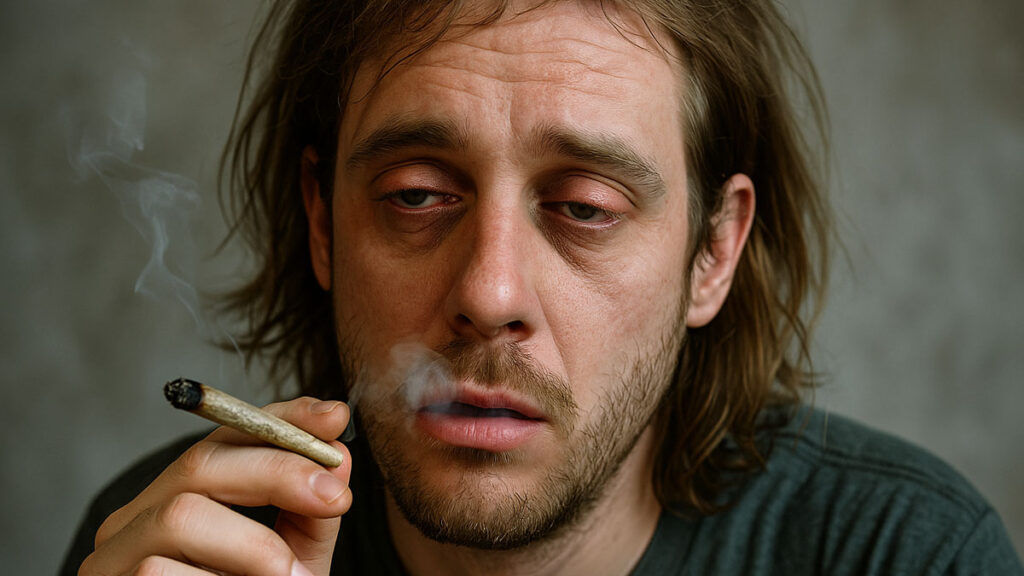
President Donald Trump is openly considering a major change in federal marijuana policy, a move that could shift the drug from its current Schedule I classification — reserved for substances with “no currently accepted medical use and a high potential for abuse” — to Schedule III, which is for drugs with a “moderate to low potential for physical and psychological dependence” such as ketamine, anabolic steroids, and testosterone. While this would not legalize marijuana for recreational use nationwide, it would dramatically ease restrictions on the cannabis industry, allowing businesses to deduct expenses and expanding the ability to conduct federally approved medical research.
Critics warn that such a change could have far-reaching negative consequences, increasing addiction rates, causing more brain damage, and worsening public health outcomes. The question now facing both the administration and the public is whether loosening these restrictions will solve problems — or create new ones.
Trump’s Deliberations
Speaking to reporters in the White House briefing room on August 11, Trump said his administration was still in the early stages of the decision-making process. “We’re looking at reclassification and we’ll make a determination over the next — I would say over the next few weeks, and that determination hopefully will be the right one. It’s very complicated subject,” he explained. He acknowledged hearing “great things having to do with medical” use, but also “bad things having to do with just about everything else.”
Trump had previously indicated openness to the idea, telling donors at his Bedminster, New Jersey country club that moving marijuana to a lower classification could “recognize its medical value” and make research easier. However, he has also expressed concern that such a move could send mixed messages at a time when his administration is emphasizing public safety and combating crime.
Why the Change Is Being Considered
This push comes amid heavy lobbying by the cannabis industry, which has spent “hundreds of millions of dollars” to influence policymakers, according to Kevin Sabet, founder of Smart Approaches to Marijuana and a former White House drug policy adviser. The potential financial benefits for the industry are significant. Currently, federal law prohibits businesses involved in trafficking Schedule I or II drugs from deducting normal business expenses on their taxes. Reclassifying marijuana as Schedule III would lift that restriction, giving the industry a substantial tax advantage.
Supporters also claim reclassification would open the door to more rigorous medical studies. Health Secretary Robert F. Kennedy Jr., a longtime supporter of marijuana legalization, argued that such a shift “would enable critical research” into potential medical uses. Advocates say this could lead to better dosing guidance, improved product quality control, and more effective treatments for conditions like chronic pain, PTSD, and certain cancers.
The Risks of Loosening Restrictions
Opponents argue that the risks of normalizing marijuana use far outweigh the potential benefits. Heavy marijuana use has already reached record highs in the United States. A 2024 study in the journal Addiction found that daily or near-daily marijuana use has increased fifteen-fold since 1992, with an estimated 17.7 million people using marijuana every day or almost every day – surpassing the number of heavy alcohol drinkers.
Research shows that long-term or heavy use can cause serious harm to brain function, leading to memory problems, impaired learning, and in some cases, psychotic disorders. The Colorado Department of Public Health and Environment has linked heavy cannabis use to psychosis, lung irritation, chronic bronchitis, and cardiovascular issues. In severe cases, it can trigger Cannabinoid Hyperemesis Syndrome, a condition that causes persistent vomiting which stops only when marijuana use ends.
Critics warn that reclassification would be perceived as a federal “safety endorsement” of marijuana, encouraging more frequent use and lowering the public’s perception of risk. As biomedical scientist Raphael Cuomo of the University of California, San Diego noted, “Risk perception often moves faster than policy,” meaning people may interpret the change as proof the drug is harmless before the medical community fully understands its long-term effects.
Conservative Pushback
Within Trump’s own political base, the idea is sparking sharp divisions. Some prominent MAGA figures are staunchly opposed. Charlie Kirk, founder of Turning Point USA, said on X, “I hope this doesn’t happen,” warning that marijuana already “overwhelms public spaces.” Matt Walsh of The Daily Wire stated bluntly that “no country of potheads has ever thrived.” Jack Posobiec cautioned against normalizing cannabis in family-friendly environments.
These critics argue that marijuana use runs counter to MAGA values of hard work, discipline, and traditional masculinity. Podcaster Michael Knowles framed it as a cultural issue, saying conservatives “prefer traditional pleasures” like tobacco or alcohol, calling marijuana “the liberal intoxicant of choice.”
Supporters Within the Movement
Other MAGA-aligned voices see the potential change differently. Influencer Rogan O’Handley believes reclassification would benefit veterans and provide an alternative to pharmaceutical drugs. Conservative commentator CJ Pearson said Trump’s openness “shows he’s listening” to people who have experienced genuine medicinal benefits. This faction argues that allowing more research could separate fact from myth and lead to better, safer medical treatments.
A High-Stakes Decision
The administration’s choice will not only affect marijuana policy but also signal broader priorities on public health, law enforcement, and economic policy. Reclassifying marijuana would shift regulatory oversight to the Food and Drug Administration, which would then face the challenge of enforcing quality standards for a product with inconsistent potency and purity.
For Trump, the decision remains “very complicated.” He has promised a final determination within weeks, but for many critics, the bottom line is simple: making marijuana easier to obtain will almost certainly lead to more use, more addiction, and more brain damage.
The question they are asking is the same one that underlies this debate — do we really need more potheads?
NP Editor: Let me ask the question a different way. Are we really ready to give up on 17 million people allowing them to live lesser lives because of an addiction? And how many more in future generations?
And BTW, in 1963, 42% of people smoked cigarettes – lots of lung cancer but no brain damage. Think about, if the percentages rise, of over 130 million people suffering from impaired thought processes from marijuana.





Pot, like gambling, was decriminalized for one reason, and one reason only” Follow the money.
It IS addictive. Period. Any argument to the contrary is false. Indeed, as are most all of the arguments for it. They are the same BS arguments I heard back when I was smoking crap that was no where NEAR as strong as today’s varieties.
But I’ll add one rebuke my PharmDoc daughter told me: ALL the active compounds in weed have been available in pharmaceutical form for decades. They are not stocked at your local CVS because there’s NEVER been a properly done clinical study that has demonstrated any beneficial effect of any of them.
Huh.
Here’s a few arguments against: Rate of Homelessness. Worker Productivity. Crime rates. Unemployment (ne job market drop out.) Gateway. The best part is that I don’t need any further discussion. They’re all going in the wrong direction.
By the way, all this legalization did was to make it even MORE profitable (54% tax on legal weed) and remove the cost of dealing the gateway drug.
To profit on one’s misery (drugs being a salve for those miseries) is immoral. Trump should go in the OTHER direction.
Nice writeup, glad to have that extra expertise
Bullshit.
Cannabis is not physically addictive, although there may be mental addictions with it. Period. You have no proof of physical addiction from a relevant peer reviewed study. In my own personal experience, there is never been any issue with quitting. And I have quit for five years and 10 years at a toss. All of the data says it is not physically addictive. At least not proven yet. It is far easier to quit smoking pot than it is to quit smoking cigarettes for example. Regarding addiction, you are much better off with Pat than you are with alcohol, nicotine, cocaine, heroin, etc..
There are a few cannabinol drugs produced by big Pharma, three majors to be exact. But not all elements of cannabis have been produced in drugs by big Pharma. That is just an outright lie.
In terms of the money, there is no doubt that extra money is going to the state, but at a consumer level, I have not noticed the price difference. I could be wrong on this one, but I just don’t notice. Then again, I started by paying $15 an ounce, for the good stuff.
As far as the drug creating joblessness, homelessness, etc., I am not sure there are any statistics that back that up. As an anecdote, it did not stop me from being in upper management for a fortune 100 company.
The only place I agree with Bobm is that the potency of the drug makes it like nothing that existed in the 70s. I’ve had many discussion with our local pot entrepreneurs about their really big problem in this. It is human nature to try to grow the very best, and the tobacco industry has gotten involved here and there is no one better at creating product for maximum distribution of effects. I keep telling the industry that they will do themselves harm if they continue down this path.
Therefore, Bob M, I would concede that everything I know about pot is probably wrong when viewed against today’s product. The new versions have different problems in my opinion. These new versions are so strong that people are being physically harmed, and mentally harmed, in ways you can’t imagine. I believe testing should be redone on the new brands, perhaps comparing to the old brands, but trying to get a better understanding of what this stuff might be doing that the older stuff did not. I think there is a difference. It may be the difference of drinking a bottle of wine versus drinking a bottle of grain alcohol. One won’t kill you, the other will. I already go for the lower thc content.
I’ve smoked for close to 60 years, with some considerable periods off, proving that it was not addictive for me. Never during that time did I experience any medicinal benefits from the drug. Just made me feel good. Lately, as age and health creep up on me, I have a few maladies that make me live with constant pain. Suddenly, reefer provides me relief. It is better than Advil, it is better than Mobic, it literally erases the pain. Unfortunately, the stuff is so strong, there is no way I could use it 24×7. It does provide me with a very peaceful sleep. Additionally, and while this may be completely mental for me, it also can reproduce every pain you could ever imagine in the first wave after smoking. Thank God, for a lifetime experience with the stuff, and therefore knowing, “just wait 15 minutes and it will blow over.“ I’ve seen people go off the deep end and head to ER with some of these feelings. Luckily, I know it’s all in my head, it will pass, and then the analgesic benefits kick in and sweet dreams. .
Now we know what’s wrong with Dunger
And more drug babies are being born. What will it be like if things change