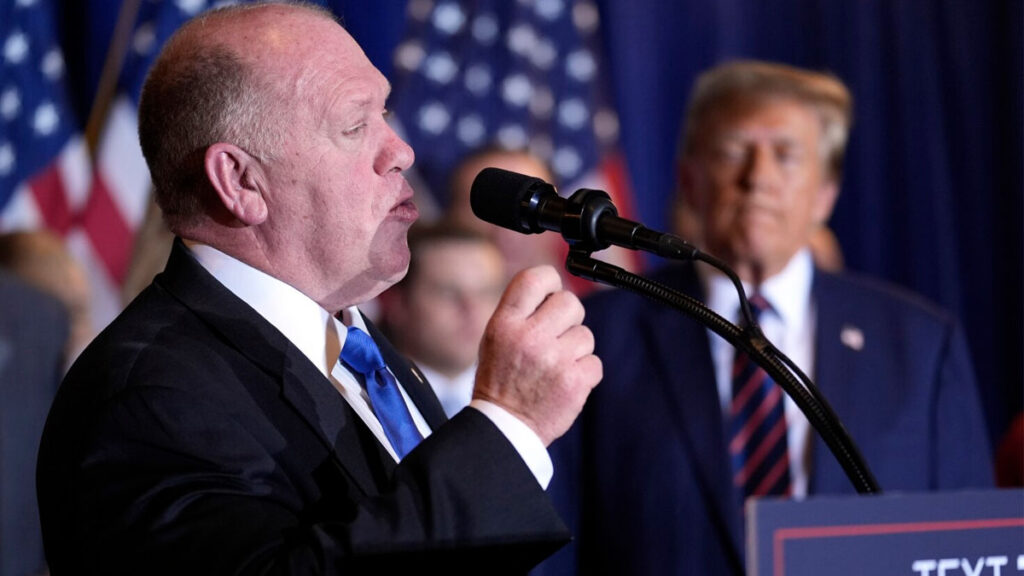
<p class="wp-block-paragraph">Tom Homan, newly appointed as President-elect Donald Trump’s border czar, is stepping into a high-stakes role that merges bold political promises with real-world challenges. Known for his straightforward demeanor and hardline immigration stances, Homan has been a prominent figure in conservative circles. Now, he faces the task of turning sweeping campaign declarations into workable strategies that prioritize public safety and practicality.</p>


<p class="wp-block-paragraph"><strong>Pragmatism at the Forefront</strong></p>


<p class="wp-block-paragraph">Homan’s appointment reflects a pivot from campaign trail rhetoric to the complexities of governance. Trump’s pledge to deport 15 to 20 million undocumented immigrants sparked widespread debate, but Homan has clarified that the immediate focus will be on those with criminal records. “I don’t know how many people we’ll remove in the first 100 days,” he told <em>The Wall Street Journal</em>, emphasizing that resources and congressional funding will dictate the scope of operations.</p>


<p class="wp-block-paragraph">This candidness underscores Homan’s pragmatic approach. Rather than pursuing mass deportations, he aims to prioritize enforcement against individuals with criminal histories, aligning with the administration’s public safety agenda. GOP Representative Darrell Issa echoed this sentiment, stating, “We’re not talking about 20 million deportations. It’s about establishing order and priorities.”</p>


<p class="wp-block-paragraph"><strong>Realism Meets Trump’s Strategy</strong></p>


<p class="wp-block-paragraph">President Trump’s negotiation tactics often involve setting ambitious goals before negotiating toward practical solutions. Homan’s realism complements this approach. By focusing on deporting criminal elements and acknowledging operational limits, he helps shape the administration’s objectives into achievable outcomes. Trump’s bold rhetoric often serves as a starting point, allowing for compromises that still deliver impactful results.</p>


<p class="wp-block-paragraph">Homan’s dual reputation as a tough-talker and a strategist is well-regarded by colleagues. John Torres, a former acting ICE director, described him as “a street cop at heart” with sharp intellect and strategic acumen. This combination positions Homan as a bridge between bold public commitments and operational feasibility.</p>


<p class="wp-block-paragraph"><strong>A Career Steeped in Immigration Enforcement</strong></p>


<p class="wp-block-paragraph">With over four decades of experience, Homan is no stranger to border security challenges. Starting as a Border Patrol agent in 1984, he rose to become acting director of Immigration and Customs Enforcement (ICE). He has tackled complex issues such as human trafficking and contributed to the establishment of ICE post-9/11.</p>


<p class="wp-block-paragraph">“I’ve served six presidents and seen countless policies,” Homan said. “Some work; others don’t.” His deep institutional knowledge has reinforced his belief in prioritizing enforcement. Instead of broad raids, Homan plans to focus on detaining individuals with criminal records, often apprehending them directly from local jails.</p>


<p class="wp-block-paragraph"><strong>Personal Convictions Rooted in Tragedy</strong></p>


<p class="wp-block-paragraph">Homan’s staunch immigration views are shaped by a tragedy he witnessed in 2003, when 17 migrants, including a father and his five-year-old son, died in a smuggler’s overcrowded truck. The heartbreaking scene left a lasting impact. “Every glance at that child reminded me of my own son,” Homan recalled in his book, <em>Defend the Border and Save Lives</em>.</p>


<p class="wp-block-paragraph">This experience cemented his belief that secure borders prevent human suffering. “Open borders are inhumane. Secure borders save lives,” he frequently asserts. Homan’s commitment to deterrence stems from a conviction that preventing illegal crossings protects vulnerable migrants from exploitation and death.</p>


<p class="wp-block-paragraph"><strong>Overcoming Challenges</strong></p>


<p class="wp-block-paragraph">Homan faces significant hurdles, including resistance from sanctuary city policies and funding limitations. Many Democratic-led cities refuse to cooperate with ICE, complicating efforts to detain criminals. “Sanctuary policies lead to more officers in neighborhoods, more arrests, and unintended consequences,” Homan warned.</p>


<p class="wp-block-paragraph">Budget constraints further limit ICE’s capabilities. The agency currently has resources for only 40,000 detention beds and 6,000 enforcement officers. Scaling up deportations—even to 1 or 2 million—will require substantial funding increases.</p>


<p class="wp-block-paragraph"><strong>Balancing Ambition and Reality</strong></p>


<p class="wp-block-paragraph">Homan’s focus on prioritizing public safety and targeting criminal deportations reflects a balanced approach to Trump’s immigration agenda. While some hardliners view this as a retreat from campaign promises, Homan and Trump understand that setting realistic goals is critical for long-term success.</p>


<p class="wp-block-paragraph">Trump’s strategy of starting with bold positions and negotiating toward practical outcomes allows for impactful compromises. “Over the years, I’ve evolved,” Homan said. “The journey to the U.S. often leads to human suffering—it’s not worth it.”</p>


<p class="wp-block-paragraph"><strong>Looking Ahead</strong></p>


<p class="wp-block-paragraph">As Trump’s border czar, Homan faces the monumental task of implementing one of the administration’s most ambitious agendas. His extensive experience and pragmatic outlook position him to navigate the complexities of immigration enforcement. By prioritizing criminal deportations and emphasizing deterrence, Homan aims to balance bold promises with achievable outcomes.</p>


<p class="wp-block-paragraph">For Homan, the mission is clear: secure the border, protect American communities, and save lives by preventing dangerous journeys. His combination of toughness and realism will play a pivotal role in shaping the administration’s immigration legacy.</p>

Tom Homan as Border Czar: Balancing Bold Promises with Reality