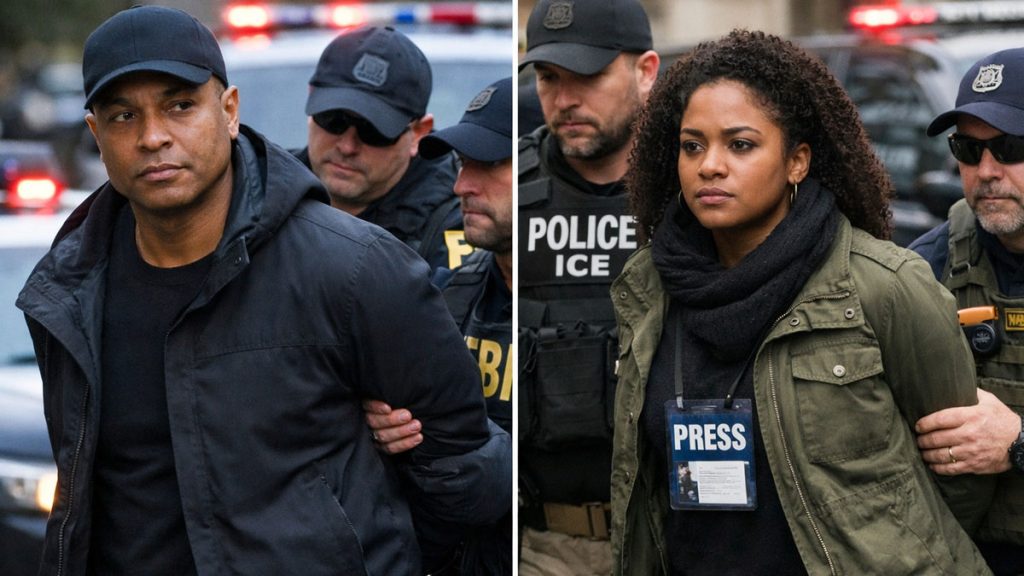
<p class="wp-block-paragraph">The arrests of Don Lemon and Georgia Fort raise serious questions. Arresting journalists is a serious issue – especially since the profession is protected by the First Amendment. The cases brought against Lemon and Fort could be dismissed &#8212; or, in the other extreme, they could wind up in jail for a short period. The justification in the cases of Lemon and Fort will eventually be determined by a court of law.</p>


<p class="wp-block-paragraph">The cases raise a number of questions, however. Were Lemon and Fort journalists who were operating as activists or more importantly, were they journalists at all. In the days of Internet commentaries, YouTube channels and podcasts, many claim to be so-called &#8220;independent journalists.&#8221; But is that a valid claim?</p>


<p class="wp-block-paragraph">There was a time — not that long ago — when journalism was a profession. Not a hobby. Not a branding exercise. Not a TikTok persona. It was a profession with college degrees and official press credentials.</p>


<p class="wp-block-paragraph">Real journalists had editors, codes of ethics, and consequences for getting things wrong. They carried press credentials issued by actual news organizations, not printed at home on glossy cardstock. They were trained, vetted, and held to standards. That is not to say that they were always good journalists, or ethical in their reporting. But at least they were officially recognized as journalists.</p>


<p class="wp-block-paragraph">Today? If you own a smartphone and can rant into a camera, congratulations — you can call yourself an “independent journalist.” That makes about as much sense as a person declaring him or herself to be a doctor or a lawyer.</p>


<p class="wp-block-paragraph"><strong>The Lemon–Fort Cases</strong></p>


<p class="wp-block-paragraph">The arrests of Don Lemon and Georgia Fort — two people who come from very different corners of the media universe — highlight the same underlying issue. Who gets to claim the constitutional protections afforded to the press?</p>


<p class="wp-block-paragraph">Lemon comes from the legacy-media world &#8212; big networks, big budgets, big platforms. He <strong>was </strong>a journalist for many years. But is he still a working journalist – without credentials or affiliation to a recognized news service?</p>


<p class="wp-block-paragraph">Fort represents the new wave of activist journalists &#8212; selfâbranded, selfâpublished, but no credentials or affiliation. Is she really a journalist in a constitutional sense?</p>


<p class="wp-block-paragraph">Both call themselves journalists. Both expect the legal and constitutional privileges that come with that title. But the public is left wondering &#8212; Is journalism a profession or a masquerade? To be sure, they both have a constitutional right of free speech, but perhaps not the special rights afforded real journalists.</p>


<p class="wp-block-paragraph"><strong>The Collapse of the Gatekeepers</strong></p>


<p class="wp-block-paragraph">For most of American history, journalism had gatekeepers. Newspapers, radio stations, and TV networks decided who was a reporter. They issued the credentials. They enforced standards. They fired people who violated them. They may not always have operated as we liked, but they are the “press” that the Constitution protects.</p>


<p class="wp-block-paragraph">With the advent of the Internet, suddenly anyone could publish. Anyone could broadcast. Anyone could claim authority. And while that democratization had benefits, more perspectives — it also created more chaos and more misinformation. The word “journalist” has become elastic. Stretching to meaninglessness. There are no standards &#8230; no code of ethics &#8230; and worst of all, no accountability.</p>


<p class="wp-block-paragraph">In the past, a press badge meant something. It was issued by a news organization that had a reputation to protect. It signaled training, professionalism, and accountability. Now, believe it or not, you can buy a press badge on Amazon for $12.99 with free shipping. Some folks print their own. Others join “press associations” that exist solely to hand out laminated cards to anyone with a PayPal account.</p>


<p class="wp-block-paragraph">And when police or public officials push back, these selfâcredentialed reporters shout “First Amendment!” as if the Constitution is a universal backstage pass.</p>


<p class="wp-block-paragraph"><strong>The Legal Gray Zone</strong></p>


<p class="wp-block-paragraph">Here is the uncomfortable truth. The First Amendment protects freedom of the press — but it does not define what the press is and who qualifies. Courts have generally interpreted “press” broadly, which made sense when the press was still a profession. But now that the term informally includes everyone from Pulitzer Prize winners to conspiracy vloggers, the lines are blurry.</p>


<p class="wp-block-paragraph">Should every person with a camera have the same access as a trained reporter? Should every podcaster be treated like a correspondent? Should every activist with a YouTube channel be allowed behind police lines? These are not rhetorical questions. They are real issues that are getting messier by the day.</p>


<p class="wp-block-paragraph">Polls show trust in the news media is at historic lows. Why? Partly, I suggest, because the public no longer knows who counts as journalists. Is it the person on cable news or the person livestreaming from a protest? The folks writing Substack essays from their couches? The person shouting into a GoPro while chasing police cars? Are all the citizens Minnesota Governor Tim Walz sent into the streets with phone cameras now “independent journalists”?</p>


<p class="wp-block-paragraph">If journalism is going to regain credibility, the profession needs to reclaim its identity. That does not mean shutting out independent voices — many do excellent work. But it does mean rejecting the freelancers as “journalists” is terms of the Constitution. Not everyone with a camera is a journalist, and not everyone who says, “I’m the press” and can flash a phony press card should automatically be treated as such.</p>


<p class="wp-block-paragraph">The arrests of Lemon and Fort did not create controversy. They exposed it.</p>


<p class="wp-block-paragraph">We are living in an era where the word “journalist” is used so loosely that it is practically decorative. In the Lemon and Fort cases, were they in that church as journalists to report the news? Or were they there as activists, using their bodies, cameras and voices to support the protesters? A judge or jury will have to deal with that issue.</p>


<p class="wp-block-paragraph">If journalism is going to survive as a <strong>profession </strong>— not just a hashtag — it needs boundaries, higher standards, and especially a clear definition. It may take the Supreme Court to weigh in on the issue to give clarity to the Constitutional definition of a free press and its practitioners. Otherwise, we’re left with a world where everyone is a journalist… which ultimately means that the <strong>profession</strong> of journalism no longer exists. Those college degrees in journalism are rendered worthless.</p>


<p class="wp-block-paragraph">So, there ‘tis.</p>

The Arrests of Don Lemon and Georgia Fort Raise Broader Questions