<p class="wp-block-paragraph">Artificial intelligence is changing the world. That much is becoming harder to deny. AI systems are already helping businesses automate tasks, accelerating scientific research, improving logistics, powering cybersecurity tools, and reshaping software development. Even many skeptics agree that AI will become one of the defining technologies of the next several decades.</p>


<p class="wp-block-paragraph">But acknowledging that AI is important is not the same thing as believing every company connected to AI deserves trillion-dollar valuations.</p>


<p class="wp-block-paragraph">That distinction is becoming the center of a growing debate on Wall Street. Increasingly, investors, analysts, and even some of the biggest names inside the technology industry are openly discussing whether the AI boom has become a speculative bubble reminiscent of the dot-com mania of the late 1990s.</p>


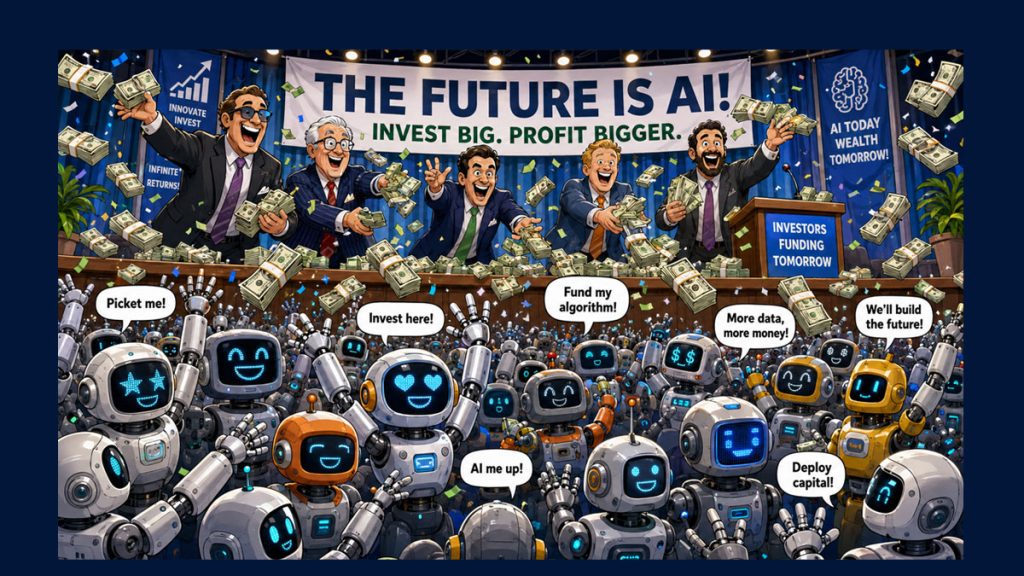
<p class="wp-block-paragraph">The key argument is not that AI is fake. It is that too much money is flowing into companies that have little unique technology, weak profit models, or business plans built almost entirely on hype.</p>


<p class="wp-block-paragraph">That is exactly what happened during the dot-com era.</p>


<p class="wp-block-paragraph">The internet was real. It transformed civilization. But thousands of internet companies still collapsed because investors poured money into businesses that lacked sustainable economics. Amazon survived. Pets.com did not.</p>


<p class="wp-block-paragraph">Many observers now believe AI may be entering a similar phase.</p>


<p class="wp-block-paragraph"><strong>Why People Are Starting to Compare AI to the Dot-Com Bubble</strong></p>


<p class="wp-block-paragraph">The comparisons are becoming difficult to ignore because the market behavior increasingly resembles previous speculative manias.</p>


<p class="wp-block-paragraph">The Wall Street Journal recently noted that some of the biggest winners in today’s AI rally resemble the explosive stock gains seen just before the dot-com crash in 2000.</p>


<p class="wp-block-paragraph">Back then, companies like Qualcomm, Sandisk, and MicroStrategy experienced breathtaking rises before the eventual collapse. Today, Nvidia, semiconductor firms, AI infrastructure companies, and cloud computing providers are showing similar parabolic moves.</p>


<p class="wp-block-paragraph">Michael Burry, the investor made famous by predicting the 2008 housing collapse, warned that the current environment feels like “the last months of the 1999-2000 bubble.” He argued that stocks are increasingly rising simply because they have been rising, rather than because of underlying economic fundamentals.</p>


<p class="wp-block-paragraph">Even some AI executives themselves are openly discussing bubble conditions.</p>


<p class="wp-block-paragraph">OpenAI CEO Sam Altman admitted, “Are we in a phase where investors as a whole are overexcited about AI? My opinion is yes.”</p>


<p class="wp-block-paragraph">Google CEO Sundar Pichai compared the moment to the dot-com boom and acknowledged that “there are elements of irrationality through a moment like this.”</p>


<p class="wp-block-paragraph">Amazon founder Jeff Bezos similarly described the environment as “kind of an industrial bubble.”</p>


<p class="wp-block-paragraph">What makes this especially remarkable is that these comments are not coming from outsiders attacking the industry. They are coming from insiders who are heavily invested in AI’s success.</p>


<p class="wp-block-paragraph">That alone says something important.</p>


<p class="wp-block-paragraph"><strong>AI Is Important. But Many AI Companies May Not Be.</strong></p>


<p class="wp-block-paragraph">One reason the bubble discussion has intensified is because there is a growing divide between a handful of genuinely dominant AI companies and a much larger crowd of firms trying to attach themselves to the trend.</p>


<p class="wp-block-paragraph">Nvidia remains the clearest example of a company benefiting from real demand. The company’s earnings have been extraordinary. Nvidia reported massive profit growth and projected hundreds of billions in AI chip sales. CEO Jensen Huang described AI as a “virtuous cycle” where expanding demand fuels more AI development across industries.</p>


<p class="wp-block-paragraph">Yet even Nvidia may be showing signs of reaching a more dangerous stage in the cycle.</p>


<p class="wp-block-paragraph">Despite reporting enormous earnings, Nvidia’s stock reaction became increasingly muted. Some analysts interpreted this as a sign that expectations had become almost impossibly high.</p>


<p class="wp-block-paragraph">That often happens near speculative peaks. When even outstanding results are no longer enough to push stocks dramatically higher, it can indicate investors are becoming exhausted or uncertain.</p>


<p class="wp-block-paragraph">The bigger concern, however, is not Nvidia itself. It is the enormous ecosystem of companies surrounding it.</p>


<p class="wp-block-paragraph">Many AI startups are burning staggering amounts of money while producing limited revenue. OpenAI reportedly generates billions in revenue but may still lose billions every quarter. xAI and Anthropic are also spending heavily while chasing enormous valuations.</p>


<p class="wp-block-paragraph">Critics argue that investors are treating almost any company with “AI” attached to its business plan as the next technological giant.</p>


<p class="wp-block-paragraph">Veteran investor Alan Patricof warned, “There will be winners and losers, and the losses will be pretty significant.”</p>


<p class="wp-block-paragraph">That sounds very familiar to anyone who remembers the dot-com era.</p>


<p class="wp-block-paragraph"><strong>The Dangerous Circularity Inside the AI Economy</strong></p>


<p class="wp-block-paragraph">One of the most concerning aspects of the AI boom is what analysts describe as “flagrant circularity.”</p>


<p class="wp-block-paragraph">In simple terms, the same small group of companies are repeatedly investing in one another, buying from one another, financing one another, and using those deals to justify higher valuations.</p>


<p class="wp-block-paragraph">For example, Nvidia invests in AI companies that then use the money to buy Nvidia chips. Microsoft funds OpenAI, which purchases massive cloud capacity powered by Nvidia hardware. CoreWeave rents Nvidia-powered infrastructure while also maintaining financial relationships with Nvidia and OpenAI.</p>


<p class="wp-block-paragraph">This creates the appearance of unstoppable growth, but critics worry it may partially resemble financial engineering rather than sustainable demand.</p>


<p class="wp-block-paragraph">Yale leadership experts Jeffrey Sonnenfeld and Stephen Henriques warned that “the lines between revenue and equity are blurring among a small group of highly influential technology companies.”</p>


<p class="wp-block-paragraph">That does not necessarily mean fraud is occurring. But it does create a system where hype can reinforce itself for long periods of time.</p>


<p class="wp-block-paragraph">As long as money keeps flowing in, valuations can continue rising.</p>


<p class="wp-block-paragraph">The danger comes when growth slows.</p>


<p class="wp-block-paragraph"><strong>The Propaganda Effect and the Psychology of Manias</strong></p>


<p class="wp-block-paragraph">Another major warning sign is the cultural atmosphere surrounding AI.</p>


<p class="wp-block-paragraph">Michael Burry noted that “Absolutely non-stop AI. Nobody is talking about anything else all day.”</p>


<p class="wp-block-paragraph">That kind of obsession often appears during speculative bubbles. Every conversation becomes dominated by the same topic. Every company feels pressure to claim an AI strategy. Every investor fears missing out.</p>


<p class="wp-block-paragraph">The Wall Street Journal noted that bubbles are often accompanied by what experts call “bubble beliefs.”</p>


<p class="wp-block-paragraph">People stop asking whether individual companies are profitable or sustainable. Instead, they focus entirely on the larger narrative.</p>


<p class="wp-block-paragraph">That narrative becomes self-reinforcing.</p>


<p class="wp-block-paragraph">If stocks keep rising, investors assume the story must be true. Rising prices themselves become evidence.</p>


<p class="wp-block-paragraph">The legendary Charles Mackay described this phenomenon nearly two centuries ago in his classic study of financial manias:</p>


<p class="wp-block-paragraph">“Men, it has been well said, think in herds; it will be seen that they go mad in herds, while they only recover their senses slowly, one by one.”</p>


<p class="wp-block-paragraph">That quote still resonates because human psychology has not changed.</p>


<p class="wp-block-paragraph">Every major bubble convinces people that “this time is different.”</p>


<p class="wp-block-paragraph">Sometimes parts of it actually are different. The internet really did transform the world. Railroads transformed the economy. Electricity transformed civilization.</p>


<p class="wp-block-paragraph">But many companies tied to those revolutions still collapsed because excitement outran economic reality.</p>


<p class="wp-block-paragraph"><strong>Even Industry Leaders Are Warning About Overinvestment</strong></p>


<p class="wp-block-paragraph">Some of the strongest warnings are now coming from business leaders themselves.</p>


<p class="wp-block-paragraph">Goldman Sachs CEO David Solomon said there will be “a lot of capital that was deployed that [doesn’t] deliver returns.”</p>


<p class="wp-block-paragraph">Sam Altman warned that “people will overinvest and lose money” during the current AI expansion.</p>


<p class="wp-block-paragraph">These are not anti-AI statements.</p>


<p class="wp-block-paragraph">They are acknowledgments that transformational technologies often attract excessive speculation.</p>


<p class="wp-block-paragraph">That distinction matters.</p>


<p class="wp-block-paragraph">The internet succeeded beyond almost anyone’s imagination. Yet the dot-com crash still wiped out trillions of dollars because investors massively overpaid for weak businesses.</p>


<p class="wp-block-paragraph">The same pattern could easily emerge in AI.</p>


<p class="wp-block-paragraph">A handful of dominant firms may become enormously valuable over the long term. But hundreds of smaller firms with little differentiation may disappear once capital becomes tighter and investors demand actual profits instead of promises.</p>


<p class="wp-block-paragraph"><strong>The Real Question Is Timing</strong></p>


<p class="wp-block-paragraph">The hardest part about bubbles is identifying when they will burst.</p>


<p class="wp-block-paragraph">Even analysts warning about excess admit that timing is nearly impossible.</p>


<p class="wp-block-paragraph">The market could continue climbing for months or even years. AI may still produce genuine breakthroughs that justify continued investment. Productivity gains could become enormous.</p>


<p class="wp-block-paragraph">But the current environment increasingly looks like one where enthusiasm is spilling far beyond the companies with durable advantages.</p>


<p class="wp-block-paragraph">That does not mean AI is fake.</p>


<p class="wp-block-paragraph">It means investors may once again be confusing a revolutionary technology with the assumption that every company connected to it will succeed.</p>


<p class="wp-block-paragraph">History suggests that is rarely how technological revolutions actually unfold.</p>


<p class="wp-block-paragraph"></p>

The AI Revolution Is Real, But That Does Not Mean the Market Is Rational