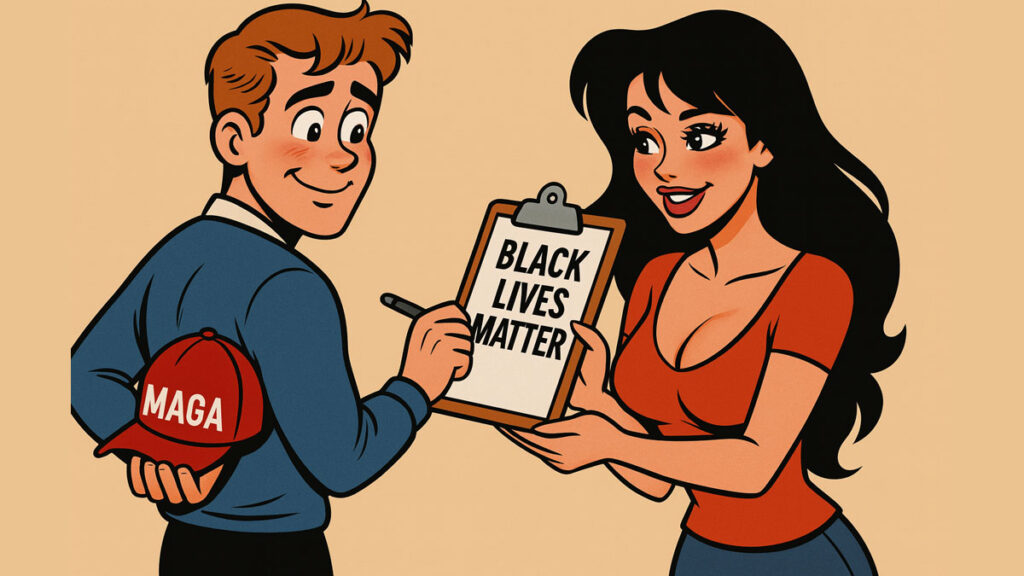
<p class="wp-block-paragraph">Nearly nine out of ten college students have confessed to something that sounds more like the setup of a campus comedy than a serious sociological finding: they’ve been faking wokeness to fit in. According to a new study from Northwestern University researchers Forest Romm and Kevin Waldman, 88 percent of students admitted they had pretended to be more progressive than they actually are. Apparently, political theater has become part of the required curriculum.</p>


<h3 class="wp-block-heading">The Numbers Behind the Masks</h3>


<p class="wp-block-paragraph">The researchers interviewed 1,452 undergraduates at Northwestern and the University of Michigan between 2023 and 2025. When asked if they had ever misrepresented their views to succeed socially or academically, nearly all said yes. More than 80 percent even admitted to submitting essays that didn’t reflect their real opinions, carefully crafted instead to match their professors’ expectations.</p>


<p class="wp-block-paragraph">The survey revealed a pattern of self-censorship across sensitive topics. Seventy-eight percent said they kept quiet about gender identity beliefs, 72 percent did so with politics, and 68 percent censored their family values. One student summed up the dilemma by confessing they were “morally confused” about whether honesty was still ethical if it meant social exile.</p>


<h3 class="wp-block-heading">Public Performance vs. Private Belief</h3>


<p class="wp-block-paragraph">When it came to the hot button issue of gender, the gap between what students said in public and what they actually believed was striking. In front of classmates, students dutifully echoed the familiar progressive lines. But privately, 87 percent identified as exclusively heterosexual and supported a binary model of gender. Nine percent expressed some openness to gender fluidity, and just seven percent embraced the broader spectrum model.</p>


<p class="wp-block-paragraph">Even more awkward for the campus orthodoxy, 77 percent disagreed with the idea that gender identity should override biological sex in sports, healthcare, or public policy. But these disagreements stayed locked away in private conversations—or in many cases, not voiced at all. Nearly half of students admitted they even hid doubts from close friends, suggesting the performance wasn’t just for the professors.</p>


<h3 class="wp-block-heading">Why Fake It?</h3>


<p class="wp-block-paragraph">Romm and Waldman argue the students weren’t being cynical, just adaptive. In an environment where belonging, grades, and leadership opportunities are tied to “performative morality,” young adults learned fast that it pays to rehearse what’s safe. “The result is not conviction but compliance,” they wrote in <em>The Hill</em>. “And beneath that compliance, something vital is lost.”</p>


<p class="wp-block-paragraph">Temple University professor Jacob Shell was less diplomatic. On X, he declared, “If the number’s actually right, this is the most damning thing I’ve ever read about higher ed. This level of coerced mendacity is tear it down and start over–level bad.”</p>


<h3 class="wp-block-heading">The Left, the Right, and the Great Pretend</h3>


<p class="wp-block-paragraph">Commentary has poured in from both sides. On the right, conservative voices say the findings prove their long-held suspicion: that progressive dominance on campuses is less about conviction and more about fear of social punishment. Houston Christian University professor Nancy Pearcy argued that being coerced into repeating beliefs you don’t hold creates what psychologists call a “moral injury.”</p>


<p class="wp-block-paragraph">On the left, reactions are more complicated. Some argue this is simply a phase of development—students trying on identities like they try on fashion. Others insist that even if some students are “performing,” the broader cultural shift toward inclusivity is still real. The irony, of course, is that a movement centered on authenticity and lived truth now has millions of undergraduates acting like extras in a play they never auditioned for.</p>


<h3 class="wp-block-heading">What It Means</h3>


<p class="wp-block-paragraph">The survey suggests that universities, once bastions of intellectual freedom, may now be manufacturing compliance at scale. Instead of incubators of independent thought, classrooms risk becoming echo chambers where truth is measured by applause, not analysis. As Romm and Waldman concluded, higher education needs to relearn the difference between support and supervision. If not, we may end up with a generation fluent in buzzwords but unable to say what they really think.</p>


<p class="wp-block-paragraph">So the next time a student passionately delivers a speech on gender fluidity, economic justice, or the climate apocalypse, it might be worth asking: are they speaking from the heart—or just trying to pass the class?</p>

Students Admit They Were Just Playing Woke