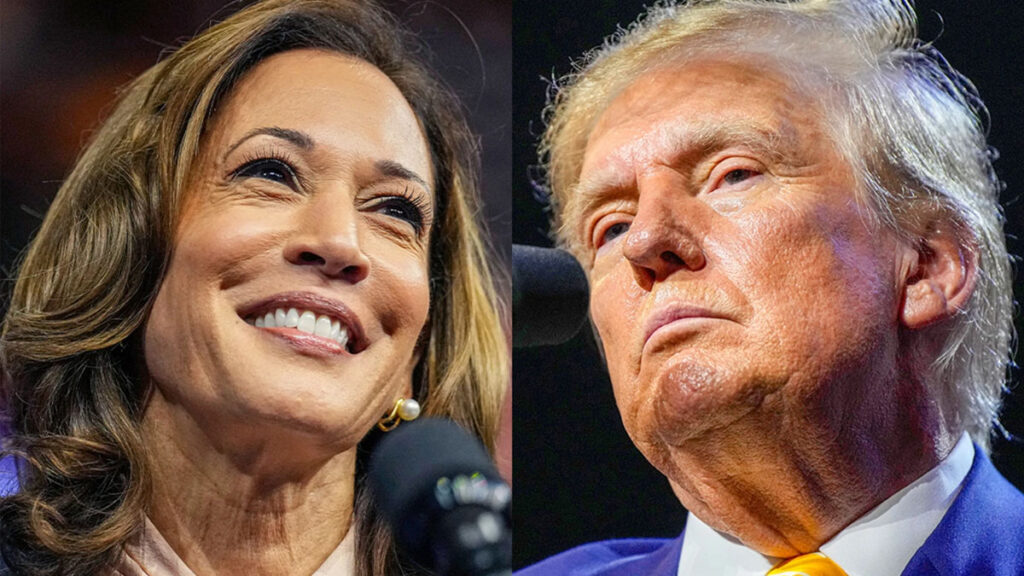
<p class="wp-block-paragraph">Over the years, I have opined on the importance of smiles as a political asset. ; There is an untold history of smiles in a presidential election. ; They evolved into an underappreciated political asset. Thus my admittedly unscientific theory.</p>


<p class="wp-block-paragraph">In the earliest years of the Republic &#8212; before cameras – we relied on painted portraits and sculptured busts to know what our presidents looked like. ; And did you ever see a smile – the bearing of teeth? ; Nope. ; That is because presidents were supposed to be somber and serious.</p>


<p class="wp-block-paragraph">President Lincoln is often portrayed in movies with a kind but modest smile. In my collection of more than 100 books on Lincoln, I have one volume that contains every known photograph of the 16<sup>th</sup> President – and not a smile to be found. He was arguably the first president with an established reputation for humor – and I have books attesting to that – but no smiles in the record.</p>


<p class="wp-block-paragraph">The first president who exhibited a noticeably happy face was President Franklin Roosevelt and his happy-days-are-here-again smile. He may have been the first with a teeth-bearing grin.</p>


<p class="wp-block-paragraph">The smile as political iconology went on steroids with President Eisenhower. It went from a secondary feature of a public presidential persona to the central ingredient of the “I like Ike” theme. ; Eisenhower set a standard for future presidents. ;</p>


<p class="wp-block-paragraph">Not every presidential contest has a candidate with a great smile – or maybe just two contenders with okay smiles. But I still give the edge to the better smile. Kennedy out smiled Nixon in 1960. Lyndon Johnson was not a huge smiler, but he edged out Goldwater. <a> </a>Ironically, the original “happy warrior” Senatore Hubert Humphery did not out smile Nixon in 1968 – but Nixon easily out smiled the dour George McGovern in 1972. Presidents Ford and Carter both smiled but nothing notable.</p>


<p class="wp-block-paragraph">The next great smile was Ronald Reagan, who crushed Carter in the smile department &#8212; ; ; ; ; ; ; ; ; ; ; and the election. ; He crushed Mondale in1984, who had a decent smile, but could not match Reagan’s super smile.</p>


<p class="wp-block-paragraph">Smiles did not play an obvious role in Geroge H.W. Bush’s defeat of Senator Paul Tsongas in 1988, but Bush was denied a second term in 1992 by Bill Clinton’s strangely appealing mischievous smile. Clinton’s smile went on to defeat the more dourer Senator Bob Dole in 1996.</p>


<p class="wp-block-paragraph">I give the edge to George W. Bush’s warm smile over Vice President Al Gore’s more forced grin in 2000. ; In terms of smiles, the race was in the margin of error between Bush and Senator John Kerry. ; Both had crowd pleasing smiles. ; Bush won.</p>


<p class="wp-block-paragraph">Barack Obama entered the race in 2008 with the best broad teeth-bearing smile &#8212; right up there with Eisenhower and Reagan. ; He flew past Senator John McCain’s polite grin in 2008 and Governor Mitt Romney’s pressed-lip smirk in 2012.</p>


<p class="wp-block-paragraph">2016 was the year without a grin factor. ; Neither Donald Trump nor Hillary Clinton put on happy faces. ; Trump did not smile at all – and when Clinton tried, it came across as condescending.</p>


<p class="wp-block-paragraph">Vice President Biden clearly had the smile advantage over Trump in 2020. ; In fact, almost any smile would have trumped Trump’s intense glare.</p>


<p class="wp-block-paragraph">However, Trump was heading for victory over Biden in 2024. ; But Biden had lost his old natural smile in favor of the kind we see on folks who are bewildered and befuddled. ; There was a certain emptiness behind it. ;</p>


<p class="wp-block-paragraph">So &#8230; now we have Harris in 2024. ; The ever serious Trump is literally facing off with the constantly smiling Vice President. ; That does not bode well for Trump if my less-than-scientific analysis has any validity at all – and I am not claiming much.</p>


<p class="wp-block-paragraph">While mine is an imperfect and perhaps unserious theory – that does not apply empirically in every case, there does seem to be a correlation between winning smiles and winning elections &#8212; for whatever that is worth.</p>


<p class="wp-block-paragraph">So, there ‘tis.</p>

Smiles as a political asset?