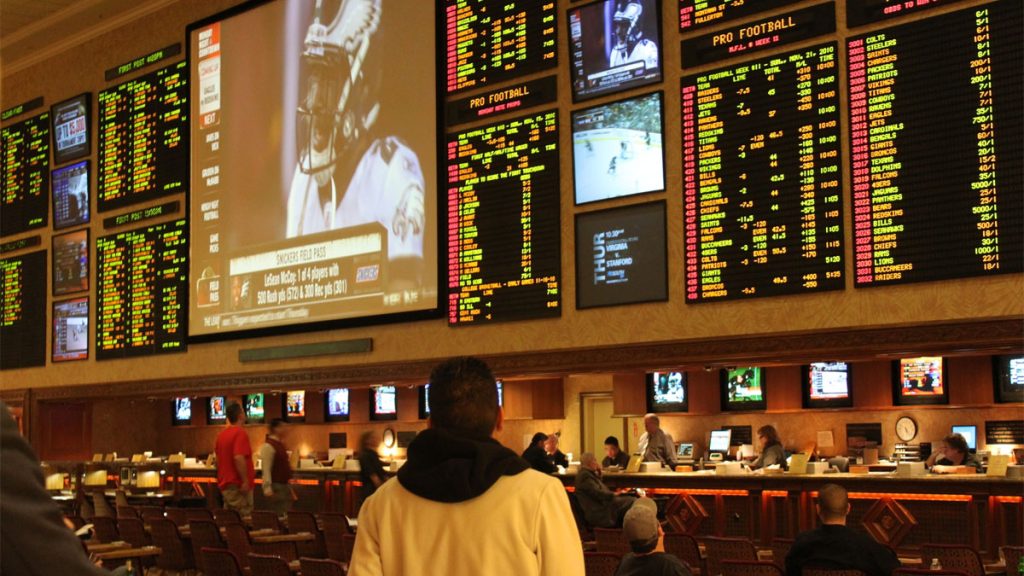
<p class="wp-block-paragraph">Last week, an article by Michelle Minton published in <em>National Review</em> argued in favor of keeping sports betting legal because it is safer than imposing a ban on it. Minton wrote:</p>


<p class="wp-block-paragraph"><em>“A legalized sports betting market is better able to curb the economic and personal risks associated with gambling.”</em></p>


<p class="wp-block-paragraph">But is it administratively affordable and ethically acceptable? The question is increasingly getting attention from commentators who weigh the pros and cons of legalized sports betting.</p>


<p class="wp-block-paragraph">Sports betting was made illegal by the U.S. Congress in 1992 under the Professional and Amateur Sports Protection Act (PASPA). For legal technicalities, this law left out four states from banning sports betting – NV, OR, DE, and MT. For the rest of the country, sports betting was made categorically illegal and it remained so until 2018 when the U.S. Supreme Court overturned PASPA and gave states the right to legalize or ban sport betting. Since then, 39 states and D.C. have legalized it while only two states – UT and ID – have kept it illegal altogether; in the remaining states some form of legislation seeking legalization of sports betting remains pending.</p>


<p class="wp-block-paragraph">The concerns over the addictive and criminal abuse of sports betting practices have remained with the public all along. Since last year these concerns have made their way into public discussions and even the authorities couldn’t stay silent on the issue. Last summer, Aaron Gray of <em>Sports Betting Dime</em> (SBD) published a brief summary of some of the most famous cases of mafia members in the United States using sports betting to fund their criminal activities. Among others, the article “History of the Mafia’s Ties to Gambling and Sports Betting” wrote about NBA referee Tim Donaghy, who was part of the sports betting world allegedly under threats from the mafia. Per Gray’s article:</p>


<p class="wp-block-paragraph"><em>Donaghy, who was sentenced to 15 months in prison, also stated that the mob will always be a part of professional sports, trying to take advantage of refs, players, trainers, and anyone else with inside information.</em></p>


<p class="wp-block-paragraph">Last November, Dr. Simon Goddek came out strongly in opposition to sports betting and called it an addiction that ruins lives while making big money for certain politically affiliated elites. He wrote on his X account: “They’re not your team. You’re their customer. Their addict. Their wallet.”</p>


<figure class="wp-block-embed is-type-rich is-provider-twitter wp-block-embed-twitter"><div class="wp-block-embed__wrapper">
<blockquote class="twitter-tweet" data-width="550" data-dnt="true"><p lang="en" dir="ltr">Exactly. A gram of weed gets you high once. Costs a bit. You smoke it, and it’s done.<br><br>But betting never ends. You lose, you chase. You lose again, you chase harder. There’s no ceiling. No “high”… just the illusion of one more win.<br><br>That’s why sports betting ruins far more lives…</p>&mdash; Dr. Simon Goddek (@goddek) <a href="https://twitter.com/goddek/status/1987746392975036887?ref_src=twsrc%5Etfw">November 10, 2025</a></blockquote><script async src="https://platform.twitter.com/widgets.js" charset="utf-8"></script>
</div></figure>


<p class="wp-block-paragraph">The FBI also sounded alarm on sports betting, though limiting it to illegal sportsbooks and online gambling sites. In December, the bureau posted an alert (Number: I-121725-PSA) that urged the public to be careful when betting on sports and keep it legal:</p>


<p class="wp-block-paragraph"><em>Individuals engaged in illegal gambling risk funding organized crime activity and becoming vulnerable to violence, extortion, and fraud.</em></p>


<p class="wp-block-paragraph">The FBI statement followed the arrest and indictment of dozens of people, involving some important names in sports, allegedly involved with gambling and rigging NBA games. It exposed the sports betting network as a “mob-backed gambling ring,” per the headline of an October 2025 story in Fastcompany.com. ;</p>


<p class="wp-block-paragraph">Also in December, Auron MacIntyre’s podcast discussed the sports betting problem in an episode called “The Sports Betting Epidemic.” MacIntyre’s guest J. Burden opined on the show that the calls for legalization of sports betting are based on the appeal to individual freedom where people want to be in charge of their own money. However, given the proven corrosive nature of this addictive practice in society, allowing it is the same as allowing any other evil to spread in the society. Burden also tried to illustrate his point by the example of decriminalization of hard addictive drugs in Oregon – a decision that proved disastrous and was ultimately reversed by the same Democrats that had legalized the drugs in the state.</p>


<figure class="wp-block-embed is-type-video is-provider-youtube wp-block-embed-youtube wp-embed-aspect-16-9 wp-has-aspect-ratio"><div class="wp-block-embed__wrapper">
<amp-youtube layout="responsive" width="1080" height="608" data-videoid="Odzc92zJ-d4" title="The Sports Betting Epidemic | Guest J. Burden | 12/5/25"><a placeholder href="https://www.youtube.com/watch?v=Odzc92zJ-d4"><img src="https://i.ytimg.com/vi/Odzc92zJ-d4/hqdefault.jpg" layout="fill" object-fit="cover" alt="The Sports Betting Epidemic | Guest J. Burden | 12/5/25"></a></amp-youtube>
</div></figure>


<p class="wp-block-paragraph">The legal regulation of sports betting on federal and state level remains open for debate with pros and cons cited from both sides of the divide on the issue. While conservatives realize the moral downside to the addiction of sports betting, they are opposed to federal government dictating state policies, and this includes laws for gambling of which betting on sports is just one type.</p>


<p class="wp-block-paragraph">Since all red states, with the exception of UT and ID, rushed to legalize sports betting after PASPA was overturned by the SCTOUS, one can conclude that Republican state legislatures care less about the moral ill associated with this form of gambling. To what degree the conservative voter base agrees with it is not clear. But a poll conducted last year by the <em>Washington Post</em> and the University of Maryland found that 36% of Americans oppose the expansion of sports betting. Out of this segment, 49% are Republican voters and 26% Democrat voters; 13% among each party’s voters were undecided on the issue.</p>


<p class="wp-block-paragraph">It’s seemingly reasonable to say that red states need to initiate discussions directly with their residents to learn about their views on the issue of sports betting and how seriously, if at all, this practice affects their lives.</p>

Should States Consider a Ban on Sports Betting?