<p class="wp-block-paragraph">I got the inspiration for this commentary from <em>Discover</em> magazine. ; I find the publication to be a distraction – a bit of a relief – from the political issues of the say. ; ; In this particular edition, I learned the difference between dragonflies and damselflies and various ways to measure time. ;</p>


<p class="wp-block-paragraph">One might have expected my inspiration to come from articles about UFOs or climate change – both of which are occasionally covered by <em>Discover.</em> But no. This commentary was not even motivated by one of the articles. But rather by a letter to the editor. It had to do with the evergreen issue of race.</p>


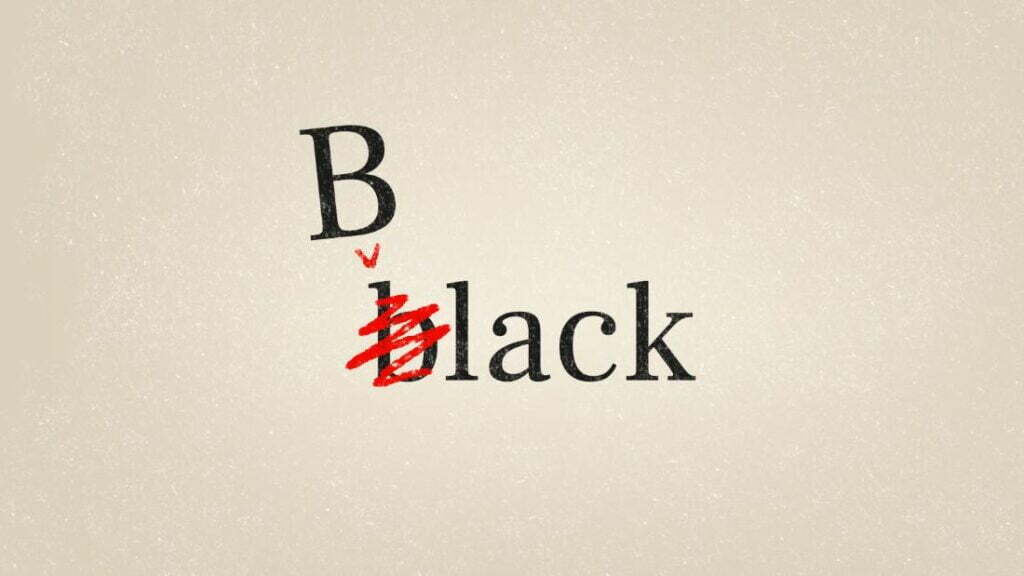
<p class="wp-block-paragraph">The letter questioned why the magazine capitalized Black – in reference to folks with African ancestries – but did not capitalize White – when referring to those with European ancestry. ; It is an issue with which I grapple. ; Readers of my commentaries might have noticed that sometimes I capitalize “Black” – and sometimes not. ; Same with “White.”</p>


<p class="wp-block-paragraph">The <em>Discover</em> editor explained that the magazine uses the Associated Press (AP) style book. That has been the standard for journalists as long as I can remember. That is a little more than half a century. The editor responded by quoting <a href="https://apnews.com/article/archive-race-and-ethnicity-9105661462">AP</a> in explaining its decision to capitalize Black, but not white.</p>


<p class="wp-block-paragraph"><em>“There is a clear desire and reason to capitalize Black. Most notably, people who are Black have strong historical and cultural commonalities, even if they are from different parts of the world and even if they now live in different parts of the world. That includes the shared experiences of discrimination due solely to the color of one’s skin. There is, at this time, less support of capitalizing white. White people generally do not share the same history and culture, or the experience of being discriminated against because of their skin color.”</em></p>


<p class="wp-block-paragraph">Let us first agree that AP’s explanation for capitalizing black is … well … utter nonsense. It is doing something that is politically, demographically, ethnically, and racially incorrect in the name of modern political correctness theology.</p>


<p class="wp-block-paragraph">AP’s first mistake is suggesting – incorrectly – that folks with the darkest skin colors have “strong historical and cultural commonalities” while those with the lightest skin “do not share the same history and culture.” ; Well duh! ; Of course, I do not share the same history and culture of those whose ancestors lived in sub-Saharan Africa – any more than I share a history and culture with those in eastern Asia or South America. ; As a person of Austrian and Polish descent (with one percent Nigerian blood), I also do not share a history and culture with the Brits or the Belgians.</p>


<p class="wp-block-paragraph">In lumping all people with Negro features and dark skin, AP descends to the depths of racism. They refuse to recognize that folks whose ancestors came from Africa have as much diversity as those of us who came from Europe. Nigerians are not the same as Somalians … or Ethiopians or Ghanaians or Liberians or Kenyans or Sudanese or Tanzanians or Ugandans &#8230; etc.</p>


<p class="wp-block-paragraph">There are 54 nations in Africa – each with a distinct history and culture. ; Apparently, the AP management did not do well in high school geography. ; They see a great mass of monolithic people with dark skins – and fail to see the human and ethnic diversity. ;</p>


<p class="wp-block-paragraph">We traditionally capitalize people by their national origins &#8211;Italians, Brazilians or Vietnamese. To say that “black” &#8212; as an adjective to label people – should be capital as a means of locking in their identity is no more rational than to capitalize “Tall” to label people whose height exceeds 72 inches.</p>


<p class="wp-block-paragraph">In setting the style for referring to folks from nations in Africa as capitalized blacks, AP not only denigrates we lowercase white folks … but also those politically designated as brown skinned. ; And for reasons that make no sense whatsoever, referring to Asians as “yellow” skinned – or Native Americans as “redskins” is a pejorative. ; Only Negros get a capital “B” when referred to by skin color.</p>


<p class="wp-block-paragraph">Black and white – in terms of human identification – are adjectives, not proper nouns – at least they should not be.</p>


<p class="wp-block-paragraph">I was happy to have the inspiration to write this commentary. Because I was a person once wallowing in uncertainty about the capitalization of black and white. I was forced to consider the subject more thoroughly – and to reach a conclusion.</p>


<p class="wp-block-paragraph">I will no longer capitalize the “w” in white or the “b” in black when making a generalization about masses of diverse people. ; Whew! ; Glad to have that finally cleared up.</p>


<p class="wp-block-paragraph">So, there ‘tis. </p>

Should Black Be Capitalized?