<p class="wp-block-paragraph">In the 1953 Alfred Hitchcock thriller, “I confess”, a priest hears the confession of the killer. Bound by the Seal of Confession, the priest cannot name the killer even as he is put on trial and convicted of the murder. A great Hitchcock movie.</p>


<p class="wp-block-paragraph">Even before I drifted away from my Catholic upbringing, I never saw the wisdom in allowing confession to insulate heinous criminals from justice. ; For everyone but priests, concealing a crime or aiding and abetting a criminal is &#8230; a crime. ; The idea of murders, rapists and even terrorists evading justice because of some ancient religious rule seems absurd.</p>


<p class="wp-block-paragraph">On the other hand, I hate to think of priests becoming town gossips – whispering the sins of others at social functions after too many sips of communion wine. And who would go to confession if they thought their secret sins would be revealed? </p>


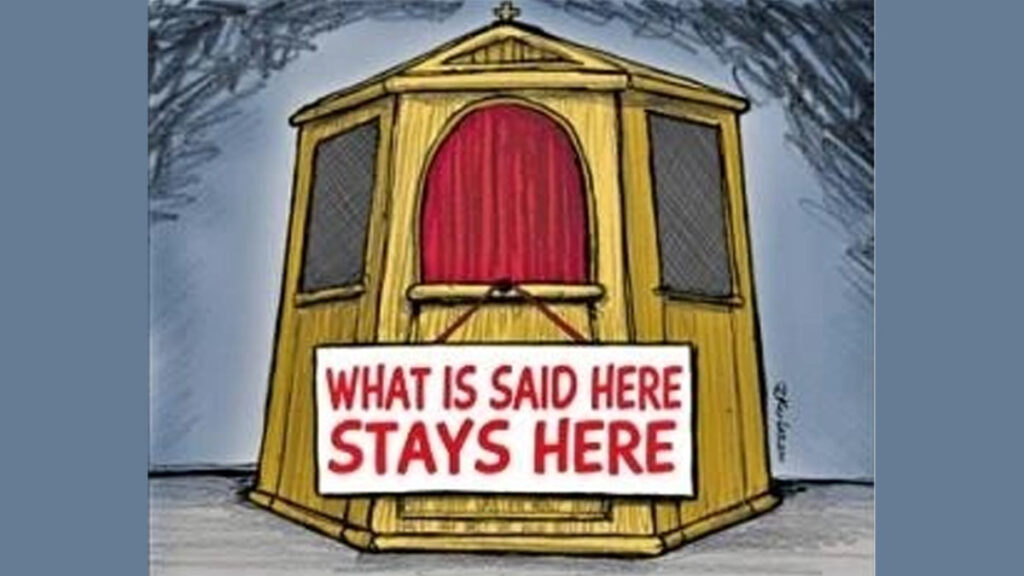
<p class="wp-block-paragraph">Weeeell &#8230; the issue has now come up in Washington State, where a new law – to take effect July 27 &#8212; challenges the Seal of Confession. In fact, it requires priests to report to law authorities any confessions involving child abuse. It has put lawmakers and clergy on a highly charged collision course over religious liberty.</p>


<p class="wp-block-paragraph">One of the problems is defining “child abuse”. ; In general, the law defines child abuse or neglect as any act that causes harm to a child&#8217;s health, welfare, or safety.  ;It specifically includes – but not limited to sexual abuse and exploitation, female genital mutilation (what about the boys?), physical injury, neglect and mistreatment.  ;But is this another slippery slope? ; For some, spanking a child for misbehavior is child abuse. ; Though the Catholic Church is the most obvious target, the new law covers all clergy and caregivers. ;</p>


<p class="wp-block-paragraph">Of course, the Catholic Church is pushing back. The Church&#8217;s Canon Law regards breaking the confessional seal as a grave offense – a mortal sin. It has issued a warning to all clergy in Washington that compliance with the law will result in automatic excommunication. The Archdiocese of Seattle and several bishops argue that the law not only contravenes church doctrine but violates First Amendment constitutional protections.</p>


<p class="wp-block-paragraph">According to the Seattle Archdiocese, &#8220;All Catholics must know and be assured that their confessions remain sacred, secure, confidential and protected by the law of the Church.&#8221;</p>


<p class="wp-block-paragraph">The Civil Rights Division of the Department of Justice is reviewing the issue to see if the Washington law is constitutional. That has brought a rebuke for Seattle Governor Bob Ferguson, who said, &#8220;We look forward to protecting Washington kids from sexual abuse in the face of this &#8216;investigation&#8217; from the Trump administration.&#8221; (Democrats cannot address any issue without dragging Trump into the fray. But I digress.)</p>


<p class="wp-block-paragraph">If the Washington State law is deemed to be constitutional, it will likely ignite similar legislation in states across the country.  ;With Catholic bishops ordering universal non-compliance with such laws – and to accept whatever consequences ensue – this could be a front burner issue in the upcoming 2026 midterm elections.</p>


<p class="wp-block-paragraph">Many see this as a slippery slope that will undermine the Seal of Confession generally. I agree that it could. Why should this one category of crimes – heinous as they may be – be singled out? What about the murderers, rapists, wife beaters and other violent criminals? Should they remain protected?</p>


<p class="wp-block-paragraph">If the Seal of Confession is not inviolable, Church leaders fear that parishioners will no longer “go to confession.” They are probably correct. At least the child abusers would not. But it would put the Catholic Church in the same position as the other Christian religions, which do not have institutional formal confessions between priests and penitents. They seek forgiveness and mercy directly from God.</p>


<p class="wp-block-paragraph">Even in Catholic confession, the priest is merely the representative of God. ; Forgiveness is not bestowed by the priest, but by God – and only is the penitent admits to the sin, is genuinely sorry and is sincerely determined never to commit the sin again. ; Fail one of those tests and the sinner goes unforgiven by God – as I was taught in my young years at St. Philomena grad school. ; Other Christian religions have the same requirement, but it is left to the sinner to deal with God directly.</p>


<p class="wp-block-paragraph">It is more than likely that the new Pope Leo XIV is aware of the attack on the Seal of Confession in his home country. Whether he will dive into the controversy or stand apart is the question. If he stands with tradition, he will lose some creds as a modern Pope – mostly among progressive non-Catholics. If he ends the sanctity of the confessional, he will be regarded by many Catholics and clergy as a heretic. </p>


<p class="wp-block-paragraph">My recommendation would be to end the Seal of Confession for specific major crimes – Class A felonies, for example – and retain it for lesser crimes and non-criminal offenses (and there are a LOT of those.). ; Yes, the bad guys and gals might not go to confession – and I have no problem with that. ; I doubt there are a lot of child abusers – and other heinous criminals – who go to confession, anyway.</p>


<p class="wp-block-paragraph">So, there ‘tis.</p>

“Seal of Confession” being challenged in Washington State