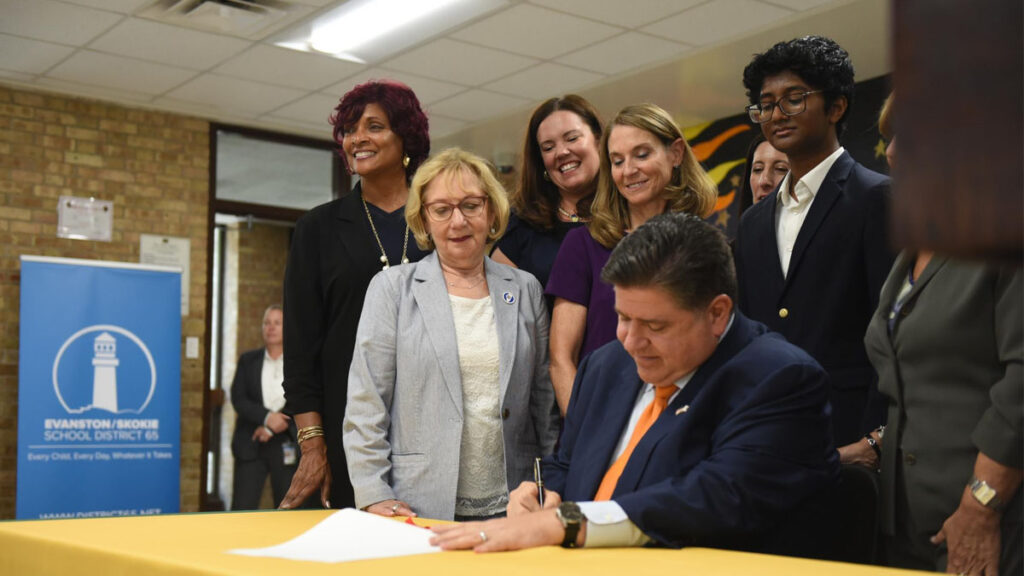
<p class="wp-block-paragraph">Illinois Governor J.B. Pritzker recently signed SB1560 &#8212; a landmark bill requiring annual mental health screenings for all Illinois public school students in grades 3 through 12 starting in the 2027–2028 school year. While the legislation is hailed by proponents as a proactive step toward addressing youth mental health, critics argue it opens the door to dangerous overreach, misdiagnosis, and unwarranted medicating—especially when teachers and school staff are assigned a central role in referring students for psychiatric evaluation.</p>


<p class="wp-block-paragraph"><strong>Teachers as Gatekeepers of Mental Health</strong></p>


<p class="wp-block-paragraph">The law mandates that schools offer screenings, but it also empowers educators to flag students based on classroom behavior. This raises a critical question. Are teachers qualified to make mental health judgments that could lead to a lifetime of therapy, medications, and even institutionalization?</p>


<p class="wp-block-paragraph">Dr. Leonard Sax, physician and author of <em>The Collapse of Parenting</em>, has been outspoken in his criticism. In a recent interview, Sax warned:</p>


<p class="wp-block-paragraph"><em>“We are experimenting on children in a way which has no precedent, with medications whose long-term risks are largely unknown. Teachers are not trained diagnosticians. Giving them this kind of authority is reckless.”</em></p>


<p class="wp-block-paragraph">Sax’s broader concern is that normal behavioral issues—like restlessness or defiance—are increasingly pathologized &#8212; leading to a surge in diagnoses like ADHD and prescriptions for psychiatric drugs. He argues that parental authority has collapsed, and schools are stepping into roles they are ill-equipped to handle.</p>


<p class="wp-block-paragraph"><strong>Epidemic of Misdiagnoses and Overmedication</strong></p>


<p class="wp-block-paragraph">Illinois is not alone in facing a youth mental health crisis, but critics argue that universal screening risks labeling normal childhood behavior as pathological. According to the Illinois Department of Human Services, medication should only be administered when absolutely necessary, and ideally under the guidance of a licensed medical professional—not school staff.</p>


<p class="wp-block-paragraph">Yet, the reality is more troubling. As Sax notes in his book:</p>


<p class="wp-block-paragraph"><em>“In the United States, it has become common to medicate children with powerful psychiatric drugs as a first resort rather than a last resort.”</em></p>


<p class="wp-block-paragraph">This trend has led to a generation of children who are more anxious, less resilient, and increasingly fragile. The concern is that screenings may become a pipeline to medication, especially for students who are simply more active or expressive.</p>


<p class="wp-block-paragraph"><strong>Parents and Experts Speak Out</strong></p>


<p class="wp-block-paragraph">Many Illinois parents are deeply uneasy about the law. Cata Truss, a Chicago mother and former educator, expressed her fears. ; “A child dealing with trauma may show the same signs as one with mental illness, but you don’t want to treat or medicate them the same.”</p>


<p class="wp-block-paragraph">Christine McGovern, another former teacher, argues that “This could open the door for overreach and the alienation of parents. That was the biggest issue I encountered during my tenure.”</p>


<p class="wp-block-paragraph">Policy attorney Mailee Smith raised concerns about the opt-out process. ; “Are parents going to be told every year they can opt out? Because if they don’t, that’s really not an opt-out process.”</p>


<p class="wp-block-paragraph">These voices highlight a broader fear. ; The erosion of parental rights and the outsourcing of mental health decisions to individuals and institutions that may prioritize compliance and profits over legitimate care.</p>


<p class="wp-block-paragraph"><strong>Are We Misdiagnosing Normal Behavior?</strong></p>


<p class="wp-block-paragraph">One of the most pressing questions is whether we’re confusing normal developmental behavior with mental illness. Dr. Sax argues that boys in particular are often misdiagnosed simply for being more physically active or less compliant with arbitrary classroom expectations by ; teachers.</p>


<p class="wp-block-paragraph">“We’ve created a culture where being a boy is treated as a disorder. If he’s loud, energetic, or doesn’t sit still, he’s labeled.”</p>


<p class="wp-block-paragraph">This raises ethical concerns about using medication as a behavioral management tool, rather than investing in better teaching strategies or classroom environments.</p>


<p class="wp-block-paragraph"><strong>Counseling vs. Parenting</strong></p>


<p class="wp-block-paragraph">The rise of school-based mental health interventions also reflects a deeper societal shift. As Sax puts it. ; “Medication is replacing parenting. Counseling is replacing discipline. We’re outsourcing the most fundamental responsibilities of raising children.”</p>


<p class="wp-block-paragraph">This shift is not just about policy—it’s about values. Are we prioritizing quick fixes over long-term development? Are we teaching children to rely on external solutions rather than building internal resilience?</p>


<p class="wp-block-paragraph"><strong>Political and Union Support: A Clash of Interests?</strong></p>


<p class="wp-block-paragraph">The bill has strong backing from Democratic lawmakers and teachers’ unions, who argue that early detection is key to preventing crises. But critics say this support often comes at the expense of parental autonomy.</p>


<p class="wp-block-paragraph">“This is a power grab disguised as compassion,” said one concerned parent. “It’s about control, not care.”</p>


<p class="wp-block-paragraph">The Illinois State Board of Education has until September 2026 to finalize guidelines, but many fear that bureaucratic decisions will override family values and medical ethics.</p>


<p class="wp-block-paragraph"><strong>Final Thoughts: A Call for Caution</strong></p>


<p class="wp-block-paragraph">Mental health is undeniably important. But universal screening, especially when tied to behavioral observations by non-medical staff, is fraught with risks. Misdiagnosis, overmedication, and the erosion of parental rights are not theoretical—they’re already happening.</p>


<p class="wp-block-paragraph">Dr. Sax’s warning is clear. ; “We must stop treating children like problems to be solved. They are people to be raised—with love, discipline, and respect.”</p>


<p class="wp-block-paragraph">Illinois may be the first state to mandate such screenings, but the rest of the country is watching. The question is not whether we care about children’s mental health—it’s how we choose to care.</p>


<p class="wp-block-paragraph">So, there ‘tis.</p>

Pritzker’s Mental Health Screening Law is a Dangerous Overreach