<p class="wp-block-paragraph">Perhaps it is because February is a short month, it seems impossible to say all there needs to be said about black history – especially in bringing to light all the misrepresentations and omissions in the currently popular and politicized versions. ; Consider this one a postscript.</p>


<p class="wp-block-paragraph">It is important that we not only understand the biased history being presented by Democrats and the left-leaning media, we need to understand what motivates their spinning of history – especially why black leaders engage in propagating the false narratives. ; And why is it that the institutions of de facto racism continue to exist even when cities have black leaders?</p>


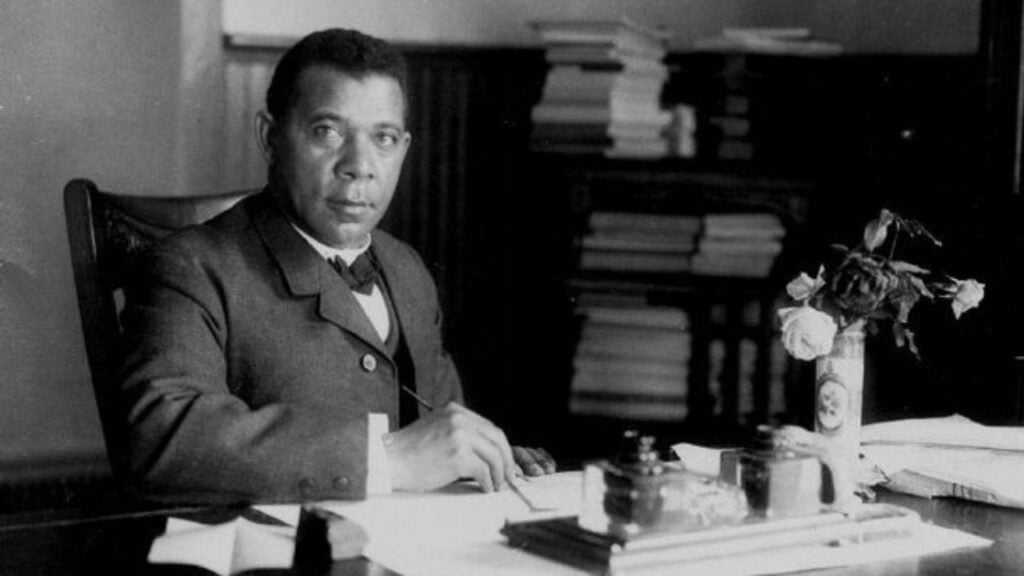
<p class="wp-block-paragraph">Booker T. Washington put the dynamic in context when he warned his fellow black Americans with this statement in 1911.</p>


<p class="wp-block-paragraph"><em>“There is a class of colored people who make a business of keeping the troubles, the wrongs, and the hardships of the Negro race before the public. Having learned that they are able to make a living out of their troubles, they have grown into the settled habit of advertising their wrongs-partly because they want sympathy and partly because it pays. Some of these people do not want the Negro to lose his grievances, because they do not want to lose their jobs.”</em></p>


<p class="wp-block-paragraph">(Every time I see that quote, Al Sharpton comes to my mind.)</p>


<p class="wp-block-paragraph">Find the Washington quote is also an example of left-wing bias. ; Of the many quotes attributed to Washington in various formats, this quote gets omitted … censored … cancelled far too often to be a coincidence. ; ;</p>


<p class="wp-block-paragraph">The Tom Joyner Foundation offers educational curricula for HBCUs (Historically Black Colleges and Universities). ; In covering Washington as part of its Executive Series, the Foundation lists 15 notable quotes – but not this one. ; When writing of Washington, Gary Galles – a professor of Economics at Pepperdine University and member of the Foundation for Economic Education &#8212; listed 16 notable quotes – but not the one above. ; These are only a couple of examples of a common practice among historians and academics. ; Personally, I think this is one of Washington’s more important statements.</p>


<p class="wp-block-paragraph">Who are the folks Washington warned against? ;  ; Perhaps he was referring to the types of people who sold out their own people in the past. ; They include the “House Negroes” who oppressed and even punished (whipped) the field slaves … or Negroes who owned slaves in pre-Civil War Dixie … or even the Jews who worked with the Nazis. ; History is filled with examples &#8212; and the motivations for such conduct are generally the same – a mixture of power, profit, and prestige.</p>


<p class="wp-block-paragraph">I mentioned Al Sharpton above because I see him as the quintessential character described by Washington. ; He is certainly a man who has gained great power, profit, and prestige from messages of grievance – real and exaggerated. ; He is much like many of the other hosts and so-called “contributors” you see on cable news panels – black professors and political activists whose stock-in-trade is grievance peddling. ; They seem to fit Washington’s description of people who “do not want the Negro to lose his grievances because they do not want to lose their jobs.”</p>


<p class="wp-block-paragraph">But what about black Democrat officeholders? ; Why do they not seem to make a difference in the plight of black citizens trapped in generational poverty and oppression in the very cities they govern? ; There are cities that have had black mayors for decades, and yet the conditions do not improve. ; In crime, drugs, and gangs, the situation in many of the ghettoes has gotten worse.</p>


<p class="wp-block-paragraph">Detroit has a black population of more than 80 percent. ; Based on demographic statistics, it is fair to say that essentially the entire city is a segregated slum with all the attributions of oppression – poor quality education, substandard housing, high unemployment, crumbling infrastructure, poor public services and high crime rates. ; The Motor City has had black mayors from 1974 to 2014, when the current white incumbent took office. ;  ; The most disastrous period for Detroit’s black community was the 20-year reign of Coleman Young.</p>


<p class="wp-block-paragraph">The black population of Baltimore is 65 percent. ; The city has had black leadership for 28 of the past 36 years. ; Baltimore has received billions of dollars over the years to fight poverty – but without any notable impact. ; Baltimore still shows some of the scars from the 1960s riots. ; The conditions in the segregated communities of Baltimore – like Detroit –have worsened over the past years. ;</p>


<p class="wp-block-paragraph">So, why have things gotten worse rather than better in cities run by black Democrats?</p>


<p class="wp-block-paragraph">There seems to be only one answer. ; It is because the black leadership’s access to power, profit, and prestige is the same as the white predecessors. ; It depends on keeping blacks consolidated (segregated) … poor … generationally dependent on the government … subservient to the folks in city hall.</p>


<p class="wp-block-paragraph">I have often spoken in black communities in Chicago that have had black aldermen, black state representatives, black state senators, black congressmen for more than 100 years. ; At times, they had black mayors, black United States Senators – and for eight years, a black President who was a product of their own community. ; ;</p>


<p class="wp-block-paragraph">And yet, the conditions in Chicago’s segregated communities have essentially remained the same – with the one difference of higher crime rates. ; Obviously, all that political power over so many decades has not produced the benefits one might expect. ; ;</p>


<p class="wp-block-paragraph">If black leadership has not made a significant difference, the question is why not. ; Was it well-intentioned incompetence, or was it something more sinister – a willful acceptance and maintenance of the historical institutional racism to gain and maintain their own power, profit, and prestige? ; Are they just gaming the old system?</p>


<p class="wp-block-paragraph">I say the latter – until someone can offer a better explanation why things do not change much under black Democrat municipal leadership. ; So far, it seems like Booker T. Washington understood the problem.</p>


<p class="wp-block-paragraph">So, there ‘tis.</p>

Post Black History Month: Booker T. Washington Warned Us