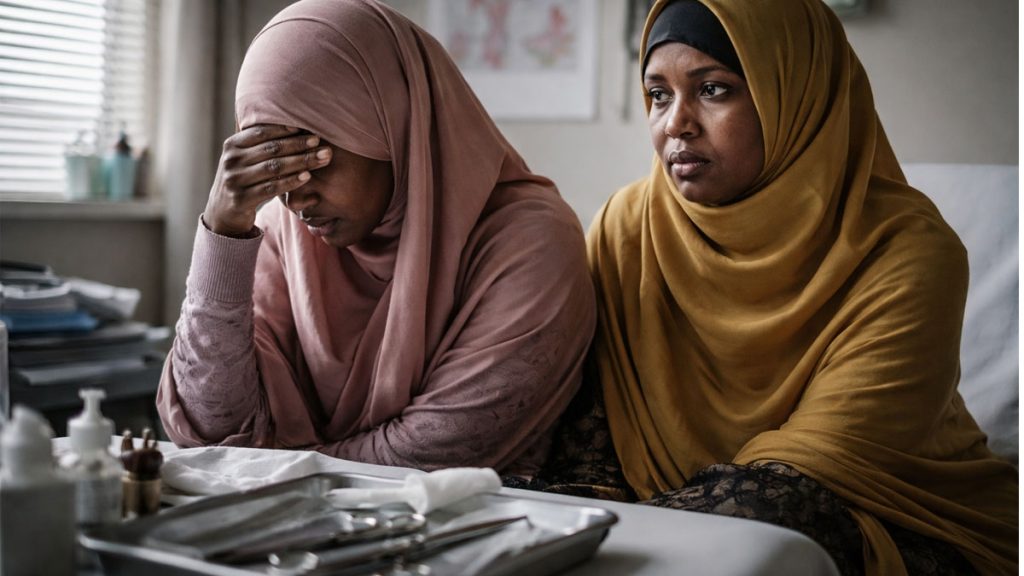
<p class="wp-block-paragraph">Female genital mutilation is widely recognized as one of the most severe forms of violence against girls anywhere in the world. It is illegal throughout the United States and has been a felony in Minnesota since 1994. Yet growing concern remains that the practice may still be occurring in secret within the Somali community that has cultural ties to countries where the procedure is common.</p>


<p class="wp-block-paragraph">Minnesota is home to one of the largest Somali communities in the United States. Somalia has among the highest female genital mutilation rates in the world, with United Nations data estimating roughly 98 percent of women ages 15 to 49 there have undergone the procedure.</p>


<p class="wp-block-paragraph">The situation has alarmed lawmakers, activists, and survivors who say there is a troubling gap between what the law says and what is actually being enforced. With no documented prosecutions despite decades of legal prohibition, critics argue Minnesota authorities are failing to protect vulnerable girls from irreversible harm.</p>


<p class="wp-block-paragraph"><strong>A Law on the Books With No Enforcement</strong></p>


<p class="wp-block-paragraph">Minnesota law clearly defines female genital mutilation as a felony crime. The statute states that anyone who knowingly performs or attempts the procedure is guilty of a felony and that parental consent is not a defense.</p>


<p class="wp-block-paragraph">Despite that clarity, there has never been a documented criminal prosecution under the state law. Reviews of court records, enforcement announcements, and professional disciplinary actions have not identified any cases. The Minnesota Attorney General’s Office said enforcement falls to county prosecutors, yet county attorneys contacted did not identify any prosecutions either.</p>


<p class="wp-block-paragraph">This absence of cases has raised serious concerns. If the practice is known to exist globally, and if Minnesota has a population at risk, observers question how enforcement could produce zero cases over more than thirty years.</p>


<p class="wp-block-paragraph">The Minnesota Department of Health also does not track specific data related to female genital mutilation. That lack of data highlights how little officials know about the scope of the problem.</p>


<p class="wp-block-paragraph"><strong>A Practice Hidden by Secrecy and Cultural Pressure</strong></p>


<p class="wp-block-paragraph">State Rep. Mary Franson says the cultural secrecy surrounding the practice makes it extremely difficult to uncover.</p>


<p class="wp-block-paragraph">“It’s hidden. It’s a cultural practice, and who is doing the cutting could be a family member or a doctor who is also in that same culture,” Franson said. She explained that the tight knit nature of some communities makes detection “exceptionally difficult.”</p>


<p class="wp-block-paragraph">Survivors confirm that secrecy is one of the biggest barriers to enforcement. Zahra Abdalla, a Minnesota based Somali survivor, said silence is deeply embedded in the culture surrounding the practice.</p>


<p class="wp-block-paragraph">“You don’t talk about it,” she said. “You’re told to stay quiet.”</p>


<p class="wp-block-paragraph">Abdalla said she believes some families may take girls overseas during school breaks to undergo the procedure, though she said she cannot confirm specific cases inside Minnesota.</p>


<p class="wp-block-paragraph">The secrecy extends even to awareness of the law. At a legislative hearing, survivor Farhio Khalif said she had only recently learned Minnesota had outlawed the practice.</p>


<p class="wp-block-paragraph">“We don’t talk about this in our community,” she said. “It’s hush hush, even in our living rooms.”</p>


<p class="wp-block-paragraph"><strong>Survivors Describe Lifelong Trauma</strong></p>


<p class="wp-block-paragraph">Medical experts warn that female genital mutilation can cause severe bleeding, infections, chronic pain, urinary problems, sexual dysfunction, childbirth complications, and even death. Because the procedure permanently alters genital tissue, the damage cannot be reversed.</p>


<p class="wp-block-paragraph">Somali born activist Ayaan Hirsi Ali, who survived the procedure herself, described it as violence against children.</p>


<p class="wp-block-paragraph">“Female genital mutilation is violence against the most vulnerable. Children,” Hirsi Ali said. “It causes infection, incontinence, unbearable pain during childbirth and deep physical and emotional scars that never heal. Religious or cultural practices that deliberately and cruelly harm children must be confronted. No tradition can ever justify torture.”</p>


<p class="wp-block-paragraph">Abdalla shared her own experience of being forcibly restrained as a child in a refugee camp while adult women used a razor blade without anesthesia.</p>


<p class="wp-block-paragraph">“They tied my hands and my legs,” she said. “I remember being held down. I remember the pain and knowing I could not escape.”</p>


<p class="wp-block-paragraph">She said the trauma followed her into adulthood, requiring surgery and contributing to miscarriages. She also described the social pressures behind the practice, including marriage expectations.</p>


<p class="wp-block-paragraph">“It’s tied to dowry. It’s tied to marriage,” she said. “It’s tied to what men expect. Families believe it protects a girl’s value.”</p>


<p class="wp-block-paragraph"><strong>Government Awareness but Limited Action</strong></p>


<p class="wp-block-paragraph">Minnesota officials are not unaware of the issue. The state has funded outreach programs, community education, and training initiatives through the Department of Health and nonprofit partnerships. Programs have included training for healthcare providers, law enforcement, educators, and child welfare workers on how to identify risk factors and respond to cases.</p>


<p class="wp-block-paragraph">Still, critics argue these efforts have not translated into enforcement.</p>


<p class="wp-block-paragraph">Some lawmakers are now pushing to create a formal state task force focused on prevention. According to Franson, the effort was prompted by concerns raised by women within the Somali community itself.</p>


<p class="wp-block-paragraph">She also said political tensions complicated support for the proposal.</p>


<p class="wp-block-paragraph">“The bill was brought forward by women in the Somali community. I was the chief author, but then Democrats told one of the DFL women that if I carried the bill, they would not support it,” Franson said. “Of course, it’s because they believe I am a racist.”</p>


<p class="wp-block-paragraph">The political sensitivity surrounding the issue has contributed to frustration among critics who believe authorities are reluctant to confront the problem directly.</p>


<p class="wp-block-paragraph"><strong>Tone Deaf Political Reactions</strong></p>


<p class="wp-block-paragraph">The controversy has also intersected with national political debates. In 2019, Minnesota Representative Ilhan Omar faced a question from a Muslim activist about female genital mutilation during a conference. Omar responded by saying she was “disgusted” by the question and suggested she should not have to repeatedly condemn the practice.</p>


<p class="wp-block-paragraph">“I want to make sure that the next time someone is in an audience, and is looking at me and Rashida, that they ask us the proper questions that they will probably ask any member of Congress,” Omar said.</p>


<p class="wp-block-paragraph">She also joked about the frequency of such questions, saying, “Does this need to be on repeat every 5 minutes.”</p>


<p class="wp-block-paragraph">Critics said the response was tone deaf given the seriousness of the issue and the presence of survivors in Minnesota communities. Activist Ani Zonneveld later said Omar “could have taken the opportunity to educate the audience instead of throwing red meat.”</p>


<p class="wp-block-paragraph">Omar has stated that she supported legislation against female genital mutilation in both the Minnesota Legislature and Congress, but the exchange added to controversy surrounding the topic.</p>


<p class="wp-block-paragraph">Female genital mutilation is considered a human rights violation by the United Nations, the World Health Organization, and UNICEF. More than 200 million women and girls worldwide have undergone the procedure.</p>


<p class="wp-block-paragraph">In the United States, prosecutions have been rare. A high profile federal case involving girls from Minnesota collapsed after a judge ruled that Congress lacked authority under the law at the time. Congress later strengthened federal law through the Stop FGM Act, expanding jurisdiction for cases involving interstate or international travel.</p>


<p class="wp-block-paragraph">Even with stronger federal law, enforcement nationwide remains limited. The only widely cited state level conviction occurred in Georgia in 2006.</p>


<p class="wp-block-paragraph">The situation in Minnesota presents a disturbing contradiction. Authorities acknowledge the risk. Survivors describe secrecy and cultural pressure. The law clearly criminalizes the act. Yet no one has been prosecuted.</p>


<p class="wp-block-paragraph">Critics argue that failing to enforce laws against the mutilation of children is unacceptable under any circumstances. Cultural sensitivity cannot justify inaction when minors may be facing permanent physical and psychological harm.</p>


<p class="wp-block-paragraph">As Hirsi Ali said, “Only legal accountability can help reduce that risk.”</p>


<p class="wp-block-paragraph">For many observers, the unanswered question remains both simple and troubling. If female genital mutilation is illegal, known to be a risk, and acknowledged by authorities, why has no one been held accountable?</p>


<p class="wp-block-paragraph">Until that question is resolved, concerns will persist that some girls in Minnesota may still face a brutal practice that should have no place in the United States.</p>

Minnesota: Female Genital Mutilation STILL PRACTICED – and Ignored