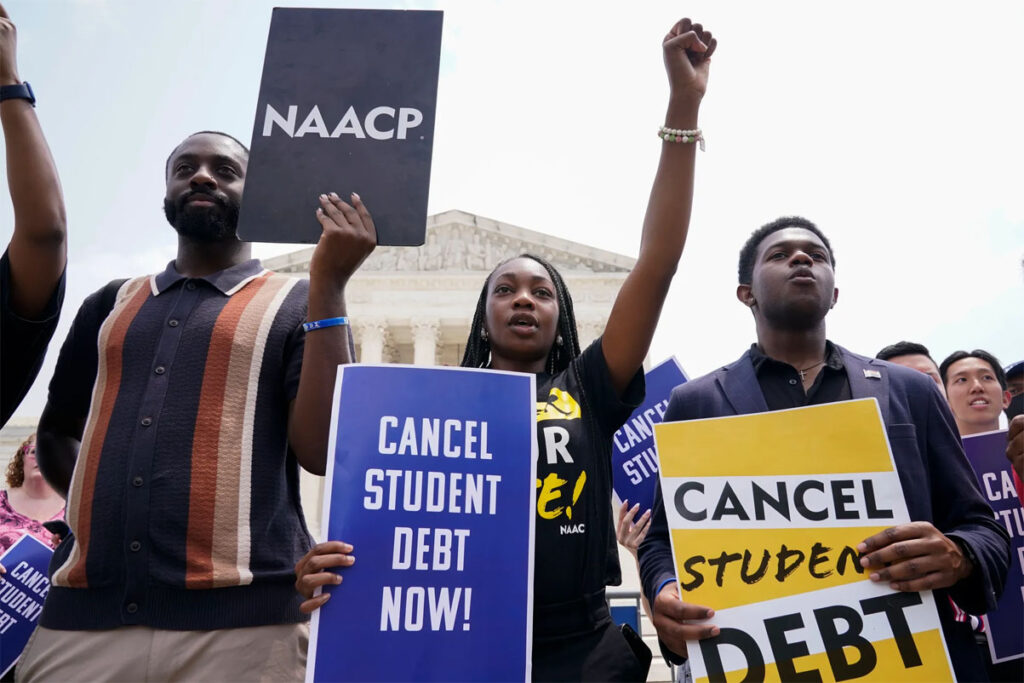
<p class="wp-block-paragraph">In a recent decision by the Supreme Court, President Biden&#8217;s ambitious plan to cancel mass student debt was struck down, leaving millions of borrowers to grapple with the return to a repayment system they had hoped to escape. Since the onset of the pandemic in 2020, payments and interest accrual on federal student loans had been suspended, courtesy of the Trump administration and Congress. However, during this hiatus, the Biden administration endeavored to transform the repayment landscape for borrowers.</p>


<p class="wp-block-paragraph">The ruling has underscored the frustrations and challenges faced by student borrowers, who feel trapped in a system that often burdens them with insurmountable debt. However, in this author&#8217;s opinion, this was a blatant vote buying scheme and a failure to address the real problems with university education.</p>


<p class="wp-block-paragraph">This perspective must be balanced against the ethical principle that resonates with most Americans, which is the belief that if you borrow money, you must fulfill your obligation to repay it. The push for student loan forgiveness can be seen as a political maneuver by Democrats to gain support and votes, further deepening the divide between Republicans and Democrats. As the issue primarily affects younger Americans burdened with student loans, it becomes a polarizing topic among different generations. The idea of expecting the rest of the country to shoulder the burden of paying off the loans for individuals who willingly borrowed the money is met with resistance, particularly from older Americans who have already repaid their own loans.</p>


<p class="wp-block-paragraph">Critics argue that the focus on student loan forgiveness overlooks the root cause of the problem, which lies in the ever-increasing tuition rates set by universities. The socialist structure of the university system has contributed to a significant inflation in the cost of education in America, making it unaffordable for many students without resorting to loans. Addressing this underlying issue is crucial to tackling the student debt crisis in a more comprehensive and sustainable manner.</p>


<p class="wp-block-paragraph">The resumption of payments poses potential complications for some borrowers due to various changes that have occurred in the loan system. Since 2020, numerous individuals have graduated from or left educational institutions without obtaining a degree, meaning they have not yet made any payments or been assigned a loan servicing company. Moreover, the federal student loan business has witnessed shifts as firms like Navient, formerly known as Sallie Mae, have withdrawn from the arena. A Consumer Financial Protection Bureau report from June revealed that over 40% of borrowers will encounter a new student loan servicer upon reentering repayment.</p>


<p class="wp-block-paragraph">This situation has given rise to concerns about the welfare of a vulnerable group of borrowers. Aaron Ament, president of the National Student Legal Defense Network, expressed worry over the absence of a plan to aid students at significant risk when payments recommence. President Biden has announced intentions to forge ahead with an alternative effort to forgive student loans on a large scale, utilizing a different legal authority. Nevertheless, the specifics of this program, including the number of beneficiaries and the timeline for its finalization, remain uncertain, thereby introducing further ambiguity for borrowers.</p>


<p class="wp-block-paragraph">Meanwhile, the Biden administration has undertaken an overhaul of the repayment process itself. By revamping income-based repayment programs and rewriting accountability regulations for for-profit schools, the administration aims to prevent loan balances from spiraling out of control in the future. While mass debt cancellation received more attention, the newly proposed changes to income-driven repayment plans, which were finalized by the Education Department, could potentially cost considerably more over time. The plan includes more generous options for qualifying borrowers, allowing them to potentially become debt-free sooner while repaying only a fraction of their balances. Notably, borrowers earning $32,800 or less per year will have their payments reduced to zero, while the department anticipates saving other borrowers at least $1,000 annually.</p>


<p class="wp-block-paragraph">However, the Education Department faces the challenge of implementing and communicating these changes to borrowers within a few months before payments are set to resume in October. The initial months following the resumption of payments are crucial, as they can significantly impact borrowers&#8217; ability to stay on track. Brian Denten, a student debt expert at Pew Charitable Trusts, emphasized the importance of swiftly making the department&#8217;s revised repayment plan available to borrowers to ensure a smooth transition.</p>


<p class="wp-block-paragraph">The Supreme Court&#8217;s ruling has left nearly 20 million borrowers disheartened, as they hoped to escape their debt obligations completely. Among them is Joy Morales-Bartlett, who anticipated the conclusion of her arduous journey to repay $89,000 in student loan debt. The ruling has underscored the frustrations.</p>


<p class="wp-block-paragraph">As the debate surrounding student loan forgiveness continues, it remains to be seen how policymakers will navigate the complex dynamics of fairness, personal responsibility, and the need for affordable education. Finding a solution that addresses both the immediate financial challenges faced by borrowers and the systemic issues within the education system will be essential in ensuring a brighter future for generations to come.</p>


<p class="wp-block-paragraph"> </p>

Millions of Student Loan Borrowers Face Repayment After Supreme Court Ruling