<p class="wp-block-paragraph">The rapid proliferation of e-bikes, electric scooters, and other low-speed personal conveyances has created a dangerous regulatory gray zone in American transportation. Positioned between fully licensed motor vehicles requiring trained operators and traditional human-powered bikes or skateboards, these devices have exploded in popularity while injuries and deaths have soared.</p>


<p class="wp-block-paragraph">National data reveals a public health emergency. According to UCSF research, e-bicycle injuries in the U.S. skyrocketed from 751 in 2017 to 23,493 in 2022, with e-scooter injuries rising from 8,566 to 56,847 over the same period. Hospitalizations climbed dramatically, reaching 3,122 in 2022 alone. This is only the tip of the iceberg since the majority of low-speed vehicle injuries go unreported.</p>


<p class="wp-block-paragraph">The Consumer Product Safety Commission (CPSC) documented over 20,000 annual e-bike injuries, with thousands requiring hospitalization, and noted that micromobility injuries increased nearly 21 percent in 2022. Head trauma from e-bike accidents surged 49-fold nationally between 2017 and 2022. In New York City, 17 people died in e-bike crashes in 2024, with 901 injuries reported in 2025—a 41 percent jump. California has seen similar spikes, including a 1,800 percent rise in some metrics, prompting local states of emergency.</p>


<p class="wp-block-paragraph">Fatalities paint an even grimmer picture. CPSC awareness data tracks around 193 e-bike deaths from 2017–2023, predominantly from motor vehicle collisions (about 58 cases) and control issues. Battery fires add to the toll—267 incidents in NYC in 2023 alone killed 18 and injured 150.</p>


<p class="wp-block-paragraph">Pediatric cases are particularly concerning. Connecticut Children’s Medical Center saw e-bike injuries nearly triple from early 2024 to 2025. Nationwide, bicyclist deaths (including e-bikes) hit 1,377 in 2023, up 87 percent since 2010, with e-bikes contributing significantly to the rise in severity.</p>


<p class="wp-block-paragraph">These vehicles often reach speeds of 20–60 mph when modified, blurring lines with motorcycles, yet many operate without licensing, insurance, or age restrictions. Riders, frequently children and teens, weave through traffic, sidewalks, and paths designed for slower use, endangering themselves and others.</p>


<p class="wp-block-paragraph">Regulation Efforts and Their Limits</p>


<p class="wp-block-paragraph">Cities and states are responding with varied measures. Speed limits, helmet mandates, sales restrictions on high-powered models, and sidewalk bans have been implemented. In California, Amazon halted sales of non-compliant e-bikes following pressure from prosecutors. Orange County District Attorney Todd Spitzer has been particularly aggressive, appearing in national coverage including CNN to highlight the crisis. Spitzer formed the RIDE SAFELY unit to prosecute illegal e-bike and e-motorcycle use, filing child endangerment and involuntary manslaughter charges against parents. Cases include a 14-year-old on a high-speed e-motorcycle killing an 81-year-old pedestrian, despite prior warnings. Spitzer has called these devices “deadly weapons” when misused and emphasized parental accountability.</p>


<p class="wp-block-paragraph">While enforcement is necessary—especially against modifications turning e-bikes into unlicensed motorcycles—such reactive measures address symptoms, not root causes. Broader classification under vehicle codes, mandatory training, and insurance could help, but they risk stifling beneficial micromobility if overly punitive.</p>


<p class="wp-block-paragraph">Why Bike Lanes Are Not the Answer</p>


<p class="wp-block-paragraph">A common response has been expanding dedicated bike lanes. Proponents claim separation improves safety, but evidence suggests otherwise in many contexts, particularly when lanes run alongside high-speed auto and truck traffic. In a Sun-Sentinel op-ed “South Florida bike lanes — designed to kill?,” I wrote from experience as the one-time executive director of the City Club of Chicago. There, I oversaw a study on bike paths entitled “Design to Kill.” It found that the new bike lane designations in the Windy City consistently resulted in increases in injuries and deaths—mostly to the cyclists.</p>


<p class="wp-block-paragraph">I argued that placing slow-moving vehicles in proximity to fast traffic violates basic safety principles. “Sharrows” (shared lanes) and roadside bike lanes create conflict points at intersections, driveways, and merges, where visibility and speed differentials create extreme dange<strong>r</strong> and prove deadly. Data supports this caution, showing rising cyclist injuries and fatalities amid lane proliferation. Having cars and trucks share common spaces with bikes and low speed vehicles increases risks rather than mitigating them, especially as the number and speed of these personal vehicles increase.</p>


<p class="wp-block-paragraph">The Third Avenue Solution</p>


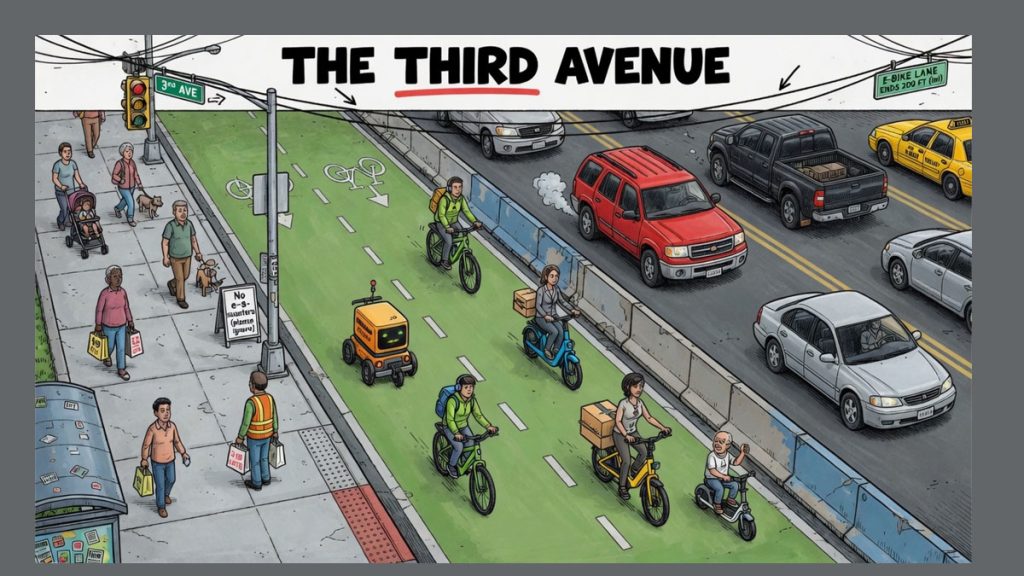
<p class="wp-block-paragraph">I proposed <strong>a</strong> concept I called “The Third Avenue”—dedicated pathways separate from both streets/highways and pedestrian walkways, reserved exclusively for low-speed personal vehicles. It would be built to accommodate the growing number and variety of low-speed electric vehicles, including Segways, golf carts, and motorized boards.</p>


<p class="wp-block-paragraph">Squeezing the Third Avenue alongside existing transportation infrastructure would not be easy or inexpensive—and in some cases impossible. I see a long-term evolutionary process that starts where space already exists or can be found. For example, in Palm Beach County, Florida, where <strong>I</strong> now live, there is ample public land alongside major highways to accommodate a Third Avenue.</p>


<p class="wp-block-paragraph">This Third Avenue creates true separation. Pedestrians remain safe on sidewalks, high-speed vehicles stay on roads, and e-bikes/scooters gain efficient, low-conflict routes. It acknowledges the unique characteristics of these vehicles—faster than walking but slower and more vulnerable than cars—without pretending they fit into existing infrastructure.</p>


<p class="wp-block-paragraph">Implementing this requires vision from planners and policymakers—and intergovernmental cooperation. Short-term repurposing of underused spaces could provide quick wins, while long-term urban design embeds these avenues in growth plans. It avoids the false choice between banning innovation and accepting chaos.</p>


<p class="wp-block-paragraph">The soaring injuries and deaths from low-speed vehicles demand action beyond patchwork regulations and misguided bike lane expansions. With statistics showing exponential growth in harm, leaders must embrace creative solutions like the Third Avenue. Failure to do so will only compound the tragedy on our streets. True safety lies in designing systems that match the realities of modern mobility—not forcing square pegs into round holes.</p>


<p class="wp-block-paragraph">So, there ‘tis.</p>


<p class="wp-block-paragraph"></p>

Low-Speed Vehicles Need Their Own Avenue