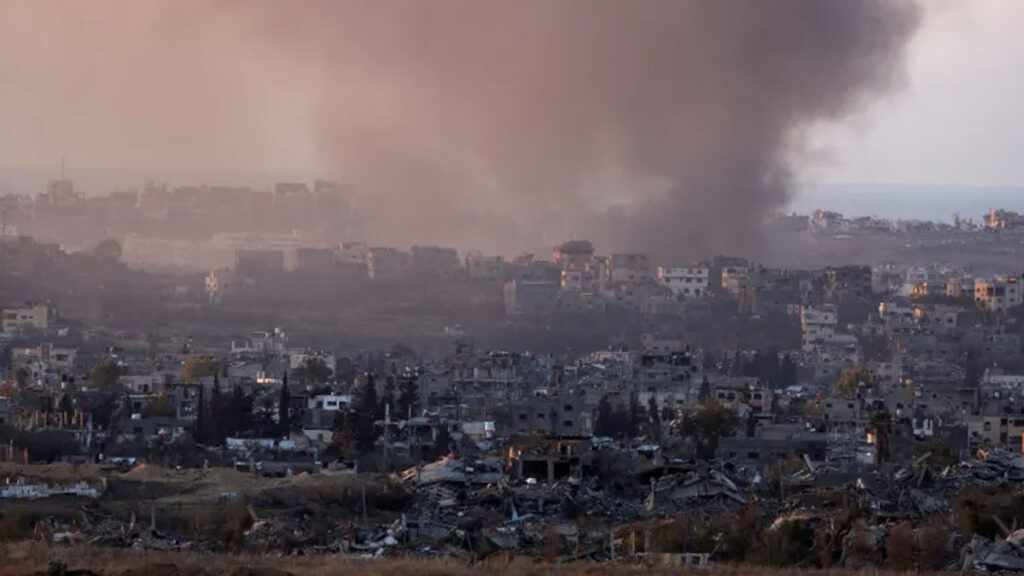
<p class="wp-block-paragraph">After nearly two months of relative calm, Israel has resumed large-scale military operations in Gaza, launching a wave of deadly airstrikes that have killed more than 400 people, according to Palestinian health authorities. The strikes, which targeted what Israel describes as Hamas leadership and military infrastructure, mark one of the deadliest days of the conflict since it began in October 2023.</p>


<p class="wp-block-paragraph">Israeli Prime Minister Benjamin Netanyahu’s office released a statement declaring that the country would now act against Hamas “with increasing military force.” The renewed fighting came after ceasefire talks broke down, with Israel accusing Hamas of refusing to release hostages and Hamas blaming Israel for derailing negotiations.</p>


<p class="wp-block-paragraph">The Israeli military also issued new evacuation orders for multiple areas, including Beit Hanoun in the north and several neighborhoods in Khan Younis in the south, signaling that this new phase of the war is only beginning.</p>


<h4 class="wp-block-heading">What Led to the Collapse of the Ceasefire?</h4>


<p class="wp-block-paragraph">For nearly two months, a fragile ceasefire had held between Israel and Hamas, largely due to mediation efforts from the United States, Egypt, and Qatar. The truce had led to the release of dozens of Israeli hostages in exchange for over 1,700 Palestinian prisoners. However, the second phase of the agreement—which was supposed to involve further hostage releases and negotiations for a more permanent resolution—never materialized.</p>


<p class="wp-block-paragraph">Israeli officials say Hamas repeatedly refused to release additional hostages, instead using the ceasefire to regroup and rearm. &#8220;Hamas could have released hostages to extend the ceasefire but instead chose refusal and war,&#8221; said White House National Security Council spokesman Brian Hughes.</p>


<p class="wp-block-paragraph">On the other side, Hamas claims it was Israel that sabotaged the ceasefire by refusing to negotiate an end to the war. In a statement shared on Telegram, Hamas declared that Netanyahu and his government &#8220;decided to overturn the ceasefire agreement,&#8221; warning that their actions had &#8220;exposed the remaining hostages in Gaza to an unknown fate.&#8221;</p>


<p class="wp-block-paragraph">The final collapse of negotiations happened over the weekend when Hamas reportedly accepted a proposal to release one American-Israeli hostage and the bodies of four dual nationals who had died in captivity. However, Netanyahu’s office rejected the deal, with Israeli officials accusing Hamas of attempting to manipulate the negotiation process.</p>


<h4 class="wp-block-heading">Devastating Strikes and Human Toll</h4>


<p class="wp-block-paragraph">The Israeli military says its latest attacks targeted Hamas leadership, mid-level commanders, and military infrastructure, but Palestinian officials report that many civilians have been caught in the violence.</p>


<p class="wp-block-paragraph">Gaza’s health ministry said at least 404 people were killed in a single night of bombing. Video footage showed bodies lining the floors of hospitals as the wounded flooded in. “We were sleeping when multiple airstrikes hit at the same time,” said Osama Humaid, a resident of the Al-Nuseirat refugee camp in central Gaza. “People were screaming.”</p>


<p class="wp-block-paragraph">Amal Ismael, a nurse in Rafah, described how the attacks shook her hospital while she was working. “It was around 2:00 a.m. I was working with a child when warplanes suddenly started bombing different targets around us,” she said.</p>


<p class="wp-block-paragraph">The destruction was widespread, with Israeli airstrikes leveling buildings across Gaza. The Israeli military also confirmed it had shut down the Rafah border crossing with Egypt, cutting off a crucial route for medical evacuations and humanitarian aid.</p>


<h4 class="wp-block-heading">The Mounting Death Toll</h4>


<p class="wp-block-paragraph">Since the war began in October 2023, Palestinian health officials report that more than 48,000 people have been killed, with thousands more wounded and nearly 90% of Gaza’s population displaced. The Israeli government does not differentiate between civilians and Hamas fighters in the casualty count, though reports indicate that women and children make up a significant portion of the dead.</p>


<p class="wp-block-paragraph">On the Israeli side, officials say about 1,200 people were killed in Hamas’ October 7 attack, which also resulted in 250 hostages being taken. While many hostages have been released, Israel believes that 59 remain in Gaza, including 24 who are thought to still be alive.</p>


<h4 class="wp-block-heading">Israel’s Justification: Hamas to Blame</h4>


<p class="wp-block-paragraph">Israel insists it had no choice but to resume military operations, claiming that Hamas was preparing for another assault and had used the ceasefire period to strengthen its forces. &#8220;If Hamas does not release all the kidnapped, the gates of hell will open in Gaza,” warned Israeli Defense Minister Israel Katz. “We will not stop fighting until all the kidnapped return home and all the war&#8217;s goals are achieved.&#8221;</p>


<p class="wp-block-paragraph">Israeli officials say the military’s priority remains dismantling Hamas and freeing the hostages. Netanyahu’s office justified the new wave of attacks, saying the decision was made only after Hamas had “refused time and again to release our hostages and rejected all the proposals it has been given by U.S. envoy Steve Witkoff and by the Qatari and Egyptian mediators.&#8221;</p>


<p class="wp-block-paragraph">Israeli security analysts say the military is planning a stepped-up campaign that will include further airstrikes and targeted raids. There is also speculation that Israel may try to displace the hundreds of thousands of Palestinians who have returned to their homes in northern Gaza since the ceasefire began.</p>


<h4 class="wp-block-heading">Hamas’ Response: Netanyahu’s Government Is Responsible</h4>


<p class="wp-block-paragraph">Hamas has strongly condemned Israel’s actions, blaming Netanyahu’s government for the collapse of the ceasefire and for placing hostages in greater danger. &#8220;Netanyahu and his extremist government have decided to overturn the ceasefire agreement, exposing the prisoners in Gaza to an unknown fate,&#8221; the group said in a statement.</p>


<p class="wp-block-paragraph">Hamas also accused the U.S. of being complicit in Israel’s actions, pointing out that Israel had coordinated its attacks with Washington beforehand. &#8220;Israel&#8217;s coordination with the U.S. administration prior to the attacks confirms the U.S. partnership in the genocide perpetrated against our people and its role in covering up Israeli war crimes,&#8221; Hamas spokesperson Abdul Latif al-Qanou said.</p>


<h4 class="wp-block-heading">The U.S. Reaction: Support for Israel, Warnings to Hamas</h4>


<p class="wp-block-paragraph">The United States, which was involved in brokering the ceasefire, has reaffirmed its support for Israel while placing the blame for the renewed fighting squarely on Hamas. White House press secretary Karoline Leavitt confirmed that Israel had consulted with the U.S. before launching the strikes.</p>


<p class="wp-block-paragraph">“Hamas could have released hostages to extend the ceasefire but instead chose refusal and war,” said National Security Council spokesman Brian Hughes.</p>


<p class="wp-block-paragraph">President Trump, who has taken a hardline stance on the conflict, has made it clear that Hamas will face severe consequences for failing to meet ceasefire demands. “All hell will break loose,” Leavitt warned in a television appearance.</p>


<h4 class="wp-block-heading">International Condemnation and Protests</h4>


<p class="wp-block-paragraph">The renewed violence has drawn criticism from international leaders and human rights organizations. The United Nations’ human rights chief, Volker Turk, said he was “horrified” by the new Israeli airstrikes, which have led to “hundreds of deaths overnight.” The U.N. called for an immediate return to ceasefire negotiations.</p>


<p class="wp-block-paragraph">Egypt, which played a central role in negotiating the truce, issued a statement condemning Israel’s actions as a “flagrant violation of the ceasefire agreement and a dangerous escalation.” The Egyptian foreign ministry urged the international community to intervene before the situation spirals further out of control.</p>


<p class="wp-block-paragraph">Within Israel, the decision to resume fighting has also sparked protests, particularly among the families of hostages who fear that military action will endanger their loved ones. &#8220;The return to fighting before bringing back the last hostage will cost the lives of 59 hostages who are still in Gaza and can be saved and returned,&#8221; warned the Hostages and Missing Families Forum.</p>


<p class="wp-block-paragraph">With ceasefire negotiations now in shambles and both sides preparing for further escalation, the war appears set to intensify. Israel has signaled that it will continue striking Hamas targets with increasing force, while Hamas is regrouping and recruiting new fighters.</p>


<p class="wp-block-paragraph">For the civilians of Gaza, already struggling under the weight of a humanitarian catastrophe, the return to full-scale war means even more suffering and loss. The hope for peace, once cautiously within reach, has now been replaced by the sounds of explosions and the fear of what comes next.</p>


<p class="wp-block-paragraph"><strong>PB Editor:</strong> Hamas was hoping to string along the ceasefire for much longer for its own purposes, reneging on its promises to release all of the hostages. Most of the time they would be right, but negotiations are much tougher now with Trump supporting Netanyahu.</p>

Israel Resumes Attacks on Gaza as Ceasefire Collapses