




















Is Russia Losing the War?

The war in Ukraine drags on … and on. Talk of ceasefires and peace are just that — talk. President Trump admits that the war he once believed he could settle in a day has no end in sight after more than a year in office.
Trump has been less than an enthusiastic supporter of Ukraine — too often leaning toward Putin’s worldview. One can remember the scolding Trump gave President Zelenskyy in the Oval Office, telling the Ukrainian leader he had “no cards” with which to win the war.
However, Trump has not cut off support for the Ukrainian military. Kyiv is receiving advanced weapons through a deal with European allies. The U.S. continues to supply munitions and intelligence support. Sanctions on Russia have been tightened, oil tankers fueling the war have been seized, and Russia’s partners in Venezuela and Iran have been weakened.
Among the pinstriped‑pants crowd, there has long been a belief that Ukraine is too small, too poor, and too weak to defeat Russia. The only question, in their view, was how much land Ukraine would lose and how much humiliation it would have to suffer in the name of peace.
These were the same people who wrote Ukraine off in the earliest days of the invasion — when Putin’s armored columns were rolling toward Kyiv. To the amazement of the world, Ukraine stopped the Russian caravan dead (literally) in its tracks. Since then, Russia has not gained any significant territory it did not control before the 2022 invasion. And the deadlock has cost Russia hundreds of thousands of dead soldiers and billions of rubles.
The Russian economy is staggering under the weight of sanctions, capital flight, and the loss of its European energy markets. It is on the ropes. And yet, despite all this, many in Washington and Europe still cling to the idea that Ukraine cannot win.
But what if that assumption is wrong? What if the evidence — the battlefield evidence — points in the opposite direction?
Ukraine has done the “impossible” — Repeatedly. From the first days of the war, Ukraine has achieved feats that military analysts, intelligence agencies, and Western governments believed were impossible. The list is long, and it keeps growing.
Stopping the Fall of Kyiv
Russia expected Kyiv to fall in 72 hours. Instead, Ukrainian forces ambushed Russian convoys, destroyed armored columns, and forced Russia into a humiliating retreat. The Battle of Kyiv will be studied in military academies for decades — a smaller, outgunned force using mobility, intelligence, and local knowledge to defeat a larger invader.
Sinking the Moskva — the Flagship of the Black Sea Fleet
This was supposed to be impossible. The Moskva was the pride of the Russian navy, a symbol of Moscow’s dominance in the Black Sea. Ukraine hit it with domestically produced Neptune missiles, sending the cruiser to the bottom of the sea. It was the first sinking of a major Russian warship since World War II — and a psychological blow that shattered the myth of Russian naval invincibility. It was the first, but not the last Russian ship destroyed.
Destroying Russian Bases and Airfields Deep Inside Russia
Ukraine has struck oil depots, airbases, drone factories, and military headquarters hundreds of miles inside Russian territory. These attacks were not supposed to be feasible. Russia’s air defenses were believed to be too dense, too sophisticated. Yet Ukrainian drones — many built in garages and workshops — have repeatedly slipped through and hit strategic targets. These strikes have forced Russia to move aircraft farther from the front, degrading its ability to wage war.
Creative Sabotage Across Russia
Rail lines have been disrupted. Fuel depots have mysteriously exploded. Factories tied to the war effort have burned. Some of this is the work of Ukrainian special forces. Some is the work of Russian partisans inspired or supported by Kyiv. All of it demonstrates that Russia’s vast territory is not secure — a reality Putin never expected to face.
Holding Terrain Against Larger Forces
In places like Bakhmut, Avdiivka, and the Zaporizhzhia front, Ukraine has held ground against numerically superior Russian forces. Russia has thrown waves of troops — including convicts from the Wagner Group — into meat‑grinder assaults. Ukraine has made them pay for every meter. The cost to Russia has been staggering.
Russia’s Losses Are Far Worse Than Moscow Admits
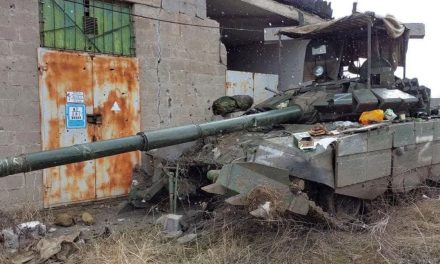
While exact numbers are impossible to verify, Western intelligence estimates paint a devastating picture. Thousands of tanks and armored vehicles destroyed. Dozens of the most advanced aircraft and helicopters lost. The Russian Black Sea Fleet forced to retreat from Crimea. Billions of dollars in equipment burned, sunk, or abandoned. An estimated 300,000 Russian soldiers killed or wounded – hundreds of thousands more fleeing Mother Russia.
Russia has lost more soldiers in Ukraine than in Afghanistan, Chechnya, and Syria combined. Entire brigades have been wiped out. Elite airborne units have been decimated. A number of top military leaders and commanders have been assassinated inside Russia.
Ukrainian Victories That Changed the War
Ukraine’s successes are not symbolic — they have reshaped the battlefield.
The Kharkiv Counteroffensive.In fall 2022, Ukraine launched a lightning strike that liberated thousands of square miles in days. Russian forces fled so quickly they left tanks, ammunition, and personal belongings behind.
The Liberation of Kherson.Kherson was the only regional capital Russia captured. Ukraine forced Russia to abandon it without a street‑by‑street fight — a strategic humiliation for the Kremlin.
The Black Sea Breakthrough. Ukraine has pushed the Russian navy away from the western Black Sea, reopened grain shipping lanes, and struck naval targets in Crimea.
Crimea — once considered untouchable — is now under constant threat.
Is Ukraine Actually Winning?
Here is the uncomfortable truth for the “Ukraine can’t win” crowd. Ukraine has already achieved more than anyone believed possible. It is winning because it has avoided losing.
Russia has failed in every major strategic objective. Putin failed to take Kyiv, failed to topple the Ukrainian government, failed to break the Ukrainian economy, failed to intimidate Europe into abandoning Ukraine, failed to stop NATO expansion – Putin’s reason for invading Ukraine in the first place.
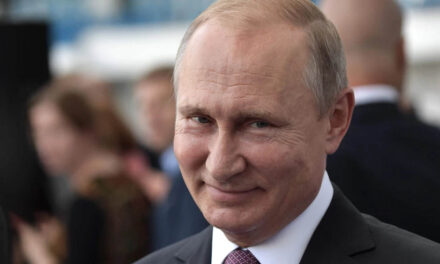
Meanwhile, Russia is isolated, sanctioned, and dependent on other nations for weapons and troops. Putin himself looks weaker than at any point in his 24 years in power. The Wagner mutiny exposed cracks in the regime. Elite infighting is growing. The Russian public is weary of endless mobilization, the loss of the younger generation to death and desertion.
The once‑unthinkable is now thinkable — that Ukraine can drive Russia out of allUkrainian territory — including Crimea. But only if the United States, NATO and the world democracies make it a mutual goal – and implement it with action.Ukraine does not need American boots on the ground. It does not need NATO soldiers. But it can use air support, intelligence and an internationally enforced no fly zone. It needs all available weapons, ammunition, and political support the West can provide.
Every time the West hesitates, Russia regroups. Every time the West steps up, Ukraine advances. The question is no longer whether Ukraine can win. The question is whether the United States and Europe will give Ukraine what it needs to finish the job.
If they do, the outcome becomes clear. Russia loses. Ukraine wins. And the world learns that even a nuclear‑armed bully can be defeated when free nations stand together. Defeating Putin would make a more peaceful world. It would chill aggression and put an end to incremental imperialism.
Ukraine is winning by not losing. Winning by exceeding all expectations. Winning by decimating a military alleged to be bigger, stronger and more technologically advanced. It is time to change “winning” to a “win”.
So, there ‘tis.



Mike F as in fag Trump kicked the colored bitch’s ass. Demented?? Hardly. But you and Dunger? Another story.
Larry, I think that most of us that listen to mainstream news (in your parlance ‘leftist’) understand that Andy’s arrest…
Big Al, In addition to what Frank says, you miss the point (as does demented don) that trade is not…
AI: thanks for the illumination. Good discussion to have. Let me see if I understand your concept. American businesses cannot…
Both Mike and frank miss the entire point. We were ALREADY footing the bill on tariffs AGAINST us. If you…