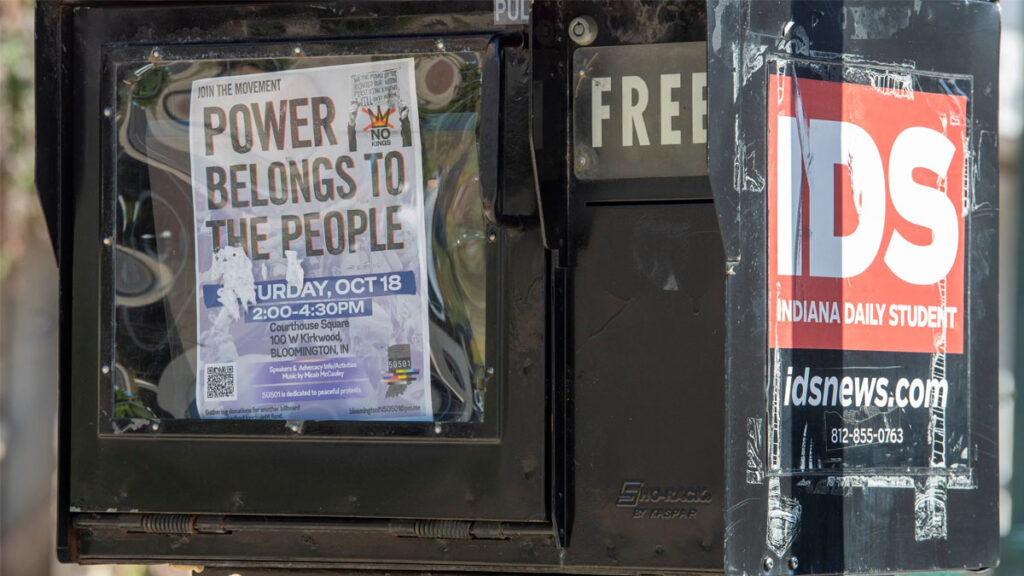
<p class="wp-block-paragraph">The recent turmoil surrounding the Indiana Daily Student (IDS) newspaper of Indiana University has reignited a longstanding debate over the autonomy of student journalism. At the heart of the controversy are two intertwined issues &#8212; administrative pressure to censor news content in the homecoming issue and the wisdom and financial challenges of sustaining a print publication in the digital age. The university’s decision to eliminate the IDS print edition and dismiss its academic adviser, Jim Rodenbush, has drawn criticism from journalists, alumni, and advocates of free expression.</p>


<p class="wp-block-paragraph">The first flashpoint came when university administrators reportedly demanded that the IDS remove news content from its special homecoming edition, insisting instead on celebratory coverage of the football team’s historic ranking and campus festivities. Rodenbush refused to comply, citing journalistic ethics and student editorial rights. “This is not about print. This is about a breach of editorial independence,” wrote co-editors-in-chief Mia Hilkowitz and Andrew Miller in a defiant e-edition titled “CENSORED”.</p>


<p class="wp-block-paragraph">The university responded swiftly. Within 24 hours, Rodenbush was fired, and the IDS was ordered to cease all print publication. The administration cited financial reasons, pointing to a $250,000 annual subsidy due to declining advertising revenues. While the IDS will continue online, the abrupt end of its 158-year print legacy has been interpreted by many as a punitive measure disguised as a budgetary decision.</p>


<p class="wp-block-paragraph">“The Media School thinks they can violate the First Amendment if it’s under a business decision,” Hilkowitz said. “That’s a really, really dangerous thought process for administrators to have”. ; As a business, however, IDS student editors have no First Amendment right over its content. ; They are essentially employees &#8212; period. ; The right to determine what is published, and what is not, belongs to the university as the owner.</p>


<p class="wp-block-paragraph">This incident is not isolated, however. The tension between student editors and university administrations has long simmered across campuses. In 2015, Wesleyan University faced backlash after its student paper published an op-ed critical of Black Lives Matter. The administration threatened funding cuts, sparking national debate. In 2006, the University of Southern California’s Daily Trojan faced pressure after publishing stories critical of campus safety protocols. These cases underscore the fragile balance between editorial freedom and institutional oversight.</p>


<p class="wp-block-paragraph">Theoretically, there exists a “wall” between ownership and editorial control—a principle borrowed from professional journalism. Publishers may own the paper, but editors decide its content – as the theory goes. Yet, as history shows, that wall often crumbles when editorial decisions challenge the interests of the owner. In the case of IDS, the university’s dual role as both publisher and funder makes the wall particularly porous.</p>


<p class="wp-block-paragraph">Financial strain only exacerbates this vulnerability. The IDS, like many student newspapers, has struggled to adapt to the digital age – along with all those other newspapers. Print advertising revenue has plummeted, and readership habits have shifted online. The university’s $250,000 subsidy, while generous, comes with strings attached. When editors choose to publish content that conflicts with the university’s image—especially during high-profile events like homecoming—the administration may feel justified in asserting control.</p>


<p class="wp-block-paragraph">From the administration’s perspective, the move to digital is both pragmatic and strategic. “Resources will shift to prioritize digital media while addressing the publication’s financial deficit,” said university spokesperson Mark Bode. This aligns with broader trends in media, where digital-first strategies dominate. Yet critics argue that the timing and manner of the shift—coinciding with the adviser’s dismissal and censorship demands—suggest ulterior motives.</p>


<p class="wp-block-paragraph">The dismissal of Rodenbush, a respected adviser and advocate for student journalism, has become a lightning rod. Billionaire and IU alumnus Mark Cuban condemned the decision, accusing the university of undermining press freedom. Faculty members have expressed concern over the erosion of shared governance and academic freedom, themes echoed in the recent documentary “Freedoms Under Assault”.</p>


<p class="wp-block-paragraph">Ultimately, the IDS controversy raises fundamental questions.  ;Who controls the narrative on campus? Should student journalists be free to report without interference, even when their stories challenge the institution? And can financial dependence coexist with editorial independence?</p>


<p class="wp-block-paragraph">In the words of Rodenbush, “Student journalists deserve the right to make editorial decisions without fear of retaliation. That’s how they learn. That’s how they grow. That’s how democracy works.” ; On the other hand, shifting the reporting experience and education to digital is more in line with the future of journalism. ; As one commentator described it: “Making print newspapers the tool of journalism education is kin to teaching telegrams as the means for fast communication.”</p>


<p class="wp-block-paragraph">What we see in the Indiana University controversy is the same old issue of editor versus owner – and in the final analysis, it is the owner who prevails. ; Professor Rodenbush has also learned that lesson. ; Professor Rodenbush has learned that lesson as well.</p>


<p class="wp-block-paragraph">So, there ‘tis.</p>

Indiana University Newspaper Exposes Tension Between Editors and Administrators