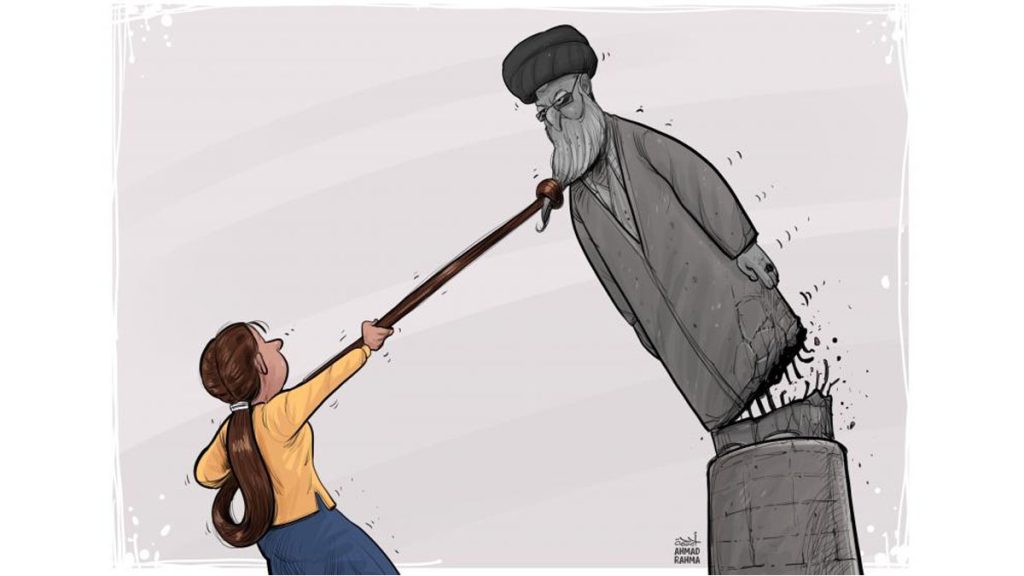
<p class="wp-block-paragraph">The latest wave of unrest sweeping across Iran underscores a reality that has defined the Islamic Republic since its earliest years. Public dissent is not an anomaly but a recurring feature of Iranian political life. The current demonstrations, sparked by political dissent, economic collapse and soaring inflation, have already resulted in multiple deaths across several provinces. Reports indicate at least six fatalities in the early days of the protests, including both demonstrators and security personnel, with clashes documented in cities such as Lordegan, Kuhdasht, Isfahan, and Marvdasht. These events echo a long lineage of uprisings that have periodically shaken the regime, each revealing deep structural grievances that remain unresolved.</p>


<p class="wp-block-paragraph">The protests began with merchant strikes in Tehran before spreading rapidly to rural and provincial areas, where anger over economic conditions is particularly acute. Videos circulating online show crowds chanting antiâregime slogans, confronting security forces, and in some cases storming government buildings. In response, the state has deployed riot police, Basij paramilitaries, and Revolutionary Guard units, signaling a familiar pattern of initial restraint followed by escalating force.</p>


<p class="wp-block-paragraph">Authorities have acknowledged several deaths, while rights groups suggest the toll may be higher. In Azna, for example, at least three people were killed and 17 injured during clashes. The Revolutionary Guards reported one Basij member killed and 13 wounded in Kuhdasht, though rights groups dispute whether the victim was actually a protester. These discrepancies reflect a longâstanding disparity between official narratives and independent reporting. What is indisputable is that the protests are large and deadly – and not unprecedented,</p>


<p class="wp-block-paragraph"><strong>Evergreen Unrest</strong></p>


<p class="wp-block-paragraph">The current protests in Iran are not unprecedented. The current demonstrations are widely described as the most serious since the 2022 protests triggered by the death of Mahsa Amini, which resulted in more than 500 deaths and more than 20,000 arrests, according to human rights organizations. But the pattern stretches back decades:</p>


<ul class="wp-block-list">
<li>2009 Green Movement<strong>:</strong> Millions protested alleged election fraud. Estimates suggest at least 72 deaths, though activists claim the real number was higher. Thousands were detained.</li>


<li>2017–2018 Protests<strong>:</strong> Sparked by economic grievances, these demonstrations spread to over 80 cities. At least 25 people were killed and nearly 5,000 arrested.</li>


<li>2019 Fuel Price Protests<strong>:</strong> Perhaps the deadliest since the revolution, with Amnesty International reporting at least 304 deaths, while some sources claim more than 1,000. Internet shutdowns obscured the full scale.</li>
</ul>


<p class="wp-block-paragraph">These cycles reveal a persistent undercurrent of dissatisfaction that periodically erupts into mass mobilization. The grievances vary (economic hardship, political repression, corruption, social restrictions), but the underlying theme is consistent &#8212; a population that feels alienated from its oppressive rulers.</p>


<p class="wp-block-paragraph"><strong>External Pressure and Internal Vulnerability</strong></p>


<p class="wp-block-paragraph">Iran’s current fragility is exacerbated by President Trump’s policy of sustained external pressure. U.S. sanctions, which have severely restricted Iran’s oil exports and access to global financial systems, have contributed significantly to the currency collapse and inflation that now fuel domestic frustration. The protests are forming amid “40 percent inflation, a currency collapse, and lingering effects of Western sanctions”. Trump’s military attacks on Iran’s nuclear sites have further driven a wedge between the Iranian regime and the people.</p>


<p class="wp-block-paragraph">In addition, these policies have strained the regime’s ability to fund regional proxies and maintain internal stability. In addition to the destruction of Iran’s nuclear enrichment programs, the killing of Quds Force commander Qassem Soleimani in 2020 and the assassination of the Hezbollah chief, Hsaasn Nasrallah, on the grounds of the presidential compound during the inauguration of the new Iranian president have helped destabilize the regime and have diminished Tehran’s regional influence.</p>


<p class="wp-block-paragraph"><strong>Regional Realignment and the Diminishing of Armed Groups</strong></p>


<p class="wp-block-paragraph">Under Trump’s policies, the Middle East has undergone significant geopolitical shifts in recent years, with new alignments forming among states that view Iran as a bad actor. Israel, Saudi Arabia, and the United Arab Emirates — all adversaries of Tehran — have increased security cooperation, intelligence sharing, and diplomatic coordination. Beginning with the Abraham Accords, Trump’s realignment policies mean that the Middle East is on longer an Arab-against-Isreal region. Some analysts argue that this emerging bloc has contributed to pressure on Iranâaligned groups such as Hezbollah, Hamas, the Houthis, and remnants of ISIS. Though the degree of “diminishment” varies by organization and region, there is no doubt that the major terrorist organizations are shadows of their former serves.</p>


<p class="wp-block-paragraph">Hezbollah remains militarily powerful in Lebanon, but its finances have been strained by sanctions on Iran. The new government in Tehran is less accommodating to their local terrorists. The Houthis continue to operate in Yemen, though international coalitions have targeted their infrastructure and diminished their capabilities. Hamas’s situation is more complex, shaped by internal Palestinian politics and regional dynamics. ISIS and al Qaeda have been territorially largely defeated but persist as decentralized insurgencies.</p>


<p class="wp-block-paragraph"><strong>Iran’s Most Vulnerable Moment</strong></p>


<p class="wp-block-paragraph">Iran is now facing its most precarious moment since the 1979 revolution due to:</p>


<ul class="wp-block-list">
<li>Economic collapse</li>
</ul>


<ul class="wp-block-list">
<li>Widespread public dissent</li>


<li>Factional divides within the ruling elite</li>


<li>Regional pushback from Arab rival states</li>


<li>International sanctions and diplomatic isolation</li>


<li>Loss of Russian support</li>
</ul>


<p class="wp-block-paragraph">The protests spreading across multiple provinces are met with increasingly forceful repression — reinforcing the perception of a regime in trouble. Crowds chanting “Death to the Dictator” and storming government offices, as reported in recent coverage, highlight the intensity of public anger.</p>


<p class="wp-block-paragraph"><strong>Regime Change?</strong></p>


<p class="wp-block-paragraph">While major powers typically avoid explicitly calling for regime change, analysts note that the Iranian regime’s unpopularity creates an environment in which external actors may feel more confident taking assertive positions – overt and covert. European governments, traditionally cautious, have increasingly criticized Iran’s human rights record and nuclear activities. Regional Arab rivals see an opportunity to counter Iranian influence. And U.S. policymakers, who favor a hardline approach, see the current situation as an opportunity to bring down the regime.</p>


<p class="wp-block-paragraph">Whether these dynamics amount to a coordinated push for regime change is a matter of debate. But the convergence of domestic instability and external pressure appears to be providing a unique opportunity. The issue rests squarely in Trump’s hands. He has often invited the Iranian regime to change course and join the world of civilized nations. At the same time, he has shown no hesitation to using diplomacy, sanctions and military action to force Iran into submission. If that means regime change, so be it.</p>


<p class="wp-block-paragraph">So, there ‘tis.</p>

Have Civic Protests put Iran on the Ropes?