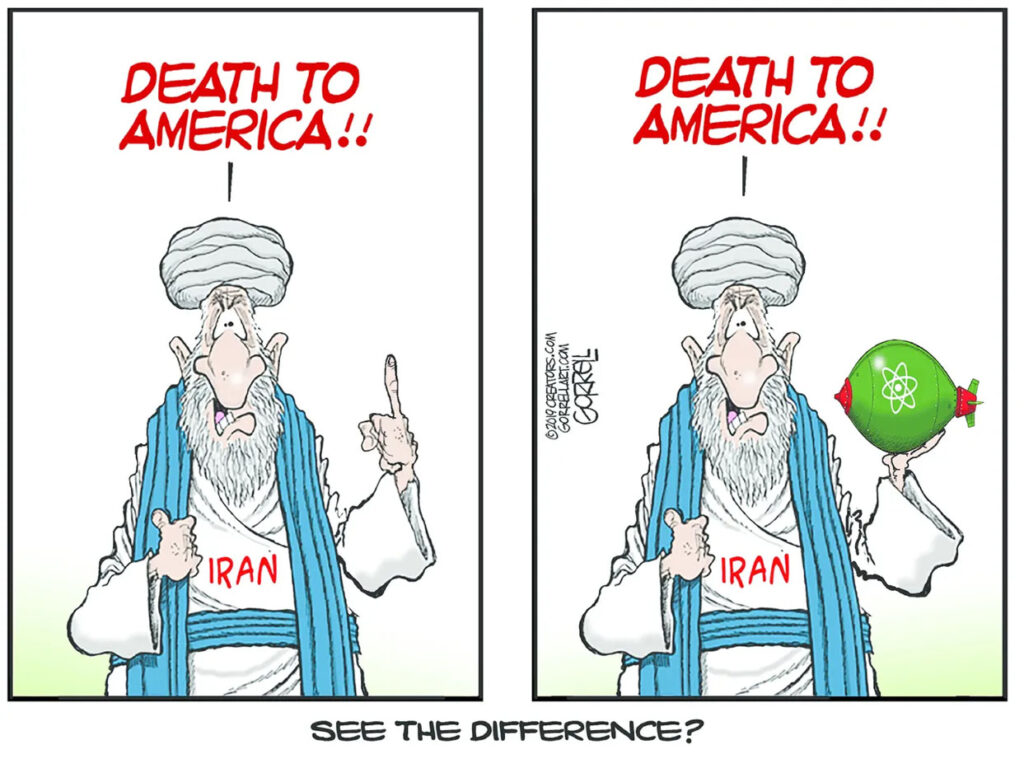
<p class="wp-block-paragraph">Since the creation of the nation of Israel after World War II, America has been unequivocal in its support of the Jewish state – or has it? ; I should note that this commentary looks at actions by past administrations specifically in terms of Iran as the primary force behind world terrorism. ; Has the United States’ Iran policy been correct in dealing with the rogue nation? ; Judge for yourself. ;</p>


<p class="wp-block-paragraph"><strong>Previous Presidents</strong></p>


<p class="wp-block-paragraph">It was on President Carter’s watch that Islamic terrorists took over Iran from an American allied government of the Shah – setting the stage for terrorist insurgency that has afflicted the Middle East ever since. ; He did impose sanctions on Iran in 1979 after terrorists seized the U.S. embassy in Tehran. ; However, he eased sanctions in the last days of his presidency as part of the Algiers Accord that secured the release of hostages held in Iran – a financial benefit that can be seen as a ransom.</p>


<p class="wp-block-paragraph">President Reagan imposed an arms embargo on Iran. ; He followed up in 1987 with a trade embargo due to Iran’s support of international terrorism.</p>


<p class="wp-block-paragraph">President George H.W. Bush signed the Iran-Iraq Arms nonproliferation Act that sanctioned material used in the production of nuclear weapons.</p>


<p class="wp-block-paragraph">In 1995, President Clinton issued an Executive Order that banned trade and investment with Iran – which was later enacted into law as the Iran and Libya Sanctions Act.</p>


<p class="wp-block-paragraph">President George W. Bush extended the Clinton sanctions and added others impacting on Iranian entities and individuals involved in terrorism or nuclear proliferation. ; He also pushed through a UN Security Council resolution that imposed international sanctions on Iran for continuing uranium enrichment activities. ; Bush also designated the Islamic Revolutionary Guard (IRG) and its Quds Force as terrorist organizations and imposed sanctions on the IRG and its affiliates.</p>


<p class="wp-block-paragraph"><strong>President Obama</strong></p>


<p class="wp-block-paragraph">The most significant shift in American policy vis-à-vis Iran came with President Obama.</p>


<p class="wp-block-paragraph">President Obama shifted American policy to what has been referred to as “an even-handed” approach – that means more favorable to normalizing relations with Iran. ;  ;More than any previous administration, Obama favored policies that tended to benefit Iran’s proxy in Gaza. ; He endorsed the Palestinian positions on the two-state option and was critical of Israeli management of the Palestinian population. ;</p>


<p class="wp-block-paragraph">In a symbolic gesture, Obama refused to meet with Israeli President Netanyahu when he came to Washington to address Congress in 2015. ; The White House gave two reasons for the refusal. ; Obama claimed it was not traditional for heads of states to meeting during election campaigns – and the Israeli election was two months off at the time. ; It was a tradition that no one had ever heard of. ;</p>


<p class="wp-block-paragraph">Obama also said that he was in the midst of negotiation for the Iran Nuclear Deal during the visit, which Netanyahu opposed. ; Being seen welcoming the Israeli Prime Minister was not good imagery at the moment. ; That makes more sense.</p>


<p class="wp-block-paragraph">In terms of policy, Obama eased sanctions on Iran. That was a complete reversal of the policies of previous presidents, who mostly imposed sanctions – Carter the ; one exception. ;</p>


<p class="wp-block-paragraph">Obama eased sanctions in 2013 and again in 2016 – when Iran agreed to the terms of the Joint Comprehensive Plan of Action, a multilateral deal designed to restrain Iranian nuclear ambitions.</p>


<p class="wp-block-paragraph">In many ways, Obama’s shift in U.S. policy empowered the anti-Israel faction of the Democratic Party regarding the Palestinians – most notably those associated with the so-called “squad.” ; Democrats and the radical left were emboldened in the condemnations of Israel – with a number of Democrats endorsing the BDS (boycott, divest and sanction) Movement against Israel.</p>


<p class="wp-block-paragraph">We see the influence of the anti-Israel faction of the Democratic Party today in their support for Palestinian terrorism – including the holding of pro-Palestinian (Hamas) rallies in cities such as New York. ; After the attack on Israel Democrat Congresswoman Rashida Tlaib posted a Palestinian flag outside her office alongside an American flag.</p>


<p class="wp-block-paragraph"><strong>President Trump</strong></p>


<p class="wp-block-paragraph">President Trump took a complete reversal of the Obama policies toward Iran and Israel – and was the most aggressive President in sanctioning Iran.  ; ;He terminated the Iran Nuclear Deal. ; That was possible because the Deal was an agreement between the Obama administration and Iran. ; It was not a treaty or deal approved by Congress – which was unlikely to approve the Deal.</p>


<p class="wp-block-paragraph">Trump imposed more sanctions on Iran than any previous president. ; He re-imposed all the sanctions that were lifted by Obama as part of the Iran Nuclear Deal. ; Specifically:</p>


<ol class="wp-block-list" type="1">
<li>In August of 2018, Trump imposed sanctions on Iran’s ability to trade in gold and precious metals, its automotive sector and access to U.S. dollars.</li>


<li>In November of 2018, Trump re-imposed sanctions on Iran’s oil export, shipbuilding, port operations, energy and on transactions with Iran’s Central Bank and other financial institutions.</li>


<li>In April of 2019, he ended waivers that allowed eight countries to continue importing Iran oil.</li>


<li>In May of 2019, Trump imposed new sanctions on Iran’s iron, steel, aluminum, and copper industries.</li>


<li>In June of 2019, Trump imposed new sanctions on Iranian Supreme Leader Ayatollah Ali Khamenei and his office.</li>


<li>In July of 2019, Trump imposed new sanctions on Iran’s Foreign Minister Mohammad Javad Zarif.</li>


<li>In September of 2019, Trump imposed new sanctions on the National Bank of Iran and its Foreign Wealth Fund.</li>


<li>In January of 2020, Trump ordered a strike that killed Qasem Soleimani, the commander of the Islamic Revolutionary Guard – the terrorist wing of the Iran military.</li>


<li>Following the attack on Soleimani, Trump imposed new sanctions on the Iranian metals industry and several Iranian officials.</li>


<li>In June of 2020, Trump imposed new sanctions on the Irani nuclear and ballistic missile programs.</li>


<li>In October of 2020, Trump imposed new sanctions on 18 Iranian banks which included secondary sanctions.</li>


<li>In November of 2020, Trump imposed new sanctions on Iranian oil, targeting the Ministry of Petroleum and related industries.</li>


<li>In December of 2020, Trump imposed new sanctions on Iran’s shipping industry, specifically targeting the Islamic Republic of Iran Shipping Lines and its subsidiaries.</li>
</ol>


<p class="wp-block-paragraph"><strong>President Biden</strong></p>


<p class="wp-block-paragraph">President Biden has moved to re-establish the Iran Nuclear Deal. ; While Biden has not lifted any of the Trump sanctions, that possibility remains on the table as part of a new Iran Nuclear Deal.</p>


<p class="wp-block-paragraph">Biden has sanctioned individuals and entities located in Iran and several other nations who have supported sanctioned Iranian energy exports. ; ; Biden has been hesitant to sanction Iran out of concern that it would disrupt negotiations over a new Iran Nuclear Deal.</p>


<p class="wp-block-paragraph">In a controversial move, Biden agreed to the release of more than $6 billion frozen by sanctions in South Korea in return for the release of American hostages. ; Though Biden claims it was not a ransom it has the smell of one.</p>


<p class="wp-block-paragraph">In what has been described as a powerful speech in support of Israel following the Hamas attack, Biden did not mention the 500-pound gorilla in the room – Iran. ; There is no doubt that the planning, training, and funding for that attack came from Iran over many years. ; Biden did not use that moment to stop the transfer of the $6 billion dollars in ransom money that remains in banks in Qatar.</p>


<p class="wp-block-paragraph"><strong>Summary</strong></p>


<p class="wp-block-paragraph">The record is clear. ; Other than Clinton, Democrat presidents have taken a much more conciliatory approach to Iran specifically – and Middle East terrorism generally. ; We need to look to the future to know how American policy toward Iran will roll out after the Hamas attack on Israel. There should be no misunderstanding that Hamas is a subsidiary of Iran and is culpable in the attack. ; As such, Iran must be made to pay along with its subsidiaries of Hamas and Hezbollah. ; Unless Iran is diminished, terrorism against Israel and the world democracies will continue. ; There can be no Middle East peace with Iran in charge.</p>


<p class="wp-block-paragraph">So, there ‘tis.</p>

Has American weakness emboldened Iran?