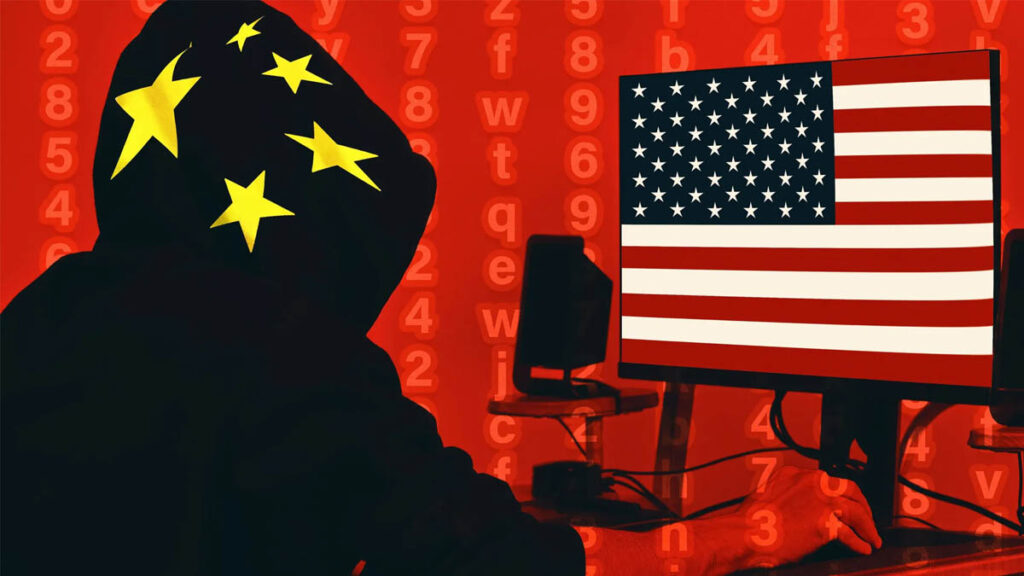
<p class="wp-block-paragraph">FBI Director Christopher Wray has urgently warned that Chinese government-linked hackers are actively preparing to launch disruptive attacks on critical U.S. infrastructure. This warning came during his address at the 2024 Vanderbilt Summit on Modern Conflict and Emerging Threats, where he detailed the alarming readiness of hacking groups like Volt Typhoon to exploit vulnerabilities in vital American sectors such as telecommunications, energy, and water.</p>


<p class="wp-block-paragraph">Director Wray&#8217;s statements underscore the severity and immediacy of the threat, indicating a strategic shift from China’s longstanding pattern of cyber espionage aimed at stealing intellectual property and technology to bolster its own industries. &#8220;The ultimate purpose of this activity is to give Beijing the ability to physically wreak havoc on our critical infrastructure at a time of its choosing,&#8221; Wray stated, highlighting a chilling potential for these preparations to turn into actual attacks.</p>


<p class="wp-block-paragraph">Historically, the U.S. has been vigilant about China&#8217;s cyber operations, which have been extensive and continuous despite international efforts to curb such activities, including a notable agreement between U.S. President Barack Obama and Chinese President Xi Jinping in 2015. However, these measures have failed to significantly deter Beijing&#8217;s cyber activities. In contrast to the rapid and overt cyber threats from countries like Russia, Wray likened China&#8217;s method to climate change: &#8220;long, slow, pervasive,&#8221; indicating a deeply embedded and enduring approach to its cyber operations.</p>


<p class="wp-block-paragraph">This evolving cyber threat from China appears to be particularly focused on preparing for a potential future confrontation over Taiwan, which China claims as part of its territory. The FBI Director noted that this cyber positioning is part of a broader Chinese strategy to deter U.S. intervention in any future crisis involving Taiwan. &#8220;A few years ago, we might have said China represents the most significant long-term threat. That’s no longer the best way to describe the danger,&#8221; Wray explained, indicating a shift in the perception of the immediacy and potential impact of the threat.</p>


<p class="wp-block-paragraph">The preparation of these Chinese hacking groups has been detailed and thorough, with Wray revealing that Volt Typhoon has not only targeted the sectors mentioned but also infiltrated 23 pipeline operators since 2011, disregarding other data to focus on acquiring control and monitoring system information. This kind of pre-positioning suggests a capability and intent to disrupt or completely halt essential services that Americans depend on daily.</p>


<p class="wp-block-paragraph">As the U.S. grapples with these revelations, federal agencies including the FBI are pushing for increased budget allocations to bolster the nation&#8217;s cyber defenses. The 2024 budget proposals reflect a significant emphasis on resources needed to thwart such extensive cyber attacks on critical infrastructure. The urgency conveyed by Wray is echoed across the U.S. intelligence community, with the Office of the Director of National Intelligence assessing last year that Beijing is ramping up capabilities to counter U.S. forces in a Taiwan-related crisis by 2027.</p>


<p class="wp-block-paragraph">In response to these assertions from the U.S., China has categorically denied any government linkage with Volt Typhoon, describing it instead as a part of a criminal ransomware group. This has been further supported by statements from the Chinese Ministry of Foreign Affairs and the Chinese Embassy in Washington, which have accused the U.S. of politicizing cybersecurity issues and framing China as the perpetrator in what they claim is a reverse victim scenario.</p>


<p class="wp-block-paragraph">The increasing vehemence in China’s rebuttals and their accusations against the U.S. for politicizing cybersecurity issues mask a deeper, more disconcerting reality. The calculated advancements in China’s cyber capabilities suggest a formidable and unyielding adversary, one that is potentially gearing up for confrontations that could extend far beyond the digital realm. This emerging shadow of belligerence casts a dark and ominous threat over global stability, underscoring the dangers of China&#8217;s cyber strategies in preparation for increasingly hostile competition.</p>

FBI: China is Preparing Disruptive Attacks on Critical U.S. Infrastructure