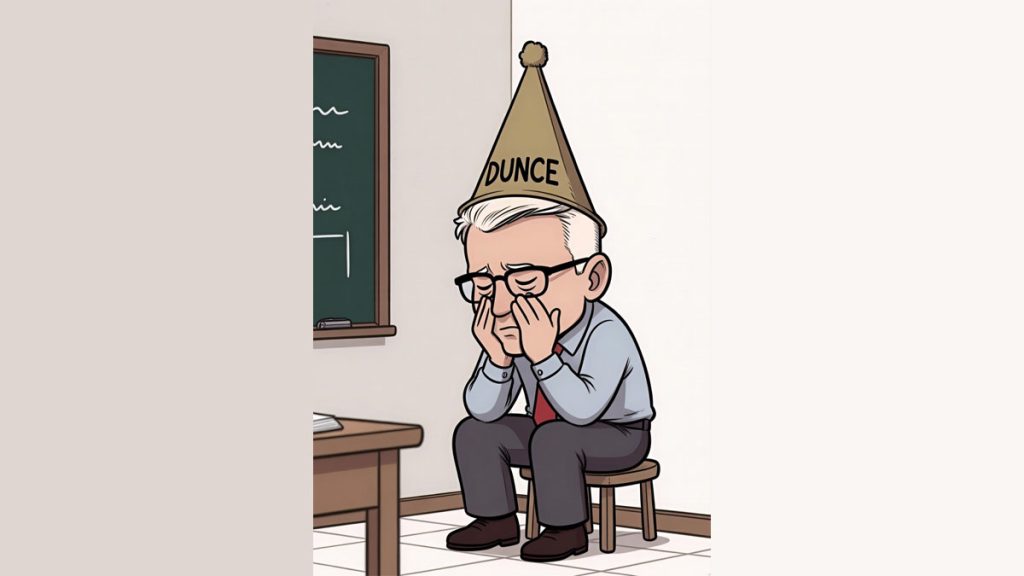
<p class="wp-block-paragraph">CNN anchor Anderson Cooper displayed a level of ignorance that left viewers wondering if he had somehow wandered into the wrong studio during coverage of the Artemis II splashdown. The moment unfolded when renowned astrophysicist Neil deGrasse Tyson attempted to explain one of the real hazards facing the crew: exposure to solar radiation during their ten-day journey around the moon.</p>


<p class="wp-block-paragraph">Tyson spoke with the clarity one expects from a man who has dedicated his life to making the cosmos understandable. He noted that the mission occurred near solar maximum, when the sun pumps out heightened levels of radiative flux and particle flux. That eleven-year peak meant the astronauts spent their time without the comforting shield of the Earth’s magnetic blanket. Any reasonable person listening could grasp the point. The crew faced increased radiation because the sun was feeling particularly energetic at that moment.</p>


<p class="wp-block-paragraph">Yet Cooper sat there, blinking as though Tyson had switched to ancient Martian dialect. With a straight face that somehow invited laughter from everyone else in the room, Cooper uttered the immortal line. “I literally do not know a word you are saying”. Really? A seasoned anchor who supposedly covers major stories, including those involving space exploration, suddenly could not process basic concepts like solar activity and radiation exposure? One wonders what sort of preparation goes into these broadcasts. Perhaps Cooper spent the morning reviewing celebrity gossip instead of brushing up on elementary solar science.</p>


<p class="wp-block-paragraph">The exchange grew even more delightful when former astronaut Mike Massimino stepped in to translate for the apparently bewildered anchor. Massimino offered the simplified version. “He (Tyson) was saying they got zapped”. Cooper responded with self-deprecating charm, declaring that he was not smart enough to understand. The studio erupted in laughter, and viewers at home likely joined in, some shaking their heads in amusement, others in disbelief.</p>


<p class="wp-block-paragraph">One can picture the scene. Here stands Tyson, dropping knowledge bombs about particle flux and magnetic protection, concepts that high school science classes routinely cover. Across the table sits Cooper, a man whose job involves processing complex information daily, pretending the explanation might as well have been delivered in quantum entanglement poetry. It was not exactly a profile in journalistic depth. It was more like watching someone claim confusion over why the sky appears blue on a clear day.</p>


<p class="wp-block-paragraph">To be fair, Tyson does speak with precision and enthusiasm that can occasionally overwhelm those unaccustomed to scientific terminology. Still, the phrases involved here were hardly obscure. Solar maximum. Radiation exposure. Magnetic field protection. These are not terms reserved for secret societies of rocket scientists. Average folks who occasionally glance at a science documentary or read a headline about space travel could follow along without needing a decoder ring.</p>


<p class="wp-block-paragraph">The humor in the moment came from the absurdity of it all. A top-tier news anchor reduced to admitting total befuddlement over a topic central to the very mission being celebrated. It highlighted a broader truth about modern media &#8212; people delivering the news are less informed than the experts they interview. Cooper turned what could have been an enlightening discussion into accidental comedy gold. One almost expects him to follow up with questions like, Wait, so the sun is hot?</p>


<p class="wp-block-paragraph">In the end, the crew of Artemis II completed their journey safely, having navigated the very real risks Tyson described. They handled the zapping, as Massimino so eloquently put it, with the professionalism expected of trained astronauts.</p>


<p class="wp-block-paragraph">Too much exposure to solar radiation, however, carries genuine concerns even here on Earth. Prolonged ultraviolet rays can damage skin cells, increase cancer risks, accelerate aging, and cause painful burns. In space, without atmospheric or magnetic protection, those effects multiply dramatically. Astronauts must carefully monitor dosage to avoid long-term health complications. Back home, a good sunscreen and some shade remain wise precautions, lest we all end up feeling a little too zapped ourselves.</p>


<p class="wp-block-paragraph">So, there ‘tis.</p>

CNN’s Anderson Cooper Displays Amazing Ignorance