<p class="wp-block-paragraph">China&#8217;s Communist Party (CCP) has long been known for its tight grip on power, and recent actions have shown just how far it will go to squash those who don&#8217;t conform to its ideals. The government&#8217;s latest crackdown targets social media influencers who flaunt their wealth, sending a clear message: in China, there is no room for rival ideologies or lifestyles.</p>


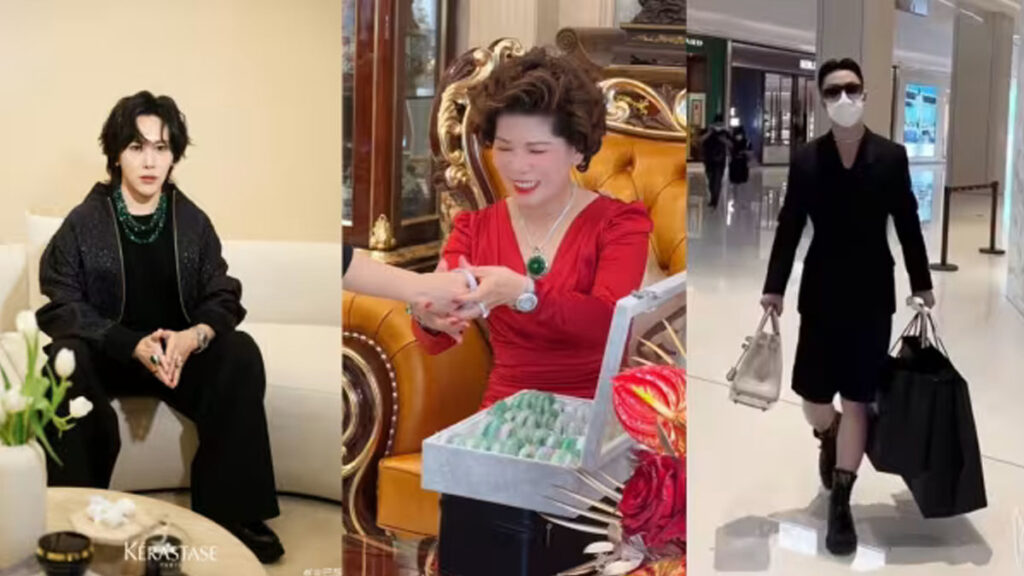
<p class="wp-block-paragraph">Wang Hongquanxing, dubbed “China’s Kim Kardashian” for his ostentatious displays of wealth, has become a high-profile victim of this campaign. Known for his extravagant lifestyle, Wang boasted about never wearing jewelry or clothes worth less than $1.4 million and owned seven luxury properties in Beijing. His social media presence was massive, with 4.4 million followers on Douyin, the Chinese equivalent of TikTok. However, all his accounts were abruptly taken offline as Beijing&#8217;s Cyberspace Administration enforced strict new regulations against “creating ostentatious personas.”</p>


<p class="wp-block-paragraph">This harsh move is part of a broader initiative by China&#8217;s internet regulators to shape and control social values. The Cyberspace Administration of China has a history of targeting influencers and celebrities, accusing them of tax evasion or spreading false content. The current focus on luxury influencers extends this policy, aiming to curb the influence of materialism and enforce the values promoted by the Communist Party.</p>


<p class="wp-block-paragraph">From May 1 to May 7, Douyin alone removed 4,701 pieces of inappropriate content and closed 11 accounts. Similarly, Xiaohongshu, an Instagram-like platform, shut down 383 accounts over two weeks. The goal is clear: to eliminate any online behavior that the government deems morally corrupt or socially harmful. As Carwyn Morris, an expert on Chinese internet policy, stated, “This conduct makes the authority seem more moral and upstanding in their actions.”</p>


<p class="wp-block-paragraph">Wang’s account, alongside those of other influencers like Baoyu Jiajie, known as “Sister Abalone,” were erased. These influencers had millions of followers, but their luxurious lifestyles clashed with the government&#8217;s push for a &#8220;civilized, healthy, and harmonious&#8221; online environment. The government argues that such content is vulgar, especially during an economic downturn when many Chinese citizens face financial struggles. By removing these influencers, the government aims to present itself as a moral guardian of society.</p>


<p class="wp-block-paragraph">In April, the Cyberspace Administration of China announced that it would target influencers who “deliberately showcase a lavish lifestyle built on wealth.” This announcement was swiftly followed by social media platforms like Douyin, Tencent, and Xiaohongshu pledging to crack down on ostentatious displays of wealth. The state-run Global Times reported that these platforms were committed to cleaning up content that promoted materialism and individualism.</p>


<p class="wp-block-paragraph">This crackdown on wealth flaunting is not an isolated incident but part of a broader pattern of silencing influential figures who challenge the Communist Party&#8217;s authority. A striking example is the mysterious disappearance of Jack Ma, the billionaire founder of Alibaba. Ma vanished from public view for several months after he criticized China&#8217;s financial regulatory system in late 2020. His disappearance underscored the lengths to which the Chinese government will go to maintain its control and suppress dissent. Ma&#8217;s temporary vanishing act served as a chilling reminder that in China, even the most powerful individuals are not beyond the reach of the Communist Party&#8217;s influence and enforcement.</p>


<p class="wp-block-paragraph">This campaign is not just about morality; it is also a strategic move to reinforce the Communist Party’s dominance. By censoring content that promotes excessive wealth and individualism, the government is attempting to suppress any cultural shifts that could undermine its authority. This aligns with previous campaigns where the government has targeted any behavior that does not align with its prescribed values, including denigrating the Party or traditional Chinese culture. As the authorities declared, “Once materialism starts spreading, it can have a bad influence on teenagers… Hence this trend of luxury on the internet needs to be stopped.”</p>


<p class="wp-block-paragraph">The crackdown on wealth flaunting comes at a time of economic uncertainty in China, where the display of vast wealth can be particularly jarring to a population experiencing financial hardships. By censoring these influencers, the government seeks to maintain social stability and prevent any potential unrest that could arise from the stark contrast between the wealthy elite and the struggling masses.</p>


<p class="wp-block-paragraph">This isn&#8217;t the first time China&#8217;s regulators have taken such measures. In 2021, Viya, another high-profile internet celebrity, was fined for tax evasion, and her social media accounts were shut down. These actions are part of a continuous effort to control the narrative and ensure that no individual or group can challenge the Communist Party&#8217;s vision for society.</p>


<p class="wp-block-paragraph">China’s ruthless crackdown on social media influencers who flaunt their wealth is more than just an effort to curb ostentatious behavior. It is a clear message that the Communist Party will not tolerate any rivals to its ideology and will go to great lengths to squash any form of non-conformity. By not recognizing the rights of individuals to express themselves freely, the Chinese government ensures that its vision of a modest, collective society prevails. This crackdown is a stark reminder of the lengths to which the Communist Party will go to maintain its grip on power and enforce its vision of societal values.</p>


<p class="wp-block-paragraph">Thinking in terms of a free person, if you live in China you are only allowed to exceed to the point where the CCP thinks you have too much. You must continue to work how they want you to work, behave the way they want you to behave, and you may only enjoy life to THEIR standards, not your own. Thinking slavery yet?</p>

China’s Ruthless Crackdown on Wealth Flaunting