<p class="wp-block-paragraph">One of the primary purposes of hosting the quadrennial Olympic Games is to put the host nation in a favorable light on the world stage. ; It can also have residual economic benefits by promoting trade and tourism over a prolonged period. ; ;</p>


<p class="wp-block-paragraph">Since we cannot see the “books,” how China does economically is, at best, an educated guess. ; China has the financial resources to spend an enormous amount of money on procuring and operating an Olympic event. ; That means the return on the investment may not be the most important consideration. ; It is mostly about image.</p>


<p class="wp-block-paragraph">I know a bit more than the average person about how China views the Olympics since I was peripherally involved in the lead-up to the 2016 Summer Olympics in Beijing. ; At the time, I was the Foreign Investment Advisor to the City of Harbin in Heilongjiang Province in northern China. ; I was also involved with a group working on the development of a ski resort that was to be the base for a future Winter Olympics.</p>


<p class="wp-block-paragraph">Though China had applied for the Summer Games of 2016, they did not expect to be awarded them. ; So, they were planning for a Winter Games bid – and we were a key part of that process. ; As it turned out, they did get the Summer Games – and all efforts for a Winter Olympics ended temporarily – including our proposed sky resort.</p>


<p class="wp-block-paragraph">From that experience, I could see first-hand that the Beijing government was totally focused on public relations, goodwill and international prestige – and they would pay any cost to produce the most impressive Olympic Games in modern history. ; Return on the investment was an afterthought – if a consideration at all. ; By all measures, they did what they hoped to achieve in the 2016 summer games.</p>


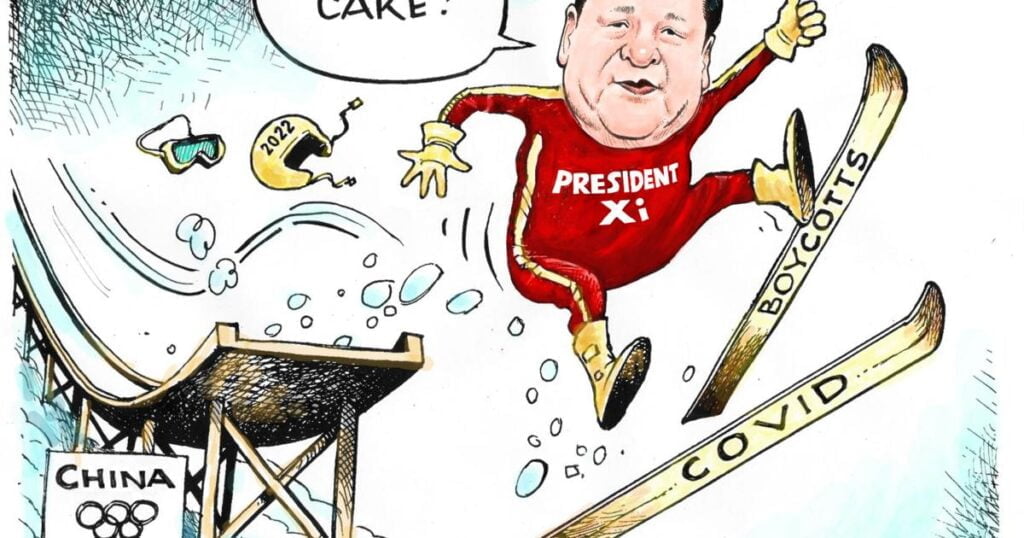
<p class="wp-block-paragraph">I am sure that the same motivation was in place for the current Winter Olympics – but much had changed. ; It is not proving to be the public relations coup that The Chinese had hoped.</p>


<p class="wp-block-paragraph">Perhaps the most significant change was the evolution of China from an evolving open and progressive culture – with strong free-market tendencies – to an older oppressive and belligerent China. ; That change came at the hand of Chinese President Xi Jinping. ; ;</p>


<p class="wp-block-paragraph">The warm relationship between China and the United States that I experienced during my dozen years traveling to and from the Middle Kingdom has grown cold. ; My family and I looked forward to our many visits to China. ; But today, I no longer have a desire to return – for business or pleasure.</p>


<p class="wp-block-paragraph">While the 2016 Sumer Games drew attention to many of the great things about China, this year seems to have exposed the ruthlessness of the new Xi regime. ; There is the genocide against the Uighurs … and the Tibetans. ; There is the crushing of the democracy movement in Hong Kong. ; There is the Orwellian social monitoring of the masses. ; There is a heightened threat against Taiwan. ; There is the increasing anti-American rhetoric – and the alliance with Russia. ; ;</p>


<p class="wp-block-paragraph">This was not the time to command the world spotlight. ; While the Summer Games enhanced China’s international image, the Winter Games have diminished it significantly. ; It brought about a worldwide condemnation – with protests by athletes and boycotts by many of the western democracies.</p>


<p class="wp-block-paragraph">Perhaps expectations were too high, but the current Winter games were also a technological disaster. ; For sure, the Covid Pandemic was a problem – as it was for Japan in 2021. ; The necessity of limiting the crowd in China was understandable. ; But the extreme measures imposed on athletes and guests created excessive hardship, anger, and complaints. ; There are reports of participants literally breaking down in tears over food and living conditions.</p>


<p class="wp-block-paragraph">Personally, I was shocked that Xi decided to put the games in Beijing. ; Having worked on the northern site for a potential Winter Olympics, I know that all the advantages for such a Winter competition were in Heilongjiang Province. ; Not the least of which was ample snow. ; They could also have carried over the amazing Harbin Ice and Snow Festival as a unique added attraction. ; An amazing event. (Check it out on the Internet)</p>


<p class="wp-block-paragraph">The images of snow-covered event venues surrounded by barren land and unfrozen water took away much of the grandeur of the games. ; In addition, some of the buildings that were impressive in 2016 were retreaded in 2022. ; I recall visiting those sites during their construction a decade before.</p>


<p class="wp-block-paragraph">The current games did not get the viewership of the previous events. ; Perhaps there was just too much competition besides the boycotting. ; American media was overwhelmed with the daily Trump grind. ; Covid was big news across the globe. The fall of Afghanistan – and Putin’s planned invasion of Ukraine – were big stories.</p>


<p class="wp-block-paragraph">For many reasons, China did not get the world attention it hoped to achieve – and what attention it did get was negative. The games will go on for a few days, but there is no way that China can pull a rabbit out of the old hat. ; They are what they are – and what they will be in the rearview mirror of history.</p>


<p class="wp-block-paragraph"> ;In short, it was a public relations disaster – and a well-deserved one.</p>


<p class="wp-block-paragraph">So. There ‘tis.</p>

China Olympics a public relations disaster