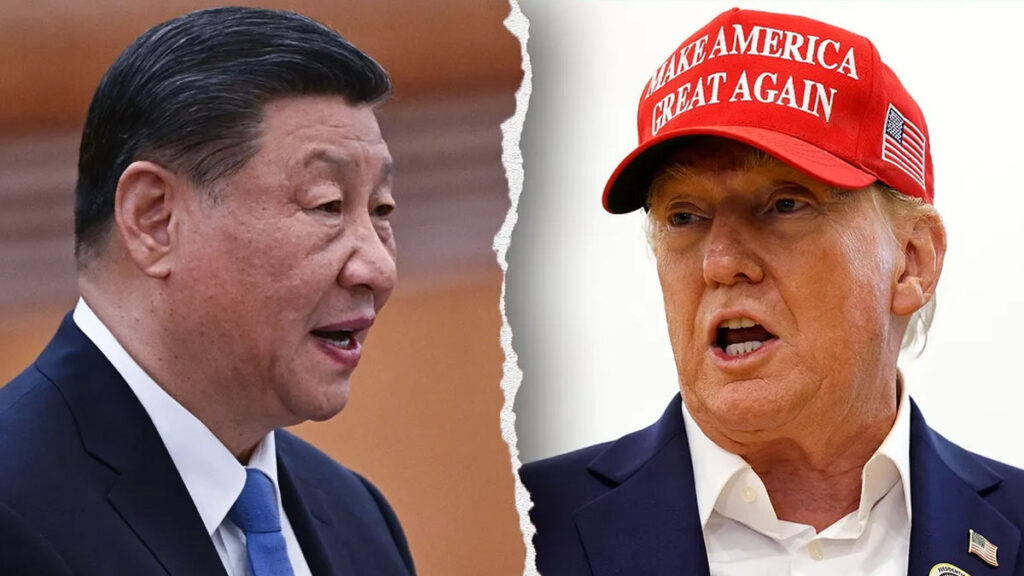
<p class="wp-block-paragraph">China has publicly maintained a calm and neutral stance following President-elect Donald Trump’s return to power, emphasizing principles like “mutual respect” and “peaceful co-existence.” Yet beneath this composed facade, experts suggest Beijing is deeply concerned about the potential direction of U.S.-China relations. Describing Trump’s presidency as a “worst-case scenario,” Chinese officials and citizens alike are bracing for what could be an intensified period of rivalry. Let’s explore why Trump’s victory is making China so nervous, and what this renewed competition could mean for both countries.</p>


<h3 class="wp-block-heading" id="h-public-calm-private-concerns">Public Calm, Private Concerns</h3>


<p class="wp-block-paragraph">After Trump’s victory, Chinese officials were quick to downplay any fears. Mao Ning, a spokesperson for China’s foreign ministry, insisted that “Our policy towards the U.S. is consistent… We will continue to view and handle China-U.S. relations in accordance with the principles of mutual respect, peaceful co-existence, and win-win cooperation.” However, behind the scenes, the reality appears far different. According to Yuan Juzheng, a professor at National Taiwan University who recently returned from mainland China, many Chinese officials view Trump’s victory as a “worst-case scenario” that could worsen the already tense relationship between the two superpowers.</p>


<h3 class="wp-block-heading" id="h-trade-worries-tariffs-and-economic-pressures">Trade Worries: Tariffs and Economic Pressures</h3>


<p class="wp-block-paragraph">One of China’s main concerns revolves around trade. In his first term, Trump’s trade war with China brought economic hardship to Beijing, with tariffs targeting Chinese technology giants and consumer goods. Now, experts believe Trump may impose even harsher trade restrictions. The President-elect has previously proposed tariffs as high as 60% on Chinese imports and suggested removing China’s “most-favored-nation” trading status. These potential policies would have a significant impact, as China exports over $400 billion annually to the U.S.</p>


<p class="wp-block-paragraph">The timing of these renewed trade pressures is particularly concerning for China, as the nation is already grappling with economic slowdowns. “Beijing is particularly wary of a potential revival of the trade war under Trump, especially as China currently faces significant internal economic challenges,” explained Tong Zhao, a senior fellow at the Carnegie Endowment for International Peace. Increased tariffs would not only affect China’s growth but could also create social instability, as economic strain filters down to the average citizen through job losses and rising prices.</p>


<h3 class="wp-block-heading" id="h-technology-decoupling-a-new-economic-frontline">Technology Decoupling: A New Economic Frontline</h3>


<p class="wp-block-paragraph">Beyond trade, Trump’s stance on technology is causing further anxiety. During his previous administration, the U.S. imposed restrictions on Chinese tech companies, blocking their access to essential American technology. Experts believe this “decoupling” of the U.S. and Chinese technology sectors could continue under Trump, potentially freezing China out of critical advancements in semiconductors, artificial intelligence, and other high-tech industries.</p>


<p class="wp-block-paragraph">For China, losing access to U.S. technology would be a severe setback in its pursuit of global tech leadership. “China also expects Trump to accelerate the decoupling of technologies and supply chains,” Zhao noted, adding that such restrictions could “threaten China&#8217;s economic growth and indirectly impact its social and political stability.” In response, China is likely to double down on its push for technological self-sufficiency and may even seek closer partnerships with allies like Russia to fill the gap left by U.S. restrictions.</p>


<h3 class="wp-block-heading" id="h-taiwan-a-potential-flashpoint">Taiwan: A Potential Flashpoint</h3>


<p class="wp-block-paragraph">Of all the issues, Taiwan presents perhaps the most immediate risk. Trump’s approach to Taiwan during his first term was often interpreted as supportive of the island’s autonomy, which Beijing views as a threat to its sovereignty. Taiwanese leaders quickly congratulated Trump on his election, with President William Lai expressing confidence that Taiwan-U.S. relations will continue to “serve as a cornerstone for regional stability.” Trump has suggested that Taiwan should contribute financially for U.S. defense support, a position that raises tensions for Beijing.</p>


<p class="wp-block-paragraph">“Trump’s victory may pose a relatively large challenge to Sino-U.S. relations,” said Da Wei, director at Tsinghua University’s Center for International Security and Strategy. Beijing has already conducted military drills around Taiwan as a show of strength, and Trump’s return could lead to an escalation of these displays, potentially bringing the two countries closer to a direct conflict. China’s leaders fear that Trump’s unpredictable stance on Taiwan may leave them little choice but to respond assertively, further straining the already fragile U.S.-China relationship.</p>


<h3 class="wp-block-heading" id="h-global-influence-competing-on-the-world-stage">Global Influence: Competing on the World Stage</h3>


<p class="wp-block-paragraph">With Trump back in office, Chinese strategists expect a continued push for global influence and economic competition. Rather than isolating itself, the Trump administration has historically worked to strengthen alliances, especially in countering China’s ambitions. Experts expect that Trump’s return will mean a more competitive stance from the U.S. toward China in international spheres, as America seeks to lead in global affairs and curb China’s influence in regions like the Asia-Pacific and Africa.</p>


<p class="wp-block-paragraph">In anticipation, China has been working to build its own network of alliances. Recently, Chinese President Xi Jinping met with Indian Prime Minister Narendra Modi and reached out to Japan’s new administration, signaling Beijing’s intent to strengthen its position in the Asia-Pacific region. However, Trump’s focus on reinforcing U.S. leadership in these areas may limit China’s expansion efforts.</p>


<h3 class="wp-block-heading" id="h-economic-volatility-market-reactions-to-trump-s-return">Economic Volatility: Market Reactions to Trump’s Return</h3>


<p class="wp-block-paragraph">The markets in China immediately responded to Trump’s victory, with the yuan experiencing its largest one-day drop in two years, while stocks listed in Hong Kong fell as well. Analysts predict that Trump’s policies, including potential tariffs and other trade restrictions, will create continued volatility. Chinese state-owned banks have already stepped in to stabilize the yuan, but experts believe that the economic tension is likely to persist as Trump’s trade measures take effect.</p>


<p class="wp-block-paragraph">“We expect the volatility of the yuan will pick up in the short term as a knee-jerk reaction to Trump’s victory,” said Cary Yeung, head of Greater China debt at Pictet Asset Management. For China, managing this economic turmoil will require careful intervention from both the central bank and government officials to prevent market instability. Some experts have speculated that if tariffs return, China might consider depreciating its currency to relieve export pressure, though this could increase U.S.-China tension.</p>


<p class="wp-block-paragraph">While China publicly insists on its commitment to “mutual respect” with the U.S., the reality behind the scenes suggests a growing sense of unease. Trump’s victory brings the likelihood of tariffs, technology restrictions, and rising tensions over Taiwan—all of which make Chinese officials nervous about the future. For the U.S., a renewed trade war could lead to higher prices for consumers and increased uncertainty in global markets. China, on the other hand, may find itself doubling down on economic self-sufficiency and seeking alliances to counterbalance U.S. influence.</p>


<p class="wp-block-paragraph">As Professor Yuan aptly noted, the next four years under Trump’s leadership represent a “worst-case scenario” for China. However, this intensified rivalry could also push China to strengthen its global ties, particularly with nations in the Asia-Pacific, and redefine its role in the international order. The path forward is uncertain, but one thing is clear: the relationship between the U.S. and China will shape global politics, economics, and technology in profound ways for years to come.</p>

China Officially ‘Doesn’t Care’ About Trump’s Win—But They are Rattled