<p class="wp-block-paragraph">We often hear that America needs a dialogue on race. Unfortunately, those who cite that need are more interested in a monologue than a dialogue. ; They are more interested in maintaining the widespread erroneous politically biased view than a full examination of the Black experience in America – historically and currently.</p>


<p class="wp-block-paragraph">The common understanding of Black history is founded on misinformation and willful disinformation. The greatest misinformation centers on the relative roles of the Democratic and Republican parties in pursuing civil rights for Black Americans.</p>


<p class="wp-block-paragraph">The history of racism in America is so skewed by politics that I was motivated to author a book to set the record straight. It is titled “Who Put Blacks in That PLACE? The long said history of the Democratic Party’s oppression of Black Americans &#8230; to this day.” </p>


<p class="wp-block-paragraph">Throughout February, I will draw from the book to bring forward facts that refute the common beliefs—starting with the 1930s.</p>


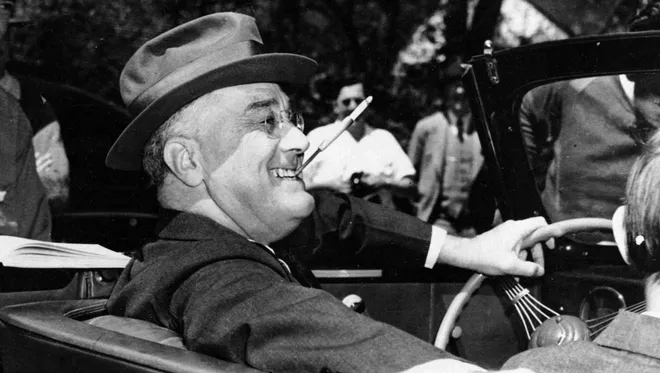
<p class="wp-block-paragraph">President Franklin Roosevelt</p>


<p class="wp-block-paragraph">Franklin Delano Roosevelt is often believed to have been a proponent of civil rights – especially by many Black Americans. In his book, “Frederick Douglass Republicans: The Movement to Re-ignite America&#8217;s Passion for Liberty,” Black author K. Carl Smith wrote that FDR’s picture hung in a place of honor in his childhood home along with President Kennedy and Jesus. In fact, Roosevelt was a racist and White supremacist.</p>


<p class="wp-block-paragraph">As an aide in the Department of the Navy, FDR implemented President Wilson’s segregation of the military and the Executive Branch of government. As President, Roosevelt resisted all efforts by Black organizations, and such military leaders as General Dwight Eisenhower, to integrate the military.</p>


<p class="wp-block-paragraph">Here are excerpts from my book dealing with our 32<sup>nd</sup> President.</p>


<p class="wp-block-paragraph"><strong><em>“&#8230; attempt(s) to polish FDR’s image ignores the reality of FDR’s longstanding and manifest belief in White supremacy. In the twelve-plus years Roosevelt resided in the White House, the Democratic Party continued its tradition as the nation’s leading vehicle of institutional racism.</em></strong></p>


<p class="wp-block-paragraph"><strong><em>FDR proposed no civil rights legislation in his twelve years in office and refused to support anti-lynching legislation repeatedly introduced by congressional Republicans. Roosevelt’s New Deal programs were designed to provide financial assistance to Whites only and to bar Blacks from union jobs. Virtually every New Deal was designed to replace Black workers with White workers.” </em>(</strong>There will be more about the racism of the New Deal programs in a future commentary).</p>


<p class="wp-block-paragraph">Warm Springs, Georgia</p>


<p class="wp-block-paragraph">Roosevelt died at a Warm Spring, Georgie Whites only spa her frequented often.  ;The exclusion of Blacks was not due to the racist climate in Georgia at the time. ; Most folks do not know that Roosevelt owned it. ; It was his policy. ; In addition to the racism, FDR’s use of the the spa was the source of controversy and scandal. From the book:</p>


<p class="wp-block-paragraph"><strong><em>“There was no better example of FDR’s personal racism than the spa he frequented at Warm Springs, Georgia. Many believe he was merely a patron of the spa for medical reasons. He was more than that.</em></strong></p>


<p class="wp-block-paragraph"><strong><em>In 1926, Roosevelt purchased the small local mineral water spring resort. It was alleged that the waters were beneficial for polio victims. Roosevelt was diagnosed with poliomyelitis in 1921 at age thirty-nine. (Modern medical professionals believe it was a misdiagnosed case of Guillain–Barré syndrome.)</em></strong></p>


<p class="wp-block-paragraph"><strong><em>Under his ownership, Roosevelt expanded the spa to be a nationally famous health resort for the rich and famous. He created the Warm Springs Foundation as a tax-free charity to operate the spa. He served as president of the foundation, its most prominent member and the magnet for America’s elite visiting the spa. They would welcome the opportunity to support Roosevelt’s favorite private charity with personal visits and large financial contributions—and on occasion enjoy his company. He hosted foreign dignitaries there.</em></strong></p>


<p class="wp-block-paragraph"><strong><em>In encouraging donations and the use of the facilities, Roosevelt apparently made false claims about the healing effect the waters had on his body. The National Park Service website promoting the spa claimed that Roosevelt experienced at least a partial cure from bathing in the waters of Warm Springs:</em></strong></p>


<p class="wp-block-paragraph"><strong><em>Roosevelt arrived at the resort on October 3, 1924, hoping to find a cure. The next day, he began swimming and immediately felt an improvement. For the first time in three years, he was able to move his right leg.</em></strong></p>


<p class="wp-block-paragraph"><strong><em>FDR’s medical records indicated no such improvements in his condition or that of anyone else. </em></strong><strong><em>The </em></strong><strong>American Journal of Public Health<em> featured an article in 2007 by Naomi Rogers entitled “Race and Politics of Polio.” It stated:</em></strong></p>


<p class="wp-block-paragraph"><strong><em>The president was also said to have deceived the American people about the effects of polio on his own body. According to a whispering campaign, polio had left him addicted to drugs, so erratic that he required a strait jacket, and was incontinent, sexually impotent and helplessly crippled.</em></strong></p>


<p class="wp-block-paragraph"><strong><em>While the funds were claimed to create an endowment for the foundation, the funds were often redirected to other civic and political purposes, and allegedly to Roosevelt himself. One of the major fundraising events was the president’s annual birthday celebration. Rogers writes:</em></strong></p>


<p class="wp-block-paragraph"><strong><em>At first the funds were intended to create a permanent endowment for Warm Springs. But gradually the Birthday Ball organizers redirected the money to the local communities that had raised it. The significance of this philanthropic policy shift away from Warm Springs was not widely appreciated by the American public.</em></strong></p>


<p class="wp-block-paragraph"><strong><em>Roosevelt was the main attraction at his annual Birthday Ball. America’s elite were solicited for contributions. This including more than $100,000 donated by prominent Black Americans—an incredible amount of money during the Depression.</em></strong></p>


<p class="wp-block-paragraph"><strong><em>What has been lost in most modern histories of Roosevelt is that his wholly owned and operated spa was for Whites only. He even rejected a suggestion for a segregated facility on the grounds for Negro patients.</em></strong></p>


<p class="wp-block-paragraph"><strong><em>In southern racist tradition, however, the low-paid work staff was approximately half Negro. They served as maids, janitors, and aides to lift patients in and out of baths. The White staff was housed in the main building or in nearby private cottages. Black workers lived in more distant and less luxurious dormitories—a tradition that goes back to slavery.</em></strong></p>


<p class="wp-block-paragraph"><strong><em>FDR’s personal refusal to allow Black children to use the spa, and revelations of the use of donated funds, created a growing embarrassment on the verge of scandal. In 1941, with help of the National Foundation for Infantile Paralysis, known popularly as the March of Dimes, Tuskegee Institute opened a heath facility for Black polio victims. The Tuskegee facility was necessitated because of Roosevelt’s personal decision to ban Black children from Warm Springs. With only thirty-six beds, the Tuskegee facility was woefully inadequate to the need. Prominent physician W. Montague Cobb would later describe the Tuskegee facility as a ‘Negro medical ghetto.’</em></strong></p>


<p class="wp-block-paragraph"><strong><em>Roosevelt praised the Institute for its establishment of the special heath center for Black victims of polio, giving him the appearance of concern for the Negro population while taking the pressure off integrating his own facility.</em></strong></p>


<p class="wp-block-paragraph"><strong><em>Most civil rights organizations, including the NAACP and the National Urban League, were offended by Roosevelt’s racist policies and made their feelings known to Mrs. Roosevelt. According to Naomi Rogers, Yale’s professor of the history of medicine:</em></strong></p>


<p class="wp-block-paragraph"><strong><em>Reverend J. S. Bookens of the African Methodist Episcopal Zion Church in Mobile, Ala, tried to have his paralyzed 9-year-old son admitted to Warm Springs and was told ‘Negroes [are] never admitted to that institution. This case was widely discussed in the Black press and spurred Walter White, secretary of the National Association for the Advancement of Colored People, to remind Eleanor Roosevelt that segregation at Warm Springs was the reason his association refused to sponsor Birthday Ball fund raising.</em></strong></p>


<p class="wp-block-paragraph"><strong><em>The Urban League argued that a change in policy ‘would be heartily welcomed by ten million otherwise socially disinherited American citizens.’ Whether Eleanor Roosevelt raised the issue with her husband is unknown, but there was no change in the policy.</em></strong></p>


<p class="wp-block-paragraph"><strong><em>About the same time, the </em></strong><strong>Chicago Tribune</strong><strong><em> printed a letter that noted (emphasis added):</em></strong></p>


<p class="wp-block-paragraph"><strong><em>There is a place in Georgia named Warm Springs where the President has endowed, or partially maintains, a sanitarium for the treatment of infantile paralysis. I have no doubt that what the humblest, most ragged, and illiterate little white child in the land would be admitted there for treatment, but the most cultured, refined, and well clothed Negro child would be denied admittance simply because it was a Negro.</em></strong></p>


<p class="wp-block-paragraph"><strong><em>With public outrage mounting, the spa’s chief surgeon issued a public explanation for Roosevelt’s Whites-only policy. His explanation is as damning as the policy. He said:</em></strong></p>


<p class="wp-block-paragraph"><strong><em>[Warm Springs] is not a general orthopedic hospital. It treats and studies nothing but Infantile Paralysis. It maintains no wards, separate clinics, or segregated rooms. Aid and pay patients share the same facilities. We cannot take colored people for this reason.</em></strong></p>


<p class="wp-block-paragraph"><strong><em>By 1937, Roosevelt and his fellow trustees were again faced with the issue of integrating Warm Springs. While there was almost universal reluctance to admit Negroes, the trustees recognized the growing public relations problem and the political fallout for Roosevelt. They decided against serving Black children but agreed to “associate” with an all-Black medical facility as a means of stemming growing criticism.</em></strong></p>


<p class="wp-block-paragraph"><strong><em>After extensive deliberations trustee James M. Hooper summed up the sentiment of his fellow board members in saying ‘our facilities do not lend themselves to the comfortable housing and treatment of resident-colored cases. We do not feel that we could make such patients comfortable both physically and psychologically.’</em></strong></p>


<p class="wp-block-paragraph"><strong><em>A 1937 decision by Roosevelt and the trustees to drop the Tuskegee Institute and other Black medical groups as recipients for that year’s Birthday Ball funds created a firestorm in the Black community.</em></strong></p>


<p class="wp-block-paragraph"><strong>The Chicago Defender<em> ran an article under the headline ‘We Donated, But They Left Us Out.’ The Warm Springs leadership had decided that ‘the Negro should solve his problem . . . through local medical practitioners, because statistics show that it (polio) is most prevalent among White people.’ Though untrue, the racist medical community proffered the false argument that Negroes were not as afflicted by polio.</em></strong></p>


<p class="wp-block-paragraph"><strong><em>Warm Springs remained segregated throughout Roosevelt’s lifetime. After his death at Warm Springs in 1945, Rogers further noted that:</em></strong></p>


<p class="wp-block-paragraph"><strong><em>Warm Springs remained segregated for many years. By the end of the 1940s it had set up a few “emergency” beds for local Black patients, but there were no Black physicians, nurses, therapists, or administrators, and the Warm Springs movie theater had an indoor picket fence indicating where Black employees could sit in the worst seats, separate from the White patients.</em></strong></p>


<p class="wp-block-paragraph"><strong><em>For the nineteen years that Roosevelt owned the facility, and despite his civil rights rhetoric, the mounting criticism from Whites and Blacks across the nation, and with disregard for the health of Black children, Roosevelt maintained his racist policies at Warm Springs to the day he died there.”</em></strong></p>


<p class="wp-block-paragraph">Roosevelt’s racial prejudice was seen in his treatment of the star of the 1936 Olympics.</p>


<p class="wp-block-paragraph"><strong><em>“The 1936 Olympic Games in Munich, Germany proved to be a great embarrassment for Adolph Hitler and his belief in Aryan superiority. No one upset the Fuehrer more than Black American track star Jesse Owens, who was the all-star of the event with four gold medals. He won gold in the 100-meter, 200-meter, and 400-meter relays and the long jump. Back home, Owens was the subject of ticker tape parades in Cleveland and New York. He was a national hero.</em></strong></p>


<p class="wp-block-paragraph"><strong><em>The events in Munich also revealed Roosevelt’s deep-seeded White supremacist views. In celebration of the team’s Olympic victories, Roosevelt invited the American team to the White House for official recognition. The invitation, however, was only extended to the White athletes. ; The Roosevelt White House was no place for Blacks.</em></strong></p>


<p class="wp-block-paragraph"><strong><em>Refuting a claim that only Hitler had snubbed Owens, the gold medalist responded, “Hitler didn’t snub me. It was our president who snubbed me. The president didn’t even send me a telegram.” In 1936, Owens campaigned for Republican Alf Landon.</em></strong></p>


<p class="wp-block-paragraph"><strong><em>Roosevelt and his successor, Democrat Harry Truman, never officially recognized Owens’ achievements. Owens finally received presidential recognition when Republican President Dwight Eisenhower invited him to the White House in 1955 and named him as Ambassador of Sports.”</em></strong></p>


<p class="wp-block-paragraph">There will be more about FDR and his New Deal in a future Black History Month commentary.</p>


<p class="wp-block-paragraph">So, there ‘tis.</p>

Black History Month (Part 1): President Franklin Roosevelt