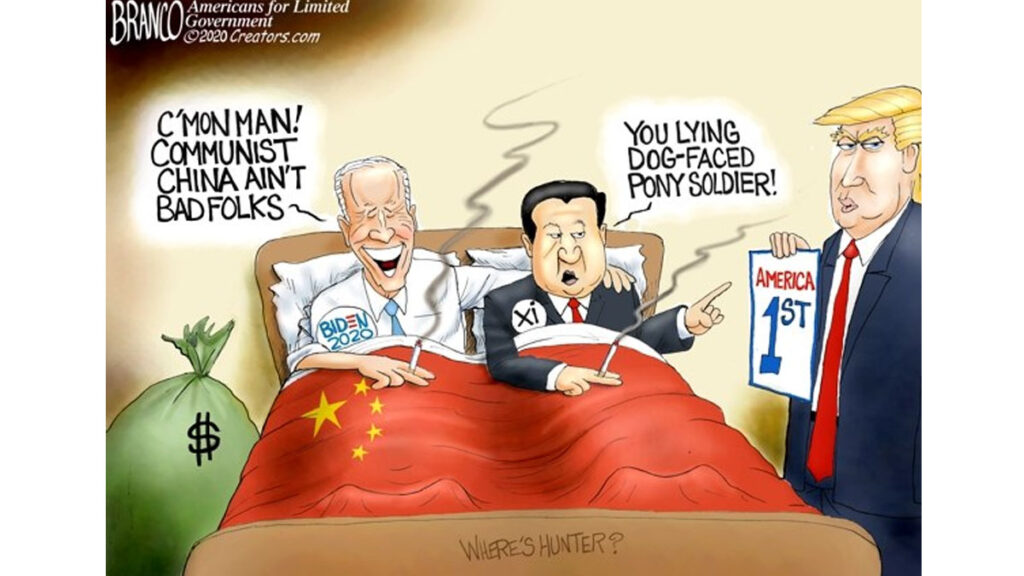
<p class="wp-block-paragraph">The 2024 US presidential election presents voters with a critical choice on how America should approach its relationship with China. Both President Joe Biden and former President Donald Trump agree on the importance of addressing trade imbalances and national security concerns with China. However, their strategies differ significantly, with Trump&#8217;s policies proving more effective in several areas.</p>


<p class="wp-block-paragraph"><strong>Trade Policies: Broad vs. Targeted Approaches</strong></p>


<p class="wp-block-paragraph">Trump&#8217;s administration took a bold stance by initiating a trade war, imposing tariffs of up to 25% on a wide range of Chinese goods. His strategy aimed to bring manufacturing jobs back to the US and reduce reliance on Chinese imports. Trump proposed universal tariffs on most foreign imports, potentially increasing costs for Chinese exporters and benefiting American industries. He suggested revoking China&#8217;s most-favored nation status, which would significantly impact bilateral trade and increase leverage against China.</p>


<p class="wp-block-paragraph">In contrast, Biden maintained Trump&#8217;s tariffs but focused on specific sectors like semiconductors and renewable energy. His targeted approach aimed to support strategic industries in the US, reflecting a more cautious but focused policy. Biden raised tariffs on certain goods, such as electric vehicles and solar cells, to promote domestic production, but this lacked the broader impact of Trump’s comprehensive trade measures.</p>


<p class="wp-block-paragraph"><strong>Technology and National Security: Different Tactics</strong></p>


<p class="wp-block-paragraph">Under Trump, the China Initiative was launched as part of a national security strategy, targeting corporate espionage and limiting Chinese influence in US infrastructure. This program, though controversial, highlighted a strong commitment to protecting US interests from foreign threats.</p>


<p class="wp-block-paragraph">Biden&#8217;s administration took a different route by implementing export restrictions on advanced technologies and working with allies to curb China&#8217;s military capabilities. While effective in specific areas, this approach sometimes lacked the direct impact of Trump&#8217;s more aggressive measures. Biden&#8217;s focus on international cooperation in restricting technology exports contrasts with Trump’s emphasis on domestic security.</p>


<p class="wp-block-paragraph"><strong>Diplomatic Relations: Confrontation vs. Engagement</strong></p>


<p class="wp-block-paragraph">Trump&#8217;s first term was marked by confrontational rhetoric and unilateral actions, maintaining a tough stance on China&#8217;s trade practices and territorial claims. His administration’s isolationist tendencies could reduce US global entanglements, allowing for more focused engagement with China on American terms. Trump&#8217;s aggressive policies aimed at reshaping global trade dynamics, positioning the US as a strong counterbalance to China’s growing influence.</p>


<p class="wp-block-paragraph">Biden has pursued diplomatic efforts alongside maintaining tariffs, engaging in high-level talks to stabilize relations. This mixed approach sometimes lacks the decisiveness of Trump&#8217;s policies but reflects an attempt to manage tensions while addressing trade issues. Biden’s administration has balanced tough trade measures with efforts to open communication channels with China, indicating a more nuanced approach to diplomacy.</p>


<p class="wp-block-paragraph"><strong>Business Impacts: Predictability vs. Uncertainty</strong></p>


<p class="wp-block-paragraph">Trump&#8217;s policies, while controversial, demonstrated a commitment to protecting American industries and jobs by taking a hard stance on unfair Chinese practices. His aggressive trade measures were aimed at reshaping global trade dynamics in favor of the US, often resonating with voters who felt economic pressures from international competition.</p>


<p class="wp-block-paragraph">Biden&#8217;s approach has been more cautious, focusing on strategic industries but potentially lacking the sweeping changes necessary for significant economic impact. His administration&#8217;s reliance on multilateral efforts has led to delayed and less ineffective results compared to Trump&#8217;s direct actions. However, Biden’s targeted tariffs and investments in key sectors align with his broader economic strategy, emphasizing long-term growth and resilience.</p>


<p class="wp-block-paragraph">As the 2024 election approaches, voters face a crucial decision that will shape US-China relations for years to come. Trump&#8217;s policies, characterized by their boldness and emphasis on American strength, contrast with Biden’s more nuanced (ACZ: read that &#8216;wishywashy&#8217;) and diplomatic approach. </p>


<p class="wp-block-paragraph">ACZ: No arguing with results, China&#8217;s belligerence has increased radically since Biden took office, and trade circumstances are unbalanced and skewed in favor of China.</p>

Biden vs. Trump on China: A 2024 Election Showdown