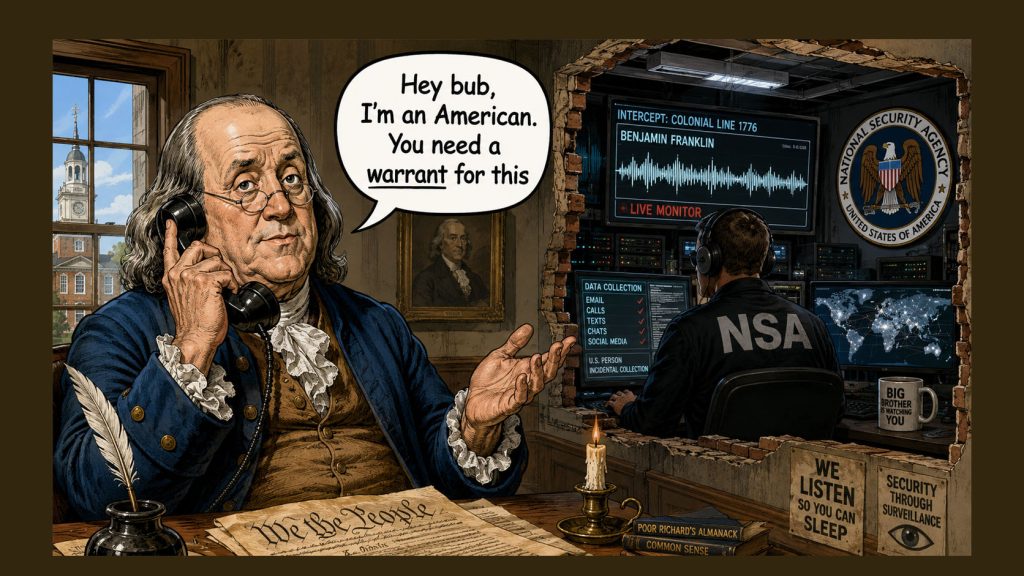
<p class="wp-block-paragraph">For nearly a quarter century, one of America&#8217;s most powerful surveillance authorities has operated under the shadow of the September 11 terrorist attacks. Now, as the June 12 deadline approaches, Congress is struggling to renew Section 702 of the Foreign Intelligence Surveillance Act (FISA), and for the first time in years, its future appears genuinely uncertain.</p>


<p class="wp-block-paragraph">The debate exposes a deep divide inside both political parties. President Donald Trump and many national security officials argue that Section 702 remains essential for protecting the country from foreign threats. Critics, including a growing number of Republicans, counter that the program allows warrantless surveillance that violates the Fourth Amendment and has outlived the emergency conditions that justified its expansion after 9/11.</p>


<p class="wp-block-paragraph"><strong>What Is FISA and Section 702?</strong></p>


<p class="wp-block-paragraph">FISA was originally enacted in 1978 after investigations revealed that federal agencies had improperly spied on American citizens and political groups. The law created a special court system to oversee foreign intelligence surveillance while attempting to balance national security needs with constitutional protections.</p>


<p class="wp-block-paragraph">Following the September 11 attacks, Congress expanded surveillance authorities several times. The most controversial addition was Section 702, which allows intelligence agencies to collect communications involving foreign targets located overseas without obtaining traditional warrants.</p>


<p class="wp-block-paragraph">Supporters emphasize that foreigners are the intended targets. Critics point out that communications involving Americans are frequently swept up in the process whenever Americans communicate with those foreign targets. Once collected, government agencies can search portions of that data. This is where much of the constitutional controversy begins.</p>


<p class="wp-block-paragraph"><strong>Why Congress Is Deadlocked</strong></p>


<p class="wp-block-paragraph">Congressional authorization for Section 702 expires on June 12. Last week, the Senate failed to advance legislation extending the program, with the measure falling short by a 47-52 vote. Seven Republicans joined Democrats in blocking the bill.</p>


<p class="wp-block-paragraph">The immediate political fight centers partly on Trump&#8217;s appointment of Bill Pulte as acting Director of National Intelligence. Democrats argue that Pulte lacks intelligence experience and should not be entrusted with expanded surveillance powers. Senate Intelligence Committee Vice Chairman Mark Warner said lawmakers were &#8220;stunned&#8221; by the appointment and called it &#8220;a national-security threat.&#8221;</p>


<p class="wp-block-paragraph">House Minority Leader Hakeem Jeffries was equally blunt, calling Pulte &#8220;deeply unserious, deeply dangerous and deeply unqualified.&#8221; Democrats have threatened to oppose reauthorization until the appointment is withdrawn.</p>


<p class="wp-block-paragraph">Yet Pulte is only part of the story.</p>


<p class="wp-block-paragraph">The larger obstacle is growing bipartisan concern about privacy and constitutional rights. Even many Republicans who generally support Trump&#8217;s agenda have refused to support a clean extension.</p>


<p class="wp-block-paragraph"><strong>The Republican Revolt</strong></p>


<p class="wp-block-paragraph">The most striking development is the number of Republican senators willing to break with both Trump and party leadership.</p>


<p class="wp-block-paragraph">Senators Josh Hawley, Mike Lee, Rand Paul, Eric Schmitt, Rick Scott, John Kennedy and Tommy Tuberville all voted against advancing the legislation. Their objections center on the lack of a warrant requirement when Americans&#8217; communications are searched.</p>


<p class="wp-block-paragraph">Mike Lee summarized the position in a simple social media post: &#8220;No warrant to protect Americans? No FISA.&#8221;</p>


<p class="wp-block-paragraph">Rick Scott argued that Congress should not grant intelligence agencies unchecked authority, saying, &#8220;We can&#8217;t give the swamp unchecked power to spy on law-abiding Americans.&#8221;</p>


<p class="wp-block-paragraph">In the House, privacy-minded conservatives have been equally vocal. Representative Tim Burchett stated, &#8220;I like the Constitution. I just don&#8217;t think you ought to be able to go after folks without a legitimate search warrant. It&#8217;s been abused in the past, and I think it will be abused in the future.&#8221;</p>


<p class="wp-block-paragraph">These lawmakers argue that Section 702 may have begun as a foreign intelligence tool, but it has evolved into a system that inevitably captures Americans&#8217; communications without the protections envisioned by the Fourth Amendment.</p>


<p class="wp-block-paragraph">Their argument is strengthened by documented abuses. Court findings and public reports have revealed hundreds of thousands of improper database searches in recent years, fueling concerns that safeguards are insufficient.</p>


<p class="wp-block-paragraph"><strong>The Case for Renewal</strong></p>


<p class="wp-block-paragraph">Despite the opposition, powerful voices continue to defend Section 702.</p>


<p class="wp-block-paragraph">Trump has repeatedly urged Congress to extend the authority. In March he wrote, &#8220;When used properly, FISA is an effective tool to keep Americans safe.&#8221; He later added, &#8220;The fact is, whether you like FISA or not, it is extremely important to our Military.&#8221;</p>


<p class="wp-block-paragraph">Defense Secretary Pete Hegseth called the program &#8220;one of our nation&#8217;s most effective tools for identifying and disrupting&#8221; threats and warned lawmakers against weakening national security capabilities.</p>


<p class="wp-block-paragraph">Senate Majority Leader John Thune has also defended renewal efforts, arguing that intelligence collection gaps could emerge if Congress allows the authority to lapse. Senators Tom Cotton and Chuck Grassley even warned the administration to prepare for a &#8220;potential significant gap in foreign-intelligence collection&#8221; if Section 702 expires.</p>


<p class="wp-block-paragraph">Supporters argue that the world remains dangerous. China, Russia, Iran, terrorist organizations, cybercriminals and foreign intelligence services continue to target American interests. From their perspective, Section 702 remains one of the country&#8217;s most valuable tools for monitoring those threats.</p>


<p class="wp-block-paragraph"><strong>A Post-9/11 Relic?</strong></p>


<p class="wp-block-paragraph">Yet even many Americans who support strong national defense increasingly question whether a surveillance framework built during the height of post-9/11 fears should continue indefinitely.</p>


<p class="wp-block-paragraph">That is the heart of the current debate.</p>


<p class="wp-block-paragraph">Trump clearly believes the program helps keep America safe. National security officials largely agree. Yet critics respond that temporary emergency powers have a way of becoming permanent. What was sold as an extraordinary response to terrorism has now existed for decades.</p>


<p class="wp-block-paragraph">The concerns are not merely theoretical. The Fourth Amendment was specifically designed to protect citizens from unreasonable government searches and seizures. Many privacy advocates argue that searching Americans&#8217; communications without a warrant violates that principle, regardless of the program&#8217;s original foreign intelligence purpose.</p>


<p class="wp-block-paragraph">Benjamin Franklin&#8217;s famous warning remains relevant: &#8220;Those who would give up essential Liberty, to purchase a little temporary Safety, deserve neither Liberty nor Safety.&#8221;</p>


<p class="wp-block-paragraph">Whether Congress ultimately renews Section 702 or forces significant reforms, the current standoff reflects a broader realization. America still needs effective intelligence tools. But many lawmakers increasingly believe that a surveillance system born from the trauma of 9/11 should not continue indefinitely without stronger constitutional safeguards.</p>


<p class="wp-block-paragraph">As the deadline approaches, Congress faces a choice that reaches far beyond partisan politics. It must decide whether Section 702 remains an indispensable shield against modern threats or whether it has become a relic that asks Americans to surrender too much liberty in exchange for security.</p>


<p class="wp-block-paragraph"></p>

Benjamin Franklin’s Warning Echoes Through the FISA Debate