<p>Getting a handle on the average wage of an auto worker is an arduous task since different tabulators use different methods. But most come up in the same range. CBS News reported the number at around $50,000 per year. The Bureau of Labor Statistics (BLS) has two reports. Its Occupational Employment Statistics report puts the number at $46,900. The BLS’ Current Employment Statistics Report places the number and around $55,000. In addition to wages, autoworkers enjoy some of the best – and most expensive – benefits.</p>
<p>The United Auto Workers Union is demanding an unprecedented 40 percent increase. The automakers have offered 20 Percent. Any worker in America would see a 40 percent increase in pay as a lot. Using the current pay at $50,000 per year, a 40 percent increase would put the new pay at $70,000. A 20 percent increase would increase the average annual wage to $60,500. The smaller increase is more than the inflation rate. That means it would be a positive gain for the worker.</p>
<p>But wait! The UAW wants a drop in the work week from 40 hours to 32 hours. That is essentially a full day off. That moves the hourly pay from around $28 today to approximately $43. That would be closer to a 65 percent increase in the hourly pay.</p>
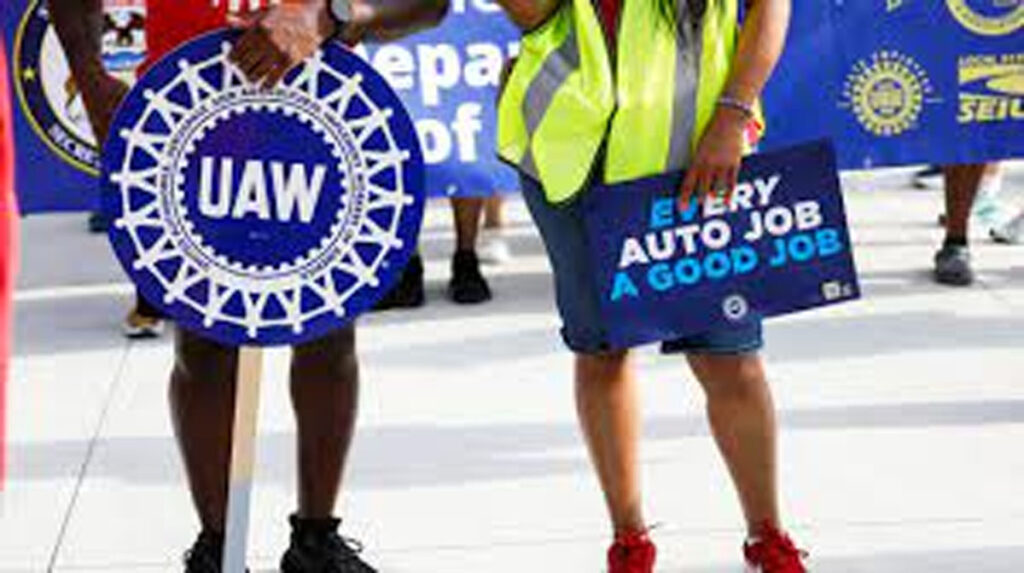
<p>With the negotiations at an impasse, the UAW has gone on strike against the three major American automakers. In this case it is what they call a “stand-up” strike. That means they only strike one facility of each of the automakers – with the option to expand the strike.</p>
<p>In announcing the strike, UAW President Shawn Fain took an unusually combative tone – even for a union leader on strike. He called the negotiations a “defining moment” and a “generational fight” –and called for picketing, rallies and protests by members and others.</p>
<p>We can all agree that the auto workers deserve an increase in pay – a reasonable increase, that is. We should all be able to agree that a 40 percent increase is NOT reasonable.</p>
<p>In considering the UAW demands, we need to not only look at the benefit to the worker, but to the impact of a large pay increase on the economy in general and the American auto industry specifically.</p>
<p>The kind of increase in wages and benefits the UAW is demanding would add to inflation. Keep in mind that the Federal Reserve is trying to avoid a recession by decreasing the amount of money flowing around the economy.</p>
<p>In previous interviews, Fain complained that American autoworkers do not make enough money to purchase American cars. They have to buy foreign vehicles, he says. While the autoworkers may be getting more money, the cost of the American cars will increase more than the foreign alternatives. Foreign vehicles will still have a price advantage.</p>
<p>In fact, that is exactly what happened in the past. Starting in the 1960s, the autoworkers were enjoying big contractual pay increases. At the time, the UAW was bragging about having some of the highest paid industrial workers in America. The wage increases were so big that they increased the cost of American cars – creating the opportunity for the foreign imports to flood the market. The excessive wage increases of yore also made it economically feasible for automakers to invest in job-killing robotics and to shift sources and operations to nations with lower labor costs. In a very real sense, the unions killed the geese that were laying the golden eggs.</p>
<p>Ford CEO James Farley said that the 40 percent wage increase would bankrupt the Company in a few years. I doubt that. What I believe would happen is what happened in the past. Automakers would move their operations overseas.</p>
<p>In its public relations strategies, the UAW is pointing to the very high compensation packages enjoyed by the senior management. I have been a longtime critic of the excessive compensation packages enjoyed by the major corporate officers, but that is a separate issue. Yes, it is good to get the working class pissed off – as we should be – but it does not have any significant importance in the economics of a general wage settlement.</p>
<p>We will have to wait and see how long this strike lasts – and what the final agreement looks like. Unless the UAW becomes more reasonable in its demands, the strike could go on for a while – and that would also be bad news for the economy. Some estimates indicate a $5.6 billion Gross Domestic Product (GDP) loss. It would most certainly drive-up inflation – and make a future recession more likely or more serious.</p>
<p>The best outcome for all concerned would be a short strike and a wage settlement in the neighborhood of … let’s say … 20 percent based on a 40-hour work week.</p>
<p>So, there ‘tis.</p>

Auto union about to wreck American car industry … again